Production Testing Equipment Market to Reach $9.70 Billion by 2035
The production testing equipment segment covers the surface test packages, separators, multiphase meters, downhole gauges, and subsea test trees deployed to measure how much oil, gas, and water a well actually produces. According to Market Research Future, the market was valued at $7.42 billion in 2025 and is projected to reach $9.70 billion by 2035, expanding at a compound annual growth rate of 2.72% over the forecast period. That growth rate reflects a mature service market tied to well counts and project sanctioning rather than speculative demand, but the value per job is rising as wireless downhole gauges, multiphase flow meters, and cloud-delivered interpretation replace rented three-phase separators, manual sampling, and paper reports.
Report Key Statistics
Insights published by Market Research Future reveal a market segmented by location, service, and well type. By location of deployment, onshore operations held a 68.4% share in 2025, reflecting dense well counts in U.S. shale, Russia, and the Gulf states, while offshore is the faster-growing location at a 3.4% CAGR as deepwater FPSO projects in Guyana and Brazil reach production. By service, downhole testing generated $2.71 billion in 2025 as the largest service category because drill-stem tests in deepwater and frontier wells command the highest day rates and tool costs, surface well testing accounted for a 31.2% share anchored by flow-back and appraisal campaigns, reservoir sampling generated $1.10 billion, and real-time testing is the fastest-growing service at a 4.6% CAGR. By well type, vertical well testing held a 57.6% share sustained by the large base of conventional producers in the Middle East and Russia, while horizontal well testing grows at a 3.3% CAGR on unconventional development. Regionally, North America holds a 34.5% share, the Middle East and Africa holds 26.8%, Europe represents $1.06 billion, South America $0.58 billion, and Asia-Pacific leads growth at a 3.9% CAGR.
Industry Trends
Findings from Market Research Future identify mature field surveillance in the Middle East and Russia as the largest single driver, contributing +0.6% to CAGR, as declining output from giant fields makes frequent rate testing a reservoir-management necessity, with Saudi Aramco holding maximum sustainable capacity at 12 million barrels per day and ADNOC's $150 billion 2023–2027 capex plan funding growth toward 5 million barrels per day. A second trend is offshore project sanctioning, contributing +0.5%, with Petrobras planning $111 billion of 2025–2029 capex of which roughly $77 billion is directed to exploration and production, and each new FPSO requiring clean-up and flow-back testing on every development well followed by periodic allocation checks, while Exxon's target of eight Guyana FPSOs and 1.7 million barrels per day of capacity by 2030 adds further demand. Third, digital and real-time data adoption contributes +0.3%, with real-time pressure and rate feeds letting engineers end a test once transient data are sufficient, saving rig time and crew cost, and service companies embedding these workflows into cloud platforms with SLB reporting digital revenue growth of roughly 20% in 2024.
Challenges
Equipment demand faces constraints from the upstream cycle. Oil price volatility and capital discipline impose −0.4% on CAGR, with testing budgets among the first to be trimmed when crude prices fall, Brent moving from an average near $99 per barrel in 2022 to around $80 in 2024, and the IEA expecting global upstream oil and gas investment to dip to roughly $570 billion in 2025. Permanent metering displacing periodic test rentals imposes −0.2%, as permanent multiphase meters and virtual flow metering reduce the need for periodic test-separator rentals at mature fields, and widespread adoption cuts operator dependency on recurring equipment rentals. Emissions constraints on conventional flared tests impose −0.2%, as the EPA's final methane rule restricts routine flaring of associated gas from new wells and World Bank data put global gas flaring at about 151 billion cubic meters in 2024. Sanctions and geopolitical disruption impose −0.2%, with Western service companies exiting Russian operations and Red Sea diversions causing a 60% drop in Suez Canal transits during 2024.
Future Outlook
Analysis presented by Market Research Future identifies several equipment opportunities. Zero-flare and produce-to-sales testing eliminates emissions by routing fluids into gathering pipelines or closed storage, and under EU Methane Regulation 2024/1787 and EPA rules operators pay premium rates for zero-emission well-testing spreads, allowing compliant service companies to capture higher margins in frontier and onshore fields. Injectivity testing for carbon storage and geothermal wells redeploys surface packages to verify reservoir injectivity, with official Global CCS Institute reports showing over 600 projects in the global pipeline aiming to double capture capacity, securing steady revenue insulated from oil price cycles. Unconventional gas in the Gulf brings multi-stage horizontal well testing to the Middle East, with Saudi Aramco awarding $25 billion in contract packages targeting over 2 billion cubic feet per day of sales gas output by 2026. Real-time testing is the fastest-growing service at a 4.6% CAGR, with operators adopting live wellsite-to-office data transmission.
Expert Discussion
Industry practitioners describe a market concentrated at the top and fragmented below, with the five largest providers holding about 55–60% of global revenue and an implied HHI in the 850–950 range. SLB holds an estimated 16–20% share with drill-stem testing, multiphase metering, and real-time reservoir testing platforms as an integrated digital leader with global footprint. Halliburton at 12–15% is strong in North American unconventionals and the Middle East with downhole test tools and fluid sampling, Baker Hughes at 9–12% offers surface testing equipment and flow measurement, Expro Group Holdings at 8–11% is the specialist with deepwater strength through subsea test trees and surface well testing, and Weatherford International at 6–9% focuses on mature-field and Middle East work. Recent developments include Expro Group agreeing in October 2023 to acquire PRT Offshore for about $105 million, adding subsea and surface testing equipment and strengthening its deepwater position, and SLB completing its acquisition of ChampionX in July 2025 to expand its production-life portfolio and integrated contract offering. Buyers should note that API 6A and API 16C ratings govern pressure-containing components, ATEX or IECEx approval is mandatory for electrical equipment in hazardous zones, and offshore buyers typically require DNV or equivalent third-party certification for test spreads.
Conclusion
The production testing equipment segment is positioned for steady growth, supported by mature field surveillance and offshore development that require verified production measurement. Emerging opportunities lie in zero-flare test spreads, carbon storage injectivity testing, and Gulf unconventional gas. Technological development will focus on multiphase metering accuracy, wireless downhole gauges, and the data transmission that shortens test cycles. The long-term outlook is one of reliable, replacement-driven demand with gradual premiumization as emissions compliance becomes a tender requirement. Where infrastructure markets such as the US Water Desalination Market are shaped by large capital projects, production testing equipment derives demand from the recurring need to measure what every well produces.
Категории
Больше
Precision is crucial in makeup, especially when blending shadows and sculpting contours. Custom Makeup Brushes from mgirlcosmetic are designed to optimize control and deliver consistent results. How do these specialized tools enhance the makeup process for both beginners and professionals? Blending requires brushes with soft, resilient bristles that move product evenly across the skin....

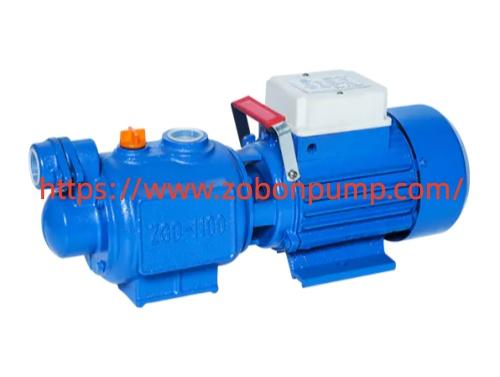
Water Pumps selection can have a direct connection with how a fluid handling system operates because different projects require different combinations of flow, pressure, power, and installation conditions. Buyers should look beyond basic product dimensions and examine the actual requirements of the application. For a Water Peripheral Booster Pump project, factors such as pressure...
Butane Gas Cartridge Supplier relationships can give importers a direct communication channel with the production side of their sourcing process. Instead of relying entirely on multiple intermediaries, buyers can discuss product specifications, compatible equipment, valve arrangements, packaging, labeling, quantities, inspection, and delivery with one manufacturing partner. Bluefirecans...

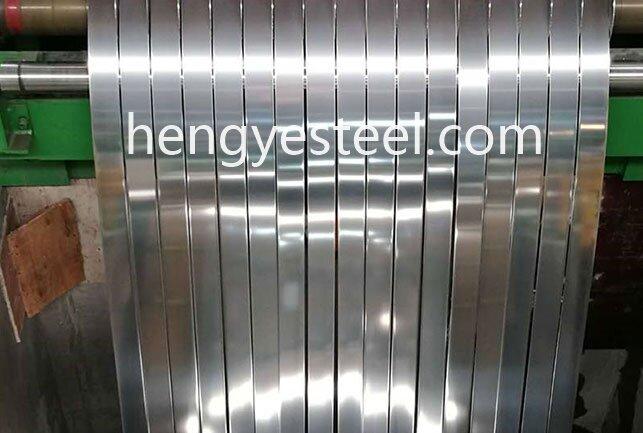
When manufacturers evaluate Cold Rolled Stainless Steel Strip, they need to consider how the material will interact with the entire production process rather than focusing only on its stainless characteristics. The strip may be cut, formed, stamped, shaped, or integrated into another component, and each stage can influence the final result. Material selection therefore becomes closely connected...
A packaging line runs at high speed. Boxes fly through the folder gluer. Suddenly, a box exits with no glue on the flap. The operator hits the stop button. Production idles. A Carton Folder Gluer Machine from CenwanMachine, produced by CenWan Machinery, suffers from glue issues like any other machine. The difference lies in how quickly the operator responds. Yet many operators call a technician...