Exploring Surface, Processing, and Design of Stainless Steel Strip
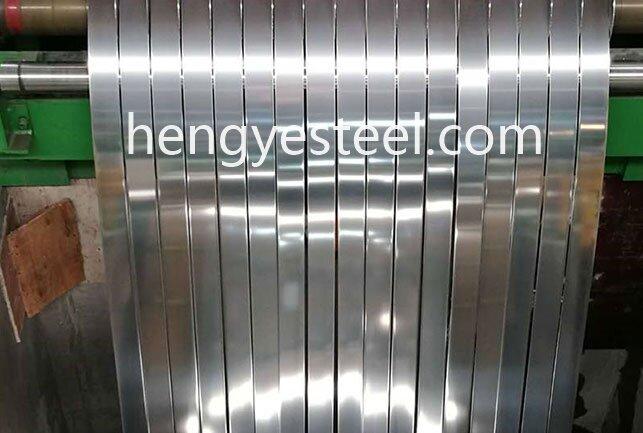
When manufacturers evaluate Cold Rolled Stainless Steel Strip, they need to consider how the material will interact with the entire production process rather than focusing only on its stainless characteristics. The strip may be cut, formed, stamped, shaped, or integrated into another component, and each stage can influence the final result. Material selection therefore becomes closely connected with processing conditions, surface expectations, handling, and the role of the finished component.
The material itself provides the foundation for these decisions. Stainless steel is valued in many applications because its alloy composition can provide corrosion resistance together with different combinations of hardness, toughness, and forming behavior. However, stainless steel is not a single material category with identical characteristics. Different grades and metallurgical conditions can be suited to different applications. Hengye's product range includes martensitic stainless steel materials intended for applications such as blades, tools, and other precision components.
Cold rolling adds another layer to the material-selection process. Instead of treating rolling as a simple shaping operation, buyers can consider how the process influences surface condition, material consistency, and readiness for subsequent manufacturing. Hengye describes a production route involving material selection, surface preparation, cold rolling, annealing, leveling, and slitting, with process control throughout the manufacturing sequence. This integrated approach connects the condition of the incoming material with the requirements of the finished strip.
For buyers, the intended application should be established before discussing the final material choice. A stainless strip used for a cutting component may have different requirements from one used in a formed mechanical part. The production method matters as well. Stamping, bending, slitting, forming, and other operations can place different demands on the material. Providing a supplier with information about the finished product and its processing route can make material discussions more precise and reduce the risk of selecting a material that does not fit the intended manufacturing process.
Surface condition is another important purchasing consideration. A consistent surface can make incoming inspection easier and may reduce the need for additional preparation before downstream processing. For products where the steel remains visible, surface appearance can also influence the finished component. Scratches, uneven areas, or other visible imperfections can become more noticeable after forming or assembly. For this reason, buyers can examine not only the material category but also how the supplier controls surface quality throughout production.
Processing technology has a direct connection with the final usability of stainless steel strip. Cold rolling can help establish the desired material condition, while annealing may be used as part of the process to prepare the steel for subsequent operations. Leveling and slitting then help transform the material into a form that can be introduced into downstream production. When these stages are coordinated, the strip can be prepared according to the needs of specific manufacturing applications rather than being treated as a generic material.
Consistency is particularly important for manufacturers using continuous production processes. Operators and automated equipment interact with the strip over an extended production cycle, so variations in material behavior or surface condition can affect processing decisions. Stable material characteristics can make feeding, inspection, cutting, and forming easier to manage. Hengye emphasizes process control, quality management, surface condition, dimensional consistency, and stable performance within its cold-rolled steel-strip manufacturing process.
From a user-experience perspective, industrial steel is experienced through the people and equipment that handle it. Packaging, identification, storage, feeding, and processing all influence how conveniently the material moves from delivery to production. Buyers may therefore want to consider how the supplier communicates product information and protects the material during transportation. This is especially relevant for overseas purchasing, where the strip may pass through multiple handling and storage stages before reaching the manufacturing facility.
The relationship between the material and the final product design should also be considered. Stainless steel strip may eventually become part of a blade, tool, mechanical component, or other precision product. Its surface can influence subsequent finishing, while its material condition can affect forming or shaping. For designers, material selection is therefore part of the product-development process rather than a decision made only after the design has been completed.
Appearance can also have functional value. A clean and uniform stainless surface can contribute to the visual quality of a finished component, particularly when the material remains exposed after manufacturing. At the same time, appearance should not be evaluated independently from performance. Surface requirements need to remain compatible with forming, cutting, heat treatment, assembly, and other processes involved in creating the final product.
Customization can provide additional flexibility when standard material choices do not fully match an application's needs. Dongyang Hengye Steel Strip Co., Ltd. focuses on precision cold-rolled and heat-treated alloy steel strips and provides material solutions for different industrial applications. Its product range covers stainless steel as well as carbon, spring, bearing, alloy, and tool steel categories, allowing different material families to be considered according to the finished application.
For manufacturers developing stainless steel components, considering the connection between alloy selection, cold-rolling processes, surface condition, downstream processing, handling, and final appearance can provide a more useful basis for material purchasing. More information about Dongyang Hengye Steel Strip Co., Ltd., its stainless steel products, and related manufacturing capabilities is available at https://www.hengyesteel.com/.
Categorías
Read More
Precision is crucial in makeup, especially when blending shadows and sculpting contours. Custom Makeup Brushes from mgirlcosmetic are designed to optimize control and deliver consistent results. How do these specialized tools enhance the makeup process for both beginners and professionals? Blending requires brushes with soft, resilient bristles that move product evenly across the skin....
Sustainable development requires a transition to clean, affordable, and reliable energy sources that can support economic growth while protecting the environment. North America photovoltaic panels are playing a central role in this transition, enabling the generation of clean electricity for homes, businesses, and communities across the continent. Analysis presented by Market Research...

Global Gallium Nitride (GaN) Power Semiconductor Market, projected to expand at a compound annual growth rate (CAGR) of 9.7% between 2024 and 2034, is on a trajectory of rapid adoption across several high‑growth verticals. This acceleration is detailed in a new comprehensive report released by Semiconductor Insight. The study underscores the pivotal role of GaN devices in delivering higher...

Non Functional Fibre Optic Sensor Market The Non Functional Fibre Optic Sensor Market (often categorized as intrinsic vs. extrinsic or non-functionalized optical fiber sensors) is expanding as industrial sectors demand robust, non-electrical monitoring solutions for harsh and hazardous environments. In non-functional fiber optic sensors, the optical fiber itself acts purely as a light...

Сегодня приобретение машины сразу превратиться может в истинный квест. Нужно учесть немало разнообразных нюансов, что очень важны для удобного вождения, а так же дальнейшего технического обслуживания. Конечно же, в том случае, если у вас имеется огромный счет и вы можете прямо сейчас спокойно приобрести дорогостоящего американца, проблем будет минимум. Тем не менее 99% всех людей сейчас ощущают...