


Why Does Hengqi Spoon Mould Design Affect Production Stability
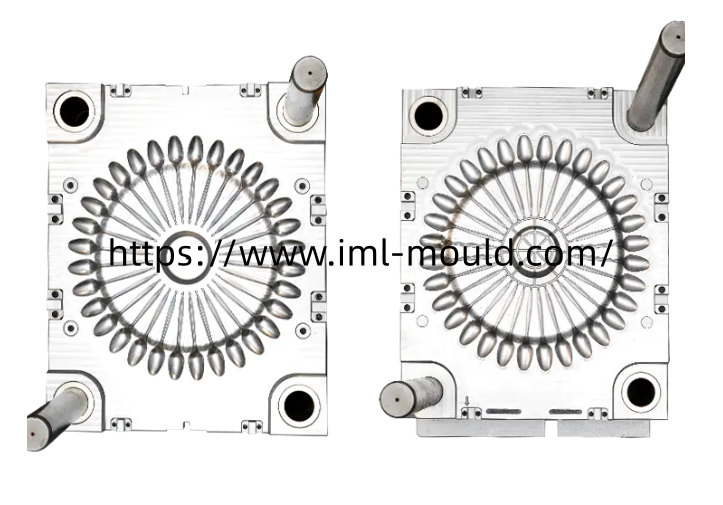
Spoon Mould selection plays an important role in high volume plastic cutlery manufacturing. As production demand continues growing in food packaging, catering, and takeaway industries, manufacturers are paying closer attention to mold structure, cooling efficiency, and long-term operating stability. Factories handling large output volumes require tooling systems that support consistent production while helping maintain product quality across extended manufacturing cycles.
One important feature considered in large scale production is cavity configuration. Multi-cavity tooling allows manufacturers to increase output within limited production time. Depending on factory requirements, different cavity layouts can support varying production capacities for disposable tableware. Balanced cavity arrangements also help maintain more stable filling performance during injection molding processes. This can contribute to more uniform product appearance and dimensional consistency.
Cooling system design is another factor that affects manufacturing efficiency. Proper cooling channel layouts help reduce unnecessary cycle delays while supporting stable product shaping. In high output environments, efficient temperature control may influence production rhythm and mold operation over long periods. Manufacturers often evaluate cooling structures carefully because production downtime can affect delivery schedules and operational planning.
Material flow performance also matters when selecting tooling solutions for plastic cutlery production. Smooth runner systems and suitable gate designs can help improve resin distribution during molding. This becomes increasingly important when factories operate continuously for extended shifts. Stable material flow may assist in reducing visible defects such as short shots, deformation, or inconsistent surface finishing. Many manufacturers also focus on material utilization as resin cost management continues becoming part of daily production decisions.
Durability remains a practical concern for factories involved in large volume manufacturing. Tool steel selection, processing precision, and component compatibility can all influence long-term operation. Molds designed for repeated production cycles often require stable structural performance to support ongoing manufacturing schedules. Maintenance accessibility is another point manufacturers frequently review, especially when equipment must operate with limited interruption.
Automation compatibility has also become more relevant in recent years. Many production facilities now integrate robotic systems, conveyor equipment, and automatic packaging lines into disposable cutlery manufacturing processes. Tooling systems designed with automation coordination in mind may help factories improve workflow organization and handling efficiency. As labor structures and production planning continue changing, manufacturers increasingly consider automation readiness during equipment investment discussions.
Hengqi focuses on tooling solutions for plastic packaging and disposable product manufacturing. The company continues developing mold structures suitable for modern production requirements while paying attention to processing details, cavity balance, and operational stability. Different product styles, sizes, and production capacities can require customized structural considerations depending on factory applications.
Another factor influencing production performance is maintenance management. Factories producing disposable tableware often schedule regular inspections to maintain stable operation. Replaceable components, accessible mold structures, and organized internal layouts may simplify routine maintenance procedures. Reduced maintenance complexity can help support smoother manufacturing schedules during long production periods.
Environmental considerations are also becoming part of industry discussions. Some manufacturers are evaluating tooling systems compatible with alternative plastic materials or thinner wall product designs. Production efficiency and material control are receiving increased attention as companies review long-term manufacturing strategies. Tooling suppliers able to adapt to changing production trends may provide additional flexibility for future market requirements.
For manufacturers seeking practical tooling solutions for disposable tableware production, careful evaluation of structure design, cooling performance, maintenance convenience, and production compatibility remains important. Hengqi continues supporting global customers with mold manufacturing services for various packaging and plastic product applications. More product information and manufacturing details are available at https://www.iml-mould.com/
Kategorien
Mehr lesen
Ewolucja gier kasynowych: od klasycznych do interaktywnych W miarę jak technologia się rozwija, ewolucja gier kasynowych staje się coraz bardziej złożona. Co zaczęło się jako skromne automaty do gier w małych, lokalnych kasynach, przekształciło się w globalny fenomen, przyciągającym miliony graczy na całym świecie. Zrozumienie tej ewolucji nie https://fieryplaycasino.pl/ tylko...

Прекрасный мобильный номер - это не попросту счастливое сочетание цифр, а большой инструментарий для бизнеса и элемент индивидуального статуса. Незабываемая комбинация укрепляет доверие покупателей, увеличивает число звонков с рекламной компании и быстро запоминается с основного взгляда. Когда вы хотите благоприятно монетизировать наличествующий у вас редкий контакт или собираетесь купить...

SPC Flooring is widely considered by buyers who need stable, practical, and visually appealing materials for different construction applications. Before selecting a suitable option, project teams should evaluate usage environments, product structure, installation requirements, and supplier support. A careful selection process helps ensure that the chosen material matches the specific needs...
An SMC compression molding machine is built to transform Sheet Molding Compound into durable, dimensionally stable components. What interests me most about this equipment is how it balances brute force with delicate control. The machine applies high pressure and carefully regulated heat to cure SMC into rigid shapes, and although the process sounds straightforward, the precision required is...

Regional dynamics in the HPV test reagent kit market reflect differences in screening infrastructure, cervical cancer burden, and healthcare investment. North America and Europe are leading markets, driven by established screening programs, high awareness, and advanced laboratory infrastructure. In the HPV test reagent kit market, Asia-Pacific is a fast-growing region. Rising cervical cancer...
