Preventing Defects in Injection Molded Bumpers
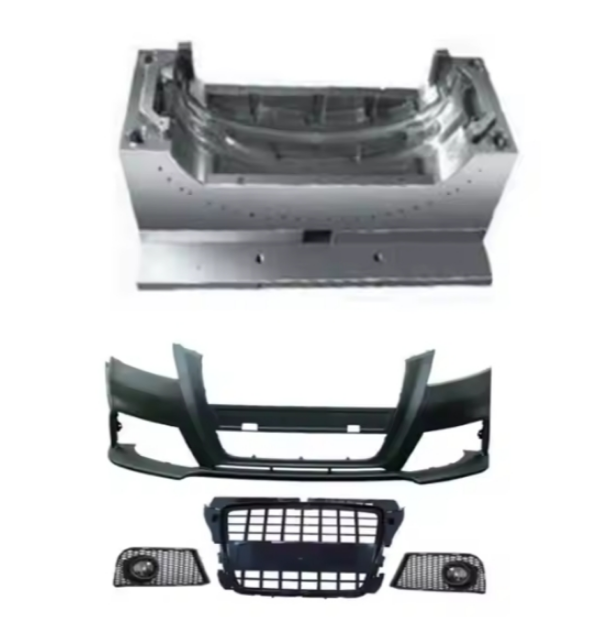
Surface quality and dimensional precision are extremely important in automotive exterior manufacturing. Since bumper assemblies remain highly visible after vehicle assembly, manufacturers must carefully control every stage of production. The Car Bumper requires both aesthetic consistency and structural reliability, making quality management an essential part of the manufacturing process.
Injection molding is the primary production method for plastic bumper covers. During molding, molten polypropylene or ABS material flows into large mold cavities under high pressure. Even small variations in temperature, pressure, or cooling time may create visible defects such as flow marks, sink marks, warpage, or weld lines.
One of the common production challenges is uneven cooling. Large bumper geometries contain areas with different wall thicknesses, which may cool at different rates. Uneven shrinkage can lead to dimensional distortion and poor fit during vehicle assembly. To address this issue, engineers design specialized cooling channels inside the mold and carefully monitor mold temperature throughout production.
Material preparation is equally important. Moisture contamination inside plastic pellets may cause bubbles, surface defects, or reduced structural performance. Manufacturers therefore use drying systems to maintain low moisture content before injection molding begins. Some production facilities also use automated material handling systems connected directly to molding equipment for greater consistency.
Appearance standards for bumper parts are often stricter than those applied to internal automotive components. Surface texture, gloss level, and paint adhesion must remain consistent across large production volumes. Metallic and pearlescent paint finishes require especially stable processing conditions to avoid color variation between body panels.
Quality inspection systems increasingly use automation and digital monitoring. Vision inspection equipment can identify scratches, sink marks, or dimensional deviations immediately after molding. Some research projects also investigate machine learning systems capable of classifying molding defects through image analysis.
Tool maintenance plays a major role in maintaining consistent quality. Large bumper molds experience significant mechanical stress during repeated production cycles. Wear on gates, runners, or cooling channels may gradually affect material flow and surface finish quality. Preventive maintenance programs therefore help reduce downtime and improve product consistency.
Production efficiency remains another important objective. Manufacturers continuously seek shorter cycle times while maintaining dimensional accuracy and appearance quality. Improved cooling systems, optimized mold flow analysis, and intelligent parameter control all contribute to higher productivity. Industry discussions frequently highlight how small design adjustments in gate location, venting, or draft angle can significantly improve manufacturing performance.
As vehicle styling becomes more sophisticated, bumper manufacturing standards will likely continue rising. Future production lines may combine advanced automation, artificial intelligence inspection systems, and sustainable materials to achieve improved efficiency and product reliability simultaneously.
Categorías
Read More
As soon as confident losses, a staff can get ease and comfort within the truth that they couldn capture a crack. Tonight, the Mets couldn capture the ball, slipping through a 74 past within just the very first of a fourgame established with the Miami was a sloppy demonstrating, with the Amazins showing up flat immediately after a highoctane sweep of the firstplace Phillies who the Mets...

The Processed Meat Market is being reshaped by a wave of innovation focused on plant-based alternatives, clean label, and sustainability. From meat-free products to eco-friendly packaging, the industry is evolving rapidly to meet the demands of modern consumers. This Processed Meat Market report explores the key trends and innovations shaping the sector's evolution. Market Dynamics...

Приняв решение работать сейчас с крипто рынком, подыскать нужно цифровой кошелек, который отвечает 4 основным условиям: • Легкий вывод; • Безопасность; • Наличие apk приложения; • Удобный внутренний интерфейс. В наше время существует свыше 60 цифровых кошельков, что будто-бы отвечают таким условиям. Тем не менее если просмотрите отзывы участников и сами проанализируете...

Why Are Party Printed Paper Napkins Becoming a Key Decor Element for Modern Celebrations? Event styling has undergone a quiet revolution where the smallest tabletop item now commands significant visual attention, and Party Printed Paper Napkins have emerged from their purely functional origins to become intentional design anchors at weddings, birthdays, and corporate gatherings. This...

When industries aim to reduce energy consumption, the injection molding zipper machine from Lhmachinery has become a key solution for many manufacturers. This advanced machine combines precision with efficiency, offering a way to produce zippers with minimal energy waste. How energy-efficient are modern injection molding zipper machines, and can they truly transform manufacturing processes?...