How to Improve Consistency in Foil Transfer Processes
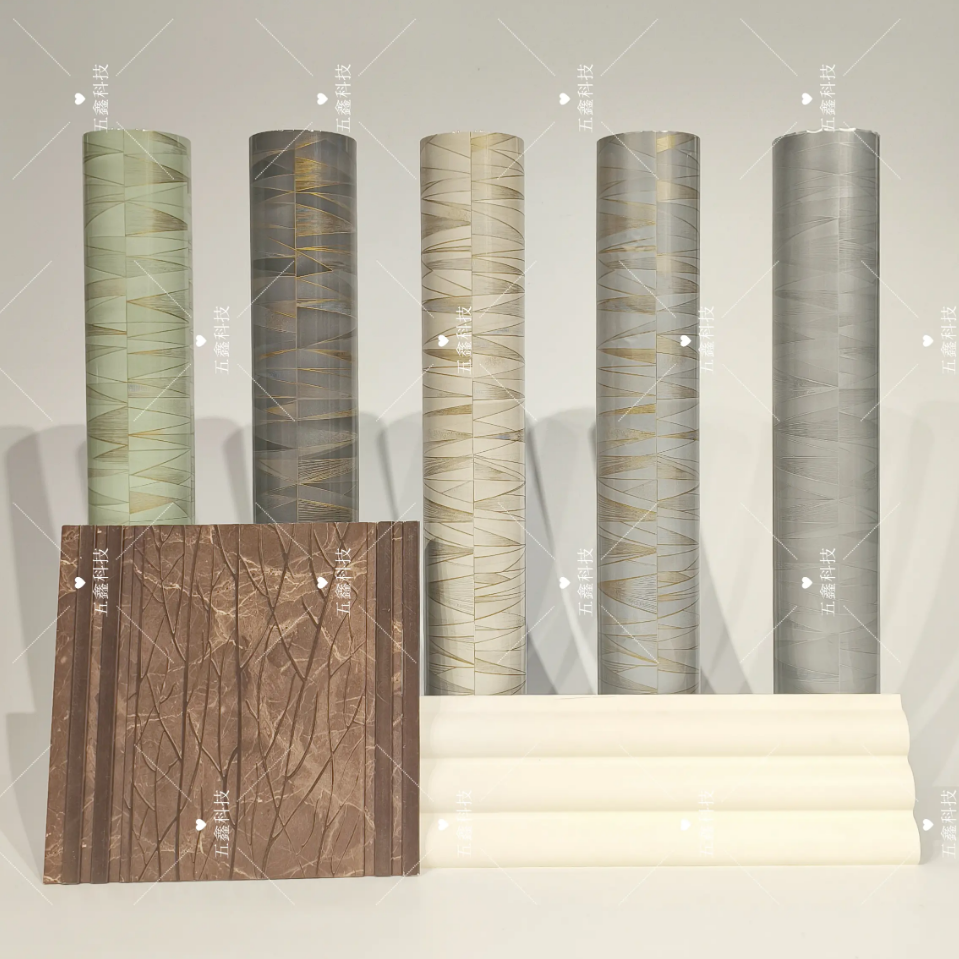
In industrial production, achieving consistent results with PVC Hot Stamping Foil requires careful control of both material quality and processing conditions. Several common issues can arise if parameters are not properly managed.
One frequent problem is incomplete transfer, where portions of the foil fail to adhere to the substrate. This is often caused by insufficient temperature or pressure. For most PVC applications, temperatures below 90°C may not fully activate the adhesive layer, resulting in weak bonding.
Another issue is over-transfer or edge bleeding, which occurs when temperature or dwell time is too high. This can cause the foil to spread beyond intended design boundaries, reducing sharpness and visual clarity.
Adhesion failure after cooling is also a common defect. This may result from contaminated surfaces, including dust, oil, or mold release agents. Proper surface cleaning is essential to ensure strong bonding.
Wrinkling of the foil during application can occur if tension is not evenly controlled. Uneven feeding can distort the decorative layer, especially in high-speed production environments. Modern systems use automatic tension regulation to minimize this issue.
Another defect is inconsistent gloss or color variation across the surface. This is often linked to uneven heat distribution or inconsistent substrate thickness. Maintaining uniform die temperature and using calibrated equipment can significantly reduce this problem.
PVC hot stamping foil also requires proper storage conditions. Exposure to high humidity or direct sunlight may degrade adhesive performance over time. Recommended storage conditions are typically below 25°C with relative humidity under 60%.
By implementing controlled process parameters and routine equipment calibration, manufacturers can achieve stable production output with minimal defects. Regular testing on sample substrates is also recommended before full-scale production runs.
Kategorien
Mehr lesen
North America and Europe remain the largest markets for CGRP antagonists, but the growth frontier has shifted east. Asia-Pacific is forecast to be the fastest-growing region, driven by rising migraine awareness, improving specialty neurology access, and increasing healthcare expenditure in China, Japan, South Korea, and India . This trajectory is reshaping competitive dynamics across the global...

The Hydraulic Vessel Steering Solutions market exhibits a clear segmentation between different system types, with Hydraulic Steering Systems holding the largest market share while Electronic Steering Systems emerge as the fastest-growing segment. As per Market Research Future, Hydraulic Steering Systems dominate the market, recognized for their reliability and robustness in handling...

Getting a new tattoo is an exciting experience that allows you to express your personality, creativity, and individuality. However, the work does not end once the tattoo is complete. Proper aftercare plays a significant role in ensuring your tattoo heals correctly while maintaining its vibrant colors and sharp details. Choosing the right tattoo aftercare products is one of the most important...

The global energy transition increasingly relies on natural gas pipeline infrastructure to transport cleaner-burning natural gas to power plants, industrial facilities, and residential consumers. According to Market Research Future, the Oil and Gas Pipelines Market was valued at $80.37 billion in 2024, with projections reaching $187.44 billion by 2035 at a compound annual growth rate...
Selecting a long shackle Brass padlock requires evaluating both environmental conditions and mechanical requirements. Unlike standard locks, these products are often chosen for fit rather than just security level. The first consideration is shackle clearance. Users must measure the gap between locking points before selecting a model. Typical long shackle sizes range from 60mm to 80mm...