


Can IoT Predict Submersible Pump Failure Before It Happens?
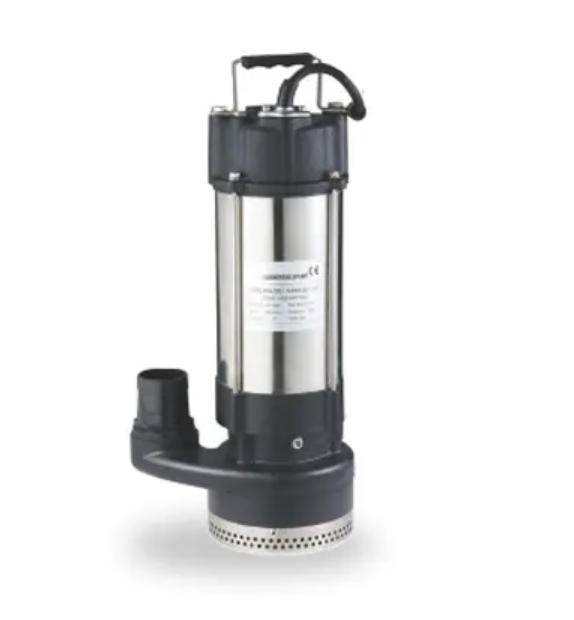
The era of reactive maintenance for the Submersible Pump is ending. Low-cost sensors and edge computing now enable real-time health monitoring from any smartphone. Adding IoT (Internet of Things) to a Submersible Pump reduces downtime by up to 70% and identifies failures weeks in advance.
Essential sensors for digital monitoring:
Three-phase current and voltage transducers
Sample at 1.000 Hz to detect current spikes as short as 1 millisecond. A sudden 25% phase current rise lasting 0.2 seconds indicates sand ingestion. The system can automatically reverse rotation for 3 seconds to purge particles.
Winding and bearing temperature (PT100 sensors)
Install two PT100s per phase—one in neutral point, one at stator end. An algorithm comparing temperatures predicts bearing failure when the difference between drive end and non-drive end exceeds 15°C for 10 minutes. Set alarm at 130°C (Class F insulation limit).
Vibration spectrum analyzer (FFT)
A MEMS accelerometer (range ±16 g) mounted on the motor housing can distinguish between:
1× RPM: imbalance
2× RPM: misalignment
High-frequency (200–500 Hz): cavitation
Example: When cavitation harmonics appear at 280 Hz with a 1450 rpm motor (24.2 Hz running speed), reduce flow by 10%.
Discharge pressure and flow (digital transmitter)
Compare real-time pressure/flow against the pump’s reference curve. A 15% head drop at constant flow means wear ring clearance increased from 0.3 mm to 0.6 mm (typical wear after 8.000 hours). Predictive maintenance then schedules seal replacement in 500 hours.
Leak detection (moisture probe in seal chamber)
A conductivity probe with 1% accuracy detects early water ingress. Combined with a GSM module, the Submersible Pump sends a text alert the moment seal oil humidity exceeds 0.5%. This gives 2–3 weeks of safe operation before full water incursion.
Data transmission options:
For depths up to 500 meters, use 4–20 mA loop powered over the existing power cable (power line carrier). Deeper installations require a hybrid cable with two twisted pairs for Modbus RTU (RS-485 at 9.600 baud).
Result example: A monitored Submersible Pump in a municipal station reduced emergency failures from 4 per year to zero over 18 months. Total sensor retrofit cost was 8% of one emergency pull-out and rewind.
Investing in smart monitoring transforms a dumb pump into a self-reporting asset.
Categorias
Leia Mais
Efficient material movement depends on more than the conveyor frame or drive system, because the components that directly support products can influence stability, handling, and maintenance. When selecting Conveyor Rollers, manufacturers should consider material compatibility, surface characteristics, structural construction, rotational behavior, installation, and the working environment....
Reliable sterilization procedures depend on careful preparation, consistent monitoring, and suitable packaging accessories. Steam Indicator Strips Tape plays a practical role in supporting sterilization workflows, while Hopeway AMD provides products designed to assist healthcare facilities, laboratories, and medical manufacturers in maintaining organized and efficient sterilization practices....

The Weapon Night Sight Market is undergoing rapid transformation as thermal imaging technologies become increasingly important for modern defense operations. Thermal weapon sights provide military personnel with the ability to detect heat signatures emitted by people, vehicles, and equipment regardless of environmental lighting conditions. These advanced systems offer significant operational...

Financial assessments of enterprise software investments consistently point to strong value creation, driven by high operational returns and cost-reduction metrics. Evaluating the total Financial Analytics Market Value highlights a lucrative global sector supported by continuous enterprise capital expenditure toward digital modernization and operational efficiency projects. From an operational...

Срезанные цветы живут неделю. Орхидея в горшке — если повезёт, пару лет. А миниатюрное дерево с характером может стать спутником на десятилетия. Именно поэтому бонсай живой всё чаще выбирают как подарок на значимые события — юбилеи, новоселья, повышения.В отличие от стандартных презентов, такое дерево невозможно забыть на полке. Оно требует внимания, но взамен даёт ощущение связи с...
