What Size Forged Ball Valve Do You Need?
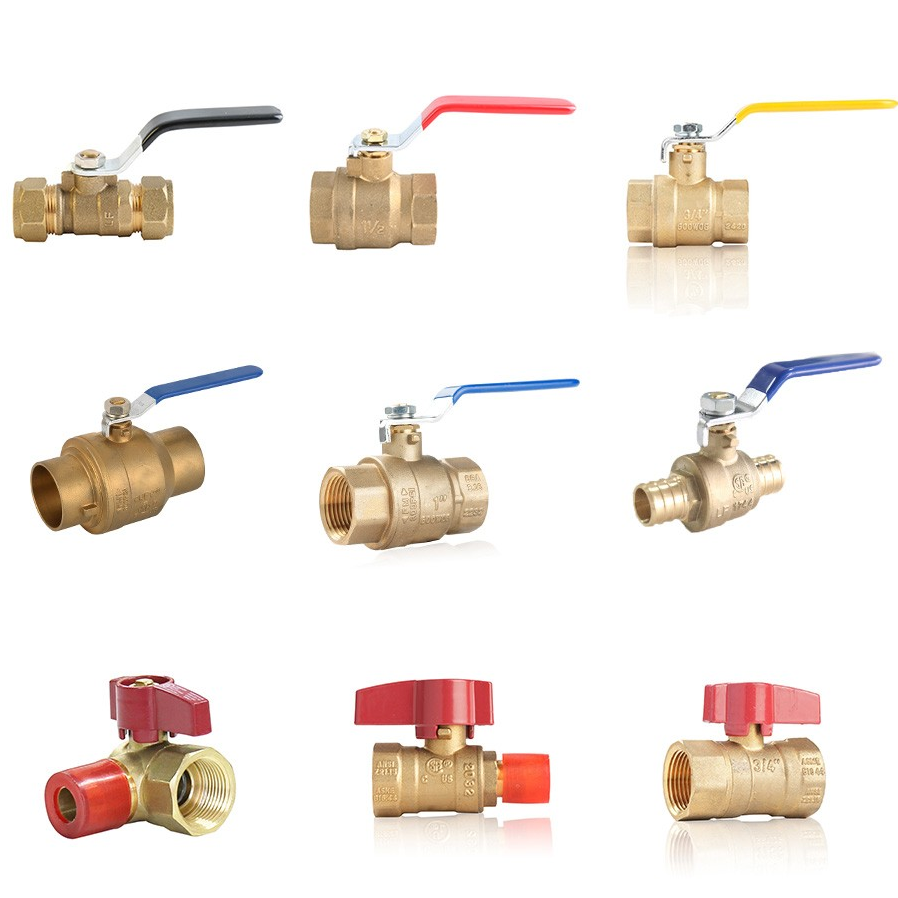
Selecting the wrong ball valve wastes energy, reduces lifespan, or causes flow starvation. This guide helps you size Brass Forged Ball Valve correctly using basic hydraulic principles. No advanced math required – just logical steps.
Key Sizing Parameters:
Port types: Full port (bore = pipe ID) vs Standard port (bore = 70–80% of pipe ID)
Pressure drop formula: ΔP (bar) = (Q / Cv)² × 0.865 (for water)
Recommended velocity: Water <5 m/s, Air <20 m/s, Oil <3 m/s
Operating torque: 1/2″ = 2–3 Nm, 1″ = 8–10 Nm (at 10 bar)
Step 1: Determine Flow Requirement
Calculate maximum expected flow in liters per minute (LPM) or gallons per minute (GPM). Example: A manifold needs 50 LPM of water at 3 bar.
Step 2: Choose Port Size
Full port 1/2″ forged valve has Cv = 12. Pressure drop = (50 LPM = 0.83 L/s; convert to GPM: 13.2 GPM). ΔP = (13.2/12)² = 1.21 PSI (0.083 bar). Acceptable.
Standard port 1/2″ valve has Cv = 7. ΔP = (13.2/7)² = 3.56 PSI (0.245 bar). Still acceptable but 3x higher energy cost.
Step 3: Select End Connections
BSPP (parallel): Uses bonded seals or copper washers. Good for hydraulic systems.
BSPT (tapered): Thread seals itself. Common for gas and water.
NPT (tapered): US standard. Never mix NPT with BSP – thread pitch differs.
Sizing by Pipe Schedule:
Schedule 40: Use standard port forged valve. Full port may have thinner body walls.
Schedule 80: Need full port to match thicker pipe ID. Forged 1″ full port bore = 25.4 mm exactly.
Actuation Considerations:
If adding a pneumatic actuator, verify torque. A 1″ forged valve at 10 bar requires 10 Nm break torque. Add 30% safety margin = 13 Nm. Select actuator with 15 Nm minimum.
Common Sizing Mistakes:
Undersizing: Using 1/2″ where 3/4″ needed. Result: velocity >5 m/s causes erosion and seat damage.
Oversizing: Using 2″ for a 1/4″ line. Result: sluggish response and trapped debris.
Ignoring temperature: At 120°C, PTFE softens. Reduce max pressure by 20%.
Final Checklist Before Buying:
Fluid compatible with forged brass (no strong acids)
Pressure <40 bar (or <20 bar for gas)
Temperature between -20°C and +120°C
Full port if low pressure drop critical
Standard port if space or cost constrained
Select wisely. A correctly sized forged brass ball valve operates smoothly, lasts decades, and never leaks.
Kategorien
Mehr lesen
More Garden Supplies are becoming an important choice for people who want to organize outdoor areas with practical solutions. Modern homeowners and professional users often look for reliable accessories that can support different layouts, maintenance tasks, and design ideas. A suitable collection of outdoor products can help improve the use of available space while creating a comfortable...

Understanding the Account Payable Market Size is critical for businesses aiming to modernize their back-office functions. As the industry approaches a multi-billion dollar valuation, companies are realizing that optimized payment processes are not just a luxury but a necessity for growth. This article explores the forces defining the scale and depth of this rapidly expanding sector. Market...

Efectele platformelor de streaming asupra popularității cazinourilor online în 2025: O analiză a interacțiunii dintre jucători, influenceri și experiența de gambling în timp real Într-o lume în continuă schimbare, unde tehnologia evoluează cu o rapiditate amețitoare, industria jocurilor de noroc online îmbrățișează noi modalități de atractivitate și interacțiune....

When your heating and cooling system works quietly in the background, it is easy to forget about it until something goes wrong. But could regular HVAC Maintenance in Kansas City, KS help homeowners and businesses avoid unexpected problems while keeping their systems operating properly? Routine maintenance can help identify developing issues, support efficient operation, and keep heating...
The Kansas Town Chiefs are perfectly underway with their offseason application. The 3rd step, or ogranizedteamactivities OTAs, begun upon Tuesday. The application ongoing upon Wednesday https://www.kansascityfootballgear.com/collections/mike-caliendo-jersey, and area media will be authorized in the direction of follow the 3rd consultation upon course of action will then repeat subsequent 7 days...