


Bio Based Epoxy Resin Market Trends Driven by Growing Demand for Renewable and Eco-Friendly Polymer Materials
The construction industry is increasingly evaluating materials according to durability, energy efficiency, environmental impact, and lifecycle performance. Epoxy resins are widely used in flooring systems, protective coatings, structural adhesives, concrete repair compounds, and composite building components. Their strong adhesion and resistance to chemicals and wear make them valuable in residential, commercial, and industrial projects. As building owners and developers adopt sustainability goals, bio-based epoxy formulations are receiving greater attention as potential alternatives to conventional resin systems.
The bio based epoxy resin market is gaining opportunities from green construction initiatives and the growing preference for materials containing renewable resources. Bio-based epoxy resins can incorporate plant-derived oils, cardanol, lignin, and other renewable chemical components. Their use can help reduce reliance on fossil-derived raw materials, depending on the formulation and verified renewable content. Construction material suppliers are examining these products for applications where environmental credentials can complement established performance requirements.
Flooring is one area where bio-based epoxy systems may find applications. Industrial facilities, warehouses, hospitals, and commercial buildings use epoxy flooring for its seamless finish, abrasion resistance, and ease of maintenance. Protective coatings are another relevant segment because buildings and infrastructure require surfaces that can withstand moisture, chemicals, weathering, and mechanical wear. Bio-based formulations must demonstrate suitable adhesion, curing behavior, durability, and resistance before they can be adopted in demanding projects.
Structural adhesives and repair materials offer additional opportunities. Construction companies use epoxy adhesives to bond concrete, metals, and composite components. Repair systems help extend the service life of existing structures and reduce the need for extensive replacement work. Renewable-content formulations may appeal to project owners seeking to improve the environmental profile of maintenance and renovation activities without compromising the reliability of the finished structure.
However, adoption depends on more than renewable content. Contractors and specifiers need reliable technical data, consistent product quality, competitive pricing, and compatibility with established application methods. Certification and transparent lifecycle information can help demonstrate the environmental advantages of a formulation. Manufacturers must also ensure that curing agents and other ingredients support the intended sustainability objectives.
As green building practices become more established, construction material suppliers are likely to continue evaluating bio-based resin technologies. Improvements in formulation performance and commercial availability could expand their use in flooring, coatings, adhesives, and composite components. The combination of infrastructure development and sustainability-focused procurement provides a meaningful opportunity for the market.
Catégories
Lire la suite
Global HIFI Headphone Market, valued at a robust US$ 353 million in 2024, is on a trajectory of significant expansion, projected to reach US$ 604 million by 2032. This growth, representing a compound annual growth rate (CAGR) of 8.2%, is detailed in a comprehensive new report published by Semiconductor Insight. The study highlights the critical role of high‑fidelity headphones in delivering...

The rapid convergence of smart home ecosystems and advanced robotics has completely altered the paradigms of private property defense across the globe. Traditional fixed security installations, such as stationary closed-circuit cameras, passive infrared motion detectors, and fence-line sensors, frequently suffer from critical field-of-view blind spots, vulnerability to physical tampering, and...

Police reform legislation across North America and Europe is reshaping procurement priorities for law enforcement agencies, creating sustained demand for non-lethal weapons and related systems. Mandates requiring documented de-escalation tools and minimum deployment ratios for less-lethal equipment have established a procurement floor that did not exist before. This policy-driven demand is...
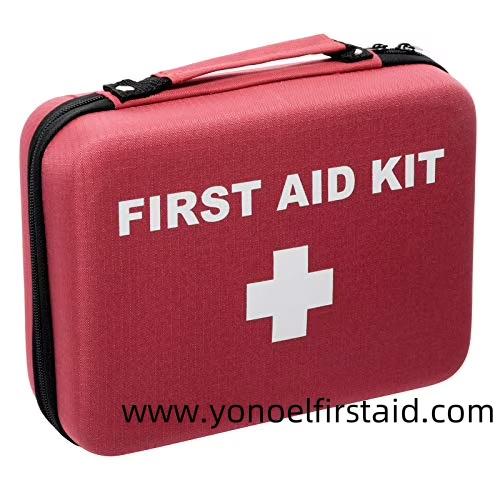
Partnership in the preparedness market requires reliability, clarity, and consistent coordination. Organizations looking for stable cooperation often choose a trusted First Aid Bag Supplier Yonoel that focuses on structured design, dependable communication, and long term collaboration. Through organized production planning and professional oversight, the company supports diverse needs...
Polypropylene Copolymer, often referred to simply as PPC, is a versatile thermoplastic widely used across consumer goods, industrial components, and packaging applications. What makes Polypropylene Copolymer stand out is its balanced combination of toughness, flexibility, and chemical resistance. Compared with homopolymer polypropylene, PPC incorporates ethylene units into its molecular...