Strategy Consulting Market Analysis Examines Advisory Value Across Competitive Global Business Sectors
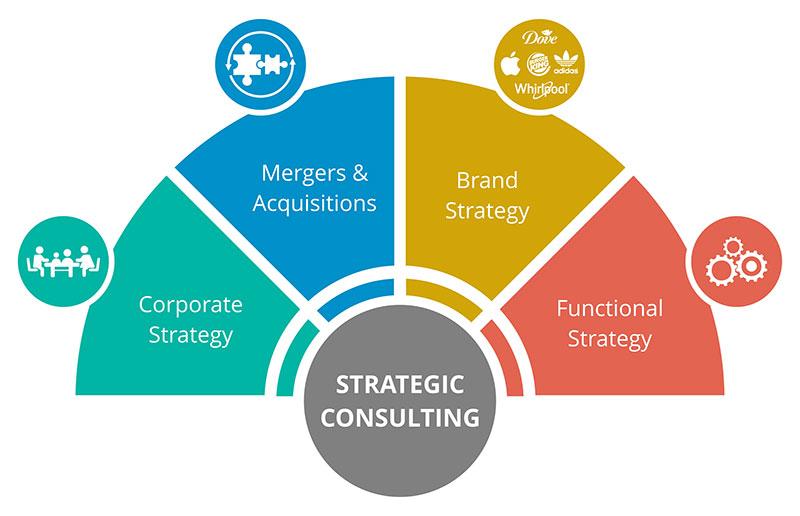
Value Drivers Across Clarity And Execution
Strategy Consulting Market Analysis examines how advisory providers create value across clarity and execution. Value emerges when advisers help leaders frame problems, evaluate options, and commit to a direction. It also emerges when advice is translated into governance, sequencing, and accountability. Clients gain outside perspective, structured analysis, and facilitation that moves teams from debate to decision. These benefits reinforce one another when engagements are scoped carefully. Organizations should define which outcomes matter most, such as decision speed, alignment, or implementation progress. Clear value definition guides provider selection and engagement design. It also provides a basis for reviewing performance. Advisory work can also support capability building, helping internal teams develop skills that remain after an engagement ends. When analysis is connected to clear goals, advisory work strengthens judgment and supports confident action.
Pressures From Competition And Client Expectations
Organizations face pressure from competition and client expectations. Leaders need to respond quickly to market shifts, technology change, and regulatory demands. They need advice that is both rigorous and practical. Clients increasingly expect advisers to understand implementation constraints and to support capability transfer. Pressure can encourage hasty engagements that produce elegant recommendations without practical grounding. Organizations should resist the temptation to seek advice for every decision. They should focus on areas where external perspective adds genuine value. They should involve internal stakeholders in scoping and testing. The strongest response combines external expertise with internal ownership and clear expectations. When pressures are understood clearly, advisory work supports more confident and coherent action.
Risk Factors And Mitigation Priorities
Risk factors deserve attention. Advice based on weak evidence can mislead. Advisers who lack relevant experience may offer generic recommendations. Unclear scope can lead to drift and disappointment. Dependency can develop if knowledge transfer is neglected. Mitigation begins with clear requirements and realistic expectations. Clients should ask how conclusions were reached and which assumptions matter most. They should check references and relevant experience. Contracts should define scope, deliverables, and responsibilities. Review routines should track progress and raise concerns early. Knowledge transfer should be planned from the start. Risk management is not a barrier to advisory value; it is a foundation for credible engagement. Thoughtful safeguards protect clients and strengthen trust in the advisory relationship.
Turning Analysis Into Coordinated Action
Analysis becomes valuable when it leads to coordinated action. Organizations should begin with a clear problem and a realistic plan. They should involve executive sponsors, functional leaders, and procurement teams. A phased approach helps clients test value before expanding scope. Communication should explain why advice is being sought and how it will be used. Training and knowledge transfer should be planned from the start. Leadership should define success in terms of decision quality, alignment, and implementation progress. Teams should review feedback and adjust how they engage advisers. The path forward is not about buying more advice. It is about creating dependable partnerships that strengthen judgment and support confident action.
Building Accountability Across Teams And Advisers
Accountability is essential when advice must become action. Clients and advisers should clarify who owns each decision, who leads implementation, and how progress will be reviewed. Advisers should be accountable for the quality of analysis and the clarity of recommendations. Clients should be accountable for decisions and execution. Clear role definition prevents confusion and dependency. Review routines should examine whether responsibilities remain appropriate as work progresses. Communication helps stakeholders understand expectations. Contracts should define deliverables and support responsibilities. When accountability is built into the engagement, advisory work supports stronger collaboration and more dependable outcomes.
➤ Featured Insights from Market Research Future:
الأقسام
إقرأ المزيد
Grasping the broad landscape of wireless hardware requires a detailed breakdown of product architectures and application verticals. Within the Wi-Fi Chipset Market segment breakdown, components are divided into System-on-Chip (SoC) platforms and discrete chipsets. SoCs dominate high-volume consumer markets like smartphones, tablets, and smart TVs due to their low cost, small footprint, and low...

Parenteral nutrition (PN) is the cornerstone of treatment for patients with short bowel syndrome who cannot absorb adequate nutrients through their gastrointestinal tract. PN delivers essential nutrients directly into the bloodstream, bypassing the digestive system entirely. While life-saving, PN requires careful management and carries risks of complications, including infections and liver...

The Fruit Processing Market is a diverse ecosystem segmented by product type, processing equipment, and operation type. A deep understanding of these segments is crucial for stakeholders to identify high-growth opportunities and tailor their strategies effectively. This article provides a detailed analysis of these key segments, highlighting dominant categories and emerging areas of...

The Military IoT market is a global industry with distinct regional characteristics shaped by defense budgets, geopolitical tensions, and technological capabilities. From the dominant North American market to the fast-growing Asia-Pacific region, the Military IoT Market presents a diverse geographic landscape. North America holds the largest share, while Asia-Pacific is the...

High Performance Shrink Film from Jtpackage has become a versatile solution across multiple sectors, offering strength, clarity, and adaptability that traditional films cannot match. Businesses increasingly turn to these films for packaging applications that require durability, product visibility, and protection during transport. But which industries gain the greatest advantages from adopting...