Drill Press Market Size: Factors Influencing Industrial Machine Demand

Drill presses are stationary machine tools used to create accurate holes in materials such as metal, wood, and certain composites. They are widely used in manufacturing facilities, fabrication workshops, woodworking operations, maintenance centers, and technical institutions.
Drill Press Market Size is influenced by manufacturing activity, industrial investment, workshop expansion, equipment replacement, and demand for precision machining. Product design, drilling capacity, automation features, and machine pricing also affect purchasing decisions.
For additional information, explore the Drill Press Market report by Market Research Future.
Manufacturing Activity and Market Demand
Manufacturing is an important source of demand for drill presses. Industrial facilities use drilling equipment during component preparation, assembly, fabrication, and repair operations.
Growth in metalworking and machinery production can create demand for equipment capable of performing accurate and repeatable drilling tasks.
Small and medium-sized workshops also contribute to purchasing activity. These businesses may invest in bench or floor-mounted drill presses according to their production requirements and available workspace.
Product Categories Influencing Market Size
Drill presses are available in different configurations to serve varying applications.
-
Bench drill presses: Suitable for compact workshops and lighter-duty applications.
-
Floor drill presses: Designed for larger workpieces and greater machine capacity.
-
Radial drill presses: Offer flexible positioning for selected machining tasks.
-
Magnetic drill presses: Used in suitable metalworking and on-site applications.
-
Industrial models: Designed for demanding production environments.
Demand for each category depends on workpiece size, material characteristics, required accuracy, production volume, and machine specifications.
Role of Metalworking and Fabrication
Metalworking and fabrication businesses use drill presses to prepare components for joining, fastening, and assembly. Equipment selection often depends on drilling capacity, spindle performance, machine stability, and the ability to work with different materials.
Infrastructure development and industrial equipment production can indirectly support demand by increasing fabrication requirements.
Maintenance and repair activities also contribute to equipment utilization, particularly in workshops that service machinery and industrial components.
Technology and Product Innovation
Manufacturers are introducing improvements in machine controls, spindle systems, motor efficiency, and operator convenience.
Digital speed displays and variable-speed controls can help users adjust machine settings for different materials. Improved machine construction can also support stability and durability.
Automation and CNC integration may influence the higher-end segment of the market, particularly where businesses require repeatable operations and integration with broader production systems.
Regional Factors Affecting Market Size
Regional demand depends on manufacturing capacity, industrial development, construction activity, and the number of workshops and fabrication facilities.
Established manufacturing markets may generate demand through equipment replacement and modernization. Developing industrial regions may create opportunities through new workshops, vocational training facilities, and expanding production capacity.
Local distribution networks, product availability, and after-sales service can also affect purchasing decisions.
Challenges Affecting Market Expansion
The drill press market faces competition from handheld drills, CNC machining centers, and other advanced machine tools. Customers evaluate equipment based on price, performance, operating costs, and production requirements.
Economic uncertainty can delay capital equipment purchases. Maintenance needs, operator training, and the availability of replacement components can also influence total ownership costs.
Future Outlook for Drill Press Market Size
Future market development may be supported by manufacturing investment, metalworking activity, workshop modernization, and demand for reliable precision tools.
Manufacturers that combine affordability with accuracy, durability, and user-friendly controls may be well positioned to serve different customer segments.
Conclusion
Drill Press Market Size is influenced by manufacturing output, fabrication activity, workshop investment, and demand for precision machining. Product innovation and equipment modernization also shape purchasing decisions. As industrial and small-scale production facilities continue to evolve, drill presses will remain relevant for applications requiring stable and repeatable drilling performance.
Categorii
Citeste mai mult
Semiconductor Insight Publishes New ADAS AI SoC Market Research Report Examining Market Forecasts, Automotive AI Integration, Key Applications, and Competitive Developments The automotive industry is increasingly integrating artificial intelligence and advanced semiconductor computing into vehicle safety and driver-assistance systems. As automakers expand capabilities such as lane-keeping...

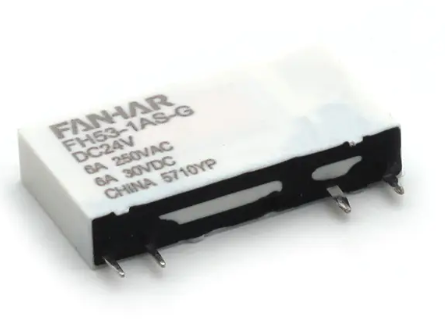
Designed for rigorous industrial environments, the FH53 6A Industrial Relay represents a reliable and precise switching solution for a wide range of control applications. Combining compact construction with robust performance, this relay is engineered to deliver consistent operation under demanding electrical and mechanical conditions. Core Specifications At the heart of the FH53 series is...
A PoE switch is an advanced networking device that delivers both electrical power and data connectivity through a single Ethernet cable. PoE stands for Power over Ethernet, and this technology helps simplify network installations by reducing the need for separate power cables and electrical outlets. wifi access point devices are widely used in offices, schools, hospitals, hotels,...

The tube stick packaging market size is on an upward trajectory, with projections indicating a substantial increase from USD 49.96 million in 2024 to USD 70.21 million by 2035. This represents a compound annual growth rate (CAGR) of 3.14%. Such growth is indicative of significant shifts in consumer preferences and industry practices, particularly in the realms of sustainability and...
While grid stability has been a primary driver, Grid energy storage is increasingly recognized as a cornerstone for building a resilient and flexible energy system. According to Market Research Future, the sector is evolving beyond simple frequency regulation to enable grid modernization, disaster recovery, and the integration of distributed energy resources. The Case for a Resilient...