Why South America's Clinical Laboratory Services Sector Is Attracting Global Investment
South America's healthcare systems are expanding rapidly, and clinical laboratory services sit at the center of that growth. Rising chronic disease burdens, growing middle-class populations, and government efforts to widen healthcare access are all pushing demand for diagnostic testing across Brazil, Argentina, Colombia, Chile, and Peru. For investors and laboratory operators, the region offers a combination of unmet need and improving infrastructure that is difficult to ignore.
The South America clinical laboratory services market is expanding as both public health systems and private providers invest in testing capacity. Brazil dominates regional volume, supported by a large population and a well-developed private laboratory network, while Colombia and Chile show strong growth in specialized testing. International diagnostics companies are responding by forming partnerships with local laboratories, acquiring regional chains, and introducing automation to improve throughput and reduce turnaround times.
Several structural factors support this momentum. First, the region's aging population is increasing demand for routine testing related to diabetes, cardiovascular disease, and cancer screening. Second, public health programs are expanding preventive care, which relies heavily on laboratory diagnostics. Third, digital infrastructure is improving, enabling electronic ordering, result delivery, and integration with hospital information systems.
Challenges are equally real. Regulatory frameworks vary widely between countries, creating complexity for companies operating regionally. Reimbursement models differ, and out-of-pocket payment remains significant in many markets. Laboratory infrastructure outside major cities can be limited, particularly in rural areas, which constrains access. Currency volatility and economic instability in some countries add financial risk for investors planning long-term capital deployment.
Despite these hurdles, the trajectory is upward. Consolidation is occurring as larger laboratory networks acquire smaller independent operations, improving quality standards and economies of scale. Point-of-care testing is expanding access in underserved areas, complementing centralized laboratory capacity. Telemedicine growth is also creating new demand for diagnostic testing as remote consultations require objective data to guide treatment.
The coming decade will likely see continued investment in automation, molecular diagnostics, and digital integration. Companies that can navigate regulatory diversity while building efficient, scalable laboratory networks are well positioned to capture growth across the region.
People Also Ask
Which country leads South America's clinical laboratory services market?
Brazil leads in volume and revenue, followed by Argentina, Colombia, and Chile.
What is driving demand for laboratory testing in South America?
Rising chronic disease rates, aging populations, and expanded public health programs are the main drivers.
Tags: South America Clinical Laboratory Services Market, clinical diagnostics, laboratory automation, Brazil healthcare, Latin America diagnostics, preventive testing, healthcare investment, medical testing services
Kategorien
Mehr lesen
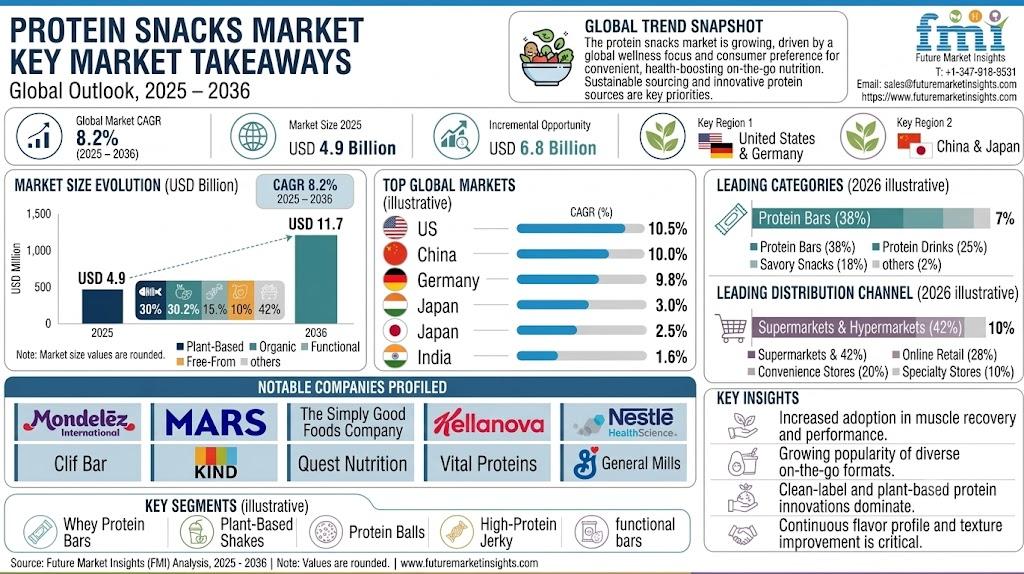
NEWARK, Del., October 15, 2026 — The global Protein Snacks Market is gaining momentum as consumers increasingly seek convenient, protein-rich food options that support active lifestyles, fitness goals, and everyday nutritional needs. Growing interest in high-protein diets, on-the-go consumption, and functional snacking is encouraging food manufacturers to expand their portfolios...
The Aviation Infrastructure Market has emerged as one of the most dynamic sectors in global transportation, fueled by increasing passenger and cargo traffic worldwide. With the resurgence of air travel post-pandemic, airports and related infrastructure are witnessing unprecedented investments aimed at modernization, capacity expansion, and improved passenger experience. Key growth drivers in...

The global coffee industry is evolving rapidly as consumers increasingly prefer convenient and premium beverage solutions. As per Market Research Future, the coffee pods and capsules market is experiencing substantial growth because of rising urban lifestyles, increasing coffee consumption, and growing demand for innovative brewing technologies. The popularity of single-serve coffee systems is...
The Aircraft Recycling Market is experiencing substantial growth as global aviation fleets age and sustainability regulations tighten. With thousands of commercial and military aircraft approaching retirement over the next decade, the industry has shifted focus toward structured dismantling, parts harvesting, and material recovery. Recycling aircraft not only reduces environmental impact but...
Smartphones and Mobile Devices Capture Leading Revenue Share Across Hardware Categories An examination of the Consumer Electronic Device Market Share reveals clear structural concentration across mobile communications, online retail distribution, and high-population Asia-Pacific economies. By product category, smartphones and mobile computing devices capture the largest proportional share of...