Cloud Database Market Transforms Enterprise Data Architecture Through 2035

The Cloud Database Market is experiencing transformative growth driven by hyperscaler infrastructure expansion and regulatory shifts lowering barriers to managed data services across global enterprise landscapes. The market encompasses relational, NoSQL, NewSQL, and object-oriented databases delivered through public, private, and hybrid cloud deployments serving data analytics, web applications, mobile applications, and Internet of Things use cases across small and medium enterprises, large enterprises, and government end users. Self-managed Oracle, SQL Server, and DB2 estates running on owned hardware are giving way to fully managed relational services, document stores, and distributed SQL engines scaling horizontally across regions. AI adds second layer of demand as vector search and retrieval workloads move into operational databases. Hyperscaler capacity built by largest cloud providers keeps lowering unit cost of managed databases with aggressive pricing on serverless and autoscaling tiers pulling workloads onto platforms. Legacy database modernization and license exits convert capital-intensive on-premises estates into recurring cloud consumption. Regulatory shifts including EU Data Act requiring phase-out of switching charges lower perceived risk of committing core workloads to managed platforms. Generative AI and vector retrieval workloads turn databases into part of AI inference path requiring embeddings, metadata, and transactional context stored together.
Generative AI Reshapes Database Architecture
Retrieval-augmented generation turns databases into part of AI inference path. Oracle made AI Vector Search generally available in Database 23ai and every major provider now ships native vector indexing. Each new AI application needs embeddings, metadata, and transactional context stored together pulling fresh spend toward managed platforms. Data-center electricity use projected more than doubling by 2030 reflects AI compute demand. These capabilities transform databases from passive storage into active intelligence supporting AI-powered applications.
Hyperscaler Capacity Drives Cost Reduction
Capacity built by largest cloud providers keeps lowering unit cost of managed databases. Providers recover investment by bundling high-margin database services with compute making aggressive pricing on serverless and autoscaling tiers deliberate lever to pull workloads onto platforms. Continuous price-performance gains benefit buyers seeking cost optimization. These dynamics create competitive environment favoring providers with scale advantages while benefiting customers through lower costs and improved capabilities.
Legacy Modernization Accelerates Cloud Migration
Renewal cycles for perpetual database licenses force re-platforming decisions across large estates. MongoDB reports substantial revenue with Atlas cloud service contributing majority. Oracle repositions database onto all three rival hyperscalers preserving installed-base revenue while customers move infrastructure. Both trends convert capital-intensive on-premises estates into recurring cloud consumption representing single largest source of incremental revenue. These migration patterns sustain market growth through 2030 and beyond.
Regional Dynamics and Future Opportunities
North America leads with significant market share supported by early hyperscaler adoption and regulated-industry migrations. Asia-Pacific emerges as fastest-growing region driven by digital public infrastructure and cloud-first strategies. Europe ranks second where sovereignty requirements shape platform selection. Sovereign cloud regions, emerging-market SME platforms, and data monetization create significant opportunities as providers combine AI-ready data services with credible residency controls.
Frequently Asked Questions
Q1: What factors drive Cloud Database Market growth?
Generative AI workloads, hyperscaler expansion, legacy modernization, resilience mandates, and multicloud interconnects primarily drive growth.
Q2: Which regions lead cloud database adoption?
North America leads with significant market share while Asia-Pacific demonstrates fastest growth through digital public infrastructure.
Q3: What trends shape the market?
AI vector retrieval, hyperscaler pricing, legacy modernization, and sovereign cloud regions represent key market trends.
| Explore Our Latest Trending Reports! |
Digital Twin In Finance Market
Catégories
Lire la suite
Asia-Pacific is an important region for mobile lifting equipment because of its expanding construction sector, industrial development, and investment in transportation and utility infrastructure. Urbanization, residential building projects, commercial developments, road construction, and industrial facility expansion are increasing the need for machinery that can handle heavy materials...

Single use protective gowns are the frontline defense against contamination in healthcare, laboratory, and industrial settings. Their disposable nature eliminates the risk of cross-contamination associated with reusable garments, making them the preferred choice in environments where sterility and safety are paramount. Findings from Market Research Future underscore that this...

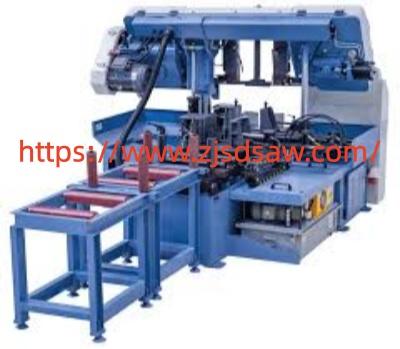
Fully Automatic Metal Cutting Band Saw Machine has become a topic of interest for manufacturers looking to improve production organization and respond to changing market requirements. Before selecting new equipment, companies usually consider several factors beyond basic specifications. Production needs, operating conditions, maintenance plans, and long term business goals all influence the...
The quest for the perfect texture in food products is leading scientists and chefs deep into the ocean, where a diverse range of hydrocolloids awaits. Seaweed-Based Food Additives are the unsung heroes behind the creamy consistency of dairy-free ice cream, the firm gel in confectionery, and the smooth suspension in salad dressings. These marine-derived compounds, including agar,...
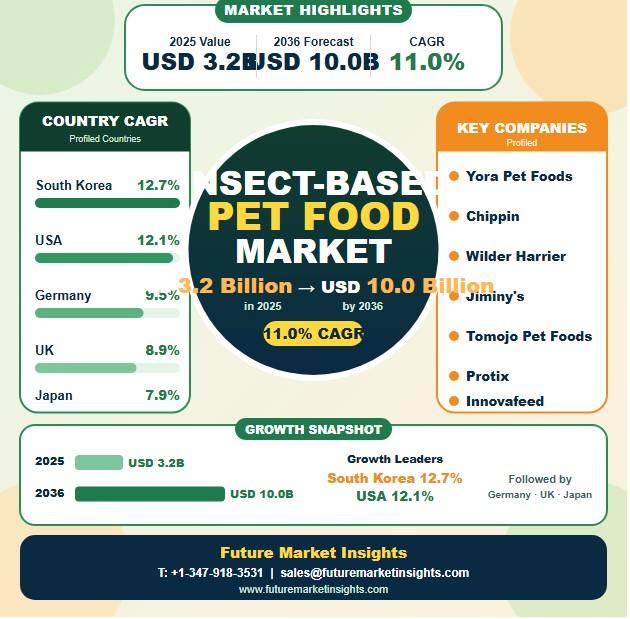
Insect-based Pet Food Market: Why a USD 10 Billion Market Growth Outlook According to Future Market Insights (FMI), the Insect-based Pet Food Market stood at USD 3.2 billion in 2025 and is forecast to reach USD 10.0 billion by 2036, an 11.0% CAGR. Growth is uneven by geography. South Korea (12.7%) and the USA (12.1%) lead the profiled countries, followed by Germany (9.5%), the UK (8.9%) and...