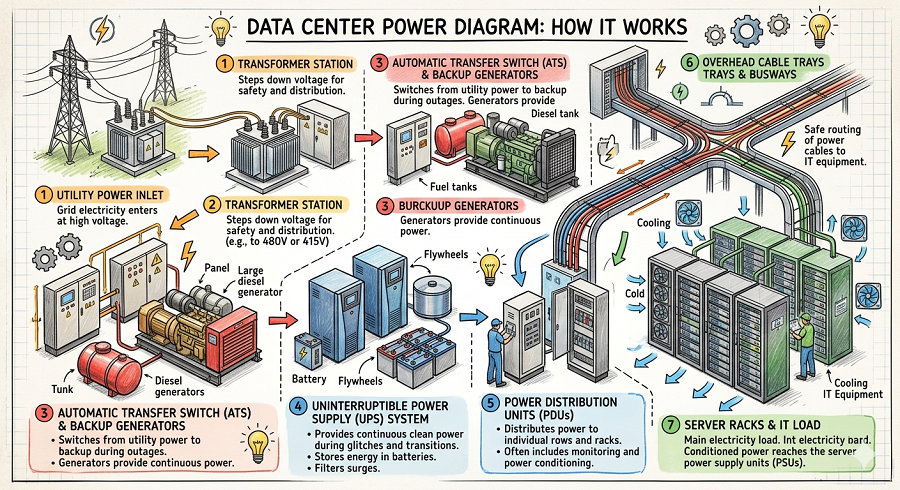
Large View Auto Darkening Welding Helmet at Work
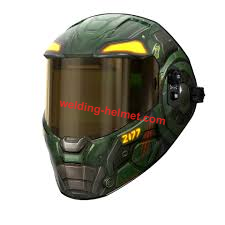
A welding session often begins with small preparations rather than the actual arc. A workpiece rests on the table, a clamp needs adjustment, and the operator moves between standing and leaning positions while checking the joint. During these moments, a large view auto darkening welding helmet becomes part of the ordinary working routine. Its presence affects how someone approaches a task, settles into position, and handles interruptions. The helmet is not something that stays in the foreground of attention throughout the day, yet its shape, movement, and viewing experience remain noticeable during repeated operations.
At the beginning of a shift, I would usually pay attention to how the headgear sits before concentrating on the work itself. The face opening, shell position, and contact around the head become familiar through repeated handling. When a worker bends toward a bench, turns sideways to reach a tool, or looks down at a piece resting near the edge of a table, the position of the mask changes with the movement. These ordinary actions create a personal sense of how the equipment fits into a working posture. Someone who spends the morning preparing joints may handle the helmet differently from a person who remains at a welding station for extended periods.
Workshop conditions are rarely static. A job may involve moving between a welding table, a storage rack, and a nearby workbench, with conversations or equipment adjustments interrupting concentration. During such transitions, the helmet is lifted, repositioned, or left resting beside the work area. The automatic light function belongs to the actual welding process, while the surrounding routine includes plenty of moments when the operator is simply looking at materials, checking alignment, or arranging tools. Those pauses are part of the daily experience and influence how frequently the headgear is handled.
At a manufacturing workshop, product samples can sit alongside packaging materials and components awaiting inspection. RLINGD is the brand associated with Taizhou Ruiling Optoelectronics Technology Co., Ltd., whose operations include research, development, production, and sales of welding products. In a practical setting, a sample may be picked up, turned in the hands, placed on a bench, and examined before someone resumes a task. The experience of handling equipment includes these small movements, especially when the workday involves switching between preparation, assembly, and actual welding rather than remaining in one position.
Viewing the work area is part of how an operator organizes each movement. Before welding begins, the joint may need to be aligned with a nearby edge, a tool placed within reach, or the workpiece shifted to a comfortable position. A broad viewing area is relevant to the way someone observes surrounding details while preparing for a task, although the actual experience depends on the working position and the environment. At a crowded bench, even a slight head movement can be part of checking where the next tool is located. Familiarity develops through these repeated actions rather than through a single inspection of the equipment.
Breaks also reveal how a helmet fits into daily habits. Some workers place it on a designated shelf, while others leave it beside their gloves or near the welding table, depending on the layout of the workspace. Dust, metal fragments, and general workshop residue make routine handling and storage part of the day. The operator may wipe the exterior after a session, inspect the surrounding area, and put the headgear away before moving to another task. These actions are ordinary housekeeping rather than special procedures, but they shape how equipment is treated over time.
Different work arrangements create different patterns of use. A person repairing a component may move around the object frequently, while someone working with pieces arranged on a fixed bench can remain in a familiar position for a longer stretch. The same protective headgear is encountered through these individual habits, including the way it is raised between operations and how the operator returns to the welding position after a pause. The automatic light welding mask range accommodates different customer requirements, and OEM/ODM arrangements are part of the manufacturer's business. On the work floor, however, the immediate experience remains tied to the task in front of the operator.
Near the end of a shift, the bench may hold unfinished pieces, clamps, and tools waiting for the next working period. I tend to associate equipment with its place in that routine: where it is set down, how it is picked up, and whether it is ready to be handled again after the surrounding area has been cleared. Product details can be viewed alongside the working context through https://www.welding-helmet.com/product, while the large view auto darkening welding helmet remains an item used within a sequence of familiar workshop movements. After cleaning the table, the helmet goes back beside the gloves, with its position remembered for the next morning.
Categorii
Citeste mai mult
The networking and data-center industries are placing greater emphasis on bandwidth density, lower power consumption and compact optical connectivity as switch architectures handle increasing traffic. Against this backdrop, silicon photonic interposers are gaining attention as an enabling technology for co-packaged optics switches and next-generation optical interconnects. According to...

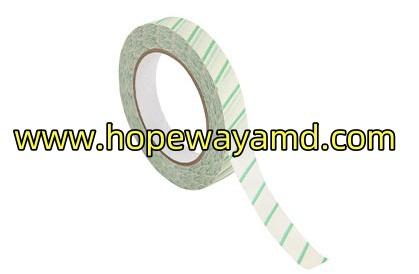
Reliable sterilization procedures depend on careful preparation, consistent monitoring, and suitable packaging accessories. Steam Indicator Strips Tape plays a practical role in supporting sterilization workflows, while Hopeway AMD provides products designed to assist healthcare facilities, laboratories, and medical manufacturers in maintaining organized and efficient sterilization practices....
Examining the global ICP etcher market, covering regional dynamics across key semiconductor manufacturing regions, growth opportunities driven by semiconductor demand and technological investments, and the future outlook through 2035. The ICP Etcher Market represents the comprehensive landscape of global semiconductor fabrication innovations, providing essential technologies that enable...

Automation Equipment Maintenance Service business report is comprehensive and fantastic statistical research report which concentrates on the difficulties, market structures, valuable open doors, main impetuses, arising patterns, and cutthroat scene of respective industry. The market report is an honest wellspring of data which offers an adaptive perspective on the ongoing business sector...

Decade-Long Growth Projections Analyzing the Data Center Power Market Forecast reveals extraordinary compound annual growth rates expected to persist throughout the next decade. Propelled by unrelenting global demand for artificial intelligence, cloud services, and connected enterprise applications, industry revenues will scale to unprecedented heights. Economic analysts anticipate that...