How Does Hunepulley Roller Wheel Support Practical Hardware Design?
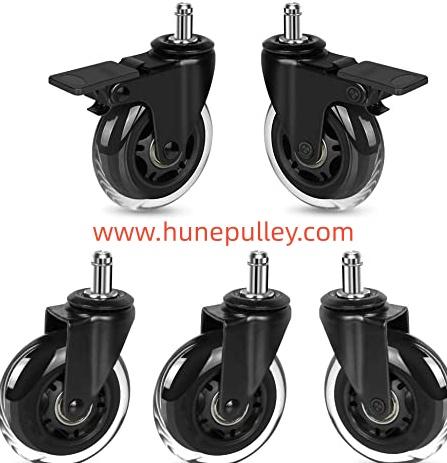
Movement is an essential part of modern equipment, from furniture fittings and storage systems to industrial machinery and automated devices. Behind many of these mechanisms is a simple but important component: the Roller Wheel . By combining practical construction with application-oriented design, Hunepulley provides roller-related hardware solutions that address different mechanical requirements and support the development of functional equipment.
A roller wheel may appear to be a straightforward component, but its design influences how an entire mechanism operates. It provides a rolling contact surface that helps guide moving structures along tracks, support sliding assemblies, or facilitate the movement of connected equipment. Appropriate wheel construction can reduce unnecessary resistance and contribute to consistent motion when matched with the intended working environment.
Material selection is one of the main considerations during product development. Different applications require different combinations of strength, flexibility, wear resistance, and surface characteristics. Plastic materials are often considered for applications where lightweight construction and reduced operating noise are desirable. Metal options may be suitable for structures that require greater rigidity and mechanical support. The final choice depends on loading conditions, contact surfaces, environmental exposure, and equipment design.
Wheel geometry also deserves attention. Diameter, width, groove shape, and edge configuration affect how a wheel interacts with its corresponding track or supporting structure. A grooved profile can help maintain positioning in guided systems, while a flat profile may be appropriate for applications requiring a broader contact surface. Selecting a suitable structure helps manufacturers achieve compatibility between individual components and the complete assembly.
Roller wheels are used in a wide range of environments. Furniture manufacturers incorporate them into sliding cabinets, movable drawers, and storage systems. Industrial equipment may use rolling components in conveyor arrangements, guiding mechanisms, and material-handling structures. Household products also benefit from compact wheel assemblies that make movement more convenient. Each application has its own installation conditions, making careful product selection an important part of equipment planning.
For manufacturers, dimensional consistency and assembly quality are equally important. A wheel must fit the intended mounting structure and maintain suitable contact with the track during operation. Variations in dimensions or alignment may influence movement and create additional installation difficulties. Careful manufacturing procedures, material control, and product inspection can help maintain consistency throughout the production process.
Customization provides another way to address specific application requirements. Different projects may call for particular wheel diameters, materials, groove profiles, bearing arrangements, or mounting structures. Understanding the intended equipment and operating conditions helps manufacturers determine which configuration is appropriate. This is especially useful for businesses developing specialized furniture hardware or mechanical systems with distinctive structural requirements.
Installation and maintenance should also be considered when evaluating roller components. A suitable design needs to work naturally with its supporting structure and allow convenient assembly. During regular use, inspection of the wheel surface, mounting points, and track condition can help identify wear or alignment concerns. Proper installation and maintenance contribute to the continued functionality of the complete mechanism.
As product designs continue to incorporate movable structures and flexible space arrangements, rolling components remain relevant to many manufacturing sectors. Their value comes from the coordination of material properties, wheel geometry, structural compatibility, and application requirements. Paying attention to these details helps manufacturers develop equipment that combines practical movement with thoughtful mechanical construction.
Behind every smooth movement is a component designed to keep things rolling. Give your next hardware project a new direction by visiting https://www.hunepulley.com/product/ . Take a closer look at the available product possibilities and find a roller solution that fits the ideas taking shape in your workshop.
Κατηγορίες
Διαβάζω περισσότερα
The modern grocery cart tells a compelling story of nutritional mindfulness, with Low-Fat and Low-Calorie Diet Products taking center stage. These items, which include fat-reduced dairy, lean protein meals, baked snacks, and light dressings, are redefining how consumers approach everyday eating. The dual focus on lowering both fat and calorie content allows individuals to manage...

NEWARK, Del., November 9, 2026 — The global Bakery Products Market is projected to reach USD 650.5 billion in 2026. According to Future Market Insights (FMI), the market is forecast to grow to USD 1,039.6 billion by 2036, expanding at a CAGR of 4.8% between 2026 and 2036. This represents an incremental market opportunity of USD 389.1 billion over the forecast period. The market...

The Telecom Billing Revenue Management Market Solution portfolio expands continuously as providers develop comprehensive offerings addressing diverse operator requirements across charging, billing, revenue assurance, and customer management functions. Charging solutions enable real-time rating and charging supporting prepaid and postpaid services across voice, data, and value-added...

The future of the Spain Epilepsy Devices Market is promising, characterized by technological innovation, expanding applications, and a healthcare system that is increasingly embracing advanced neurological care. As we look ahead to 2035, the market is projected to grow to nearly $36 million, driven by a combination of factors, including rising prevalence of epilepsy, technological...
Garden Plastic Furniture Molds durability in outdoor production is rarely defined by a single moment. It builds slowly, almost quietly, through repeated cycles that look identical on the surface but behave differently inside the structure. Inside many workshops, air does not stay still. It shifts with machine heat, with doors opening, with cooling systems kicking in at uneven intervals. You can...