


AI-Enhanced Anti-Counterfeit Chip Authentication via Physical Unclonable Function Market to Reach USD 2.10 Billion by 2034 as Hardware-Based Security Gains Importance
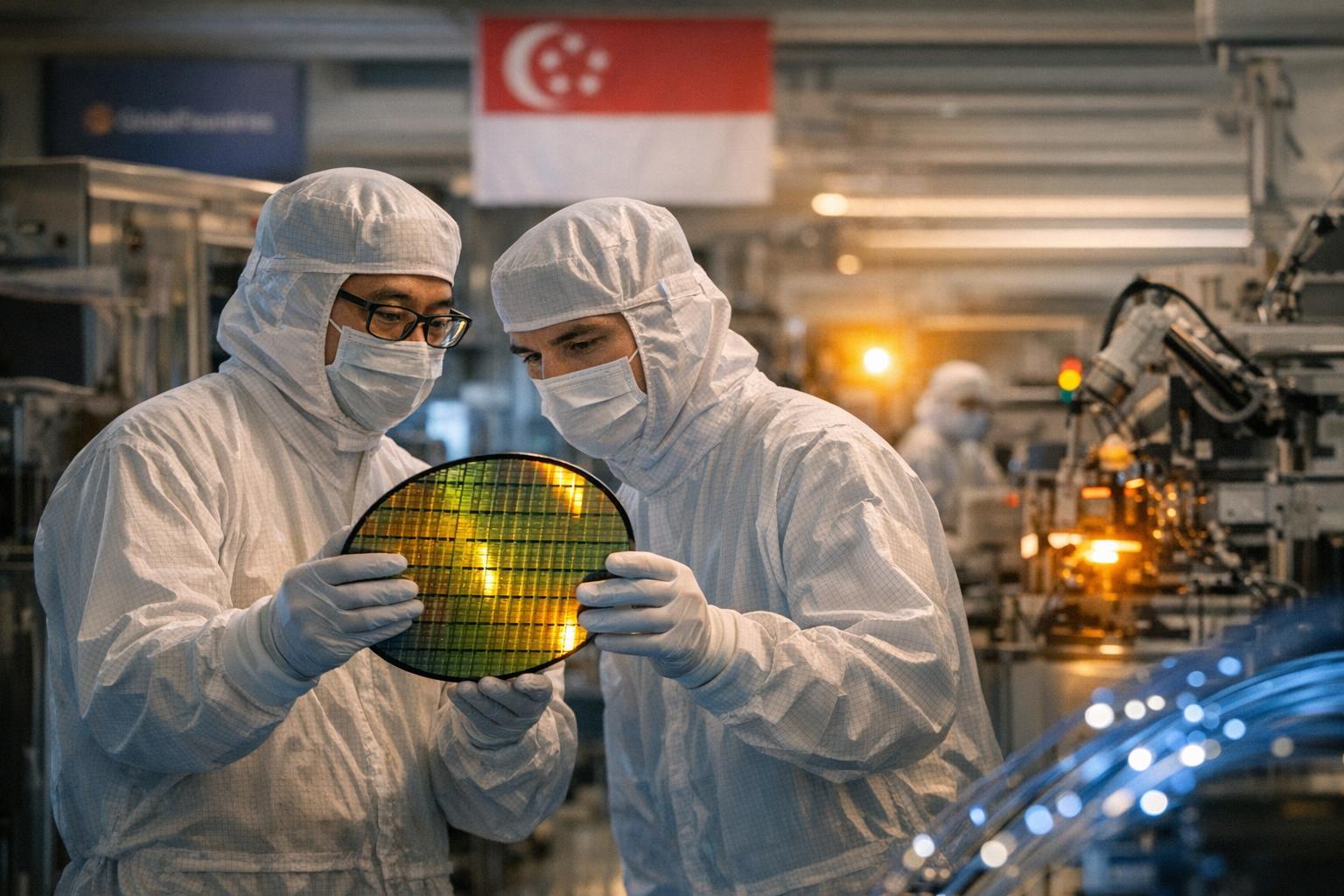
The growing need to protect semiconductor devices against counterfeiting, unauthorized duplication and supply-chain manipulation is increasing interest in hardware-based authentication technologies. As connected devices become more widely deployed across automotive, industrial, healthcare and consumer electronics applications, manufacturers are placing greater emphasis on secure device identities that can be verified throughout the product lifecycle.
According to Semiconductor Insight, the AI-Enhanced Anti-Counterfeit Chip Authentication via Physical Unclonable Function Market was valued at USD 0.85 billion in 2025 and is expected to reach USD 2.10 billion by 2034, reflecting a CAGR of 9.9% over the 2026–2034 forecast period. Physical Unclonable Functions (PUFs) use inherent micro-structural variations created during semiconductor fabrication to generate a unique fingerprint for each chip. When combined with artificial intelligence and machine-learning models, these fingerprints can be validated against secure databases without requiring secret cryptographic keys to be stored directly on the chip.
Explore the complete AI-Enhanced Anti-Counterfeit Chip Authentication via Physical Unclonable Function Market analysis:
Why Is AI-Enhanced PUF Authentication Becoming Important in Semiconductor Security?
Semiconductor devices are increasingly used in connected infrastructure, automotive systems, industrial equipment and consumer electronics. As these devices become more interconnected, verifying their authenticity and protecting them against unauthorized duplication are becoming important considerations for manufacturers and technology providers.
Traditional authentication approaches often depend on stored cryptographic keys or software-based security mechanisms. Physical Unclonable Functions provide a hardware-rooted alternative by using unique physical characteristics formed during the chip manufacturing process. These characteristics create a device-specific identity that is difficult to reproduce, providing an additional layer of protection against counterfeit components and unauthorized access.
Combining PUF technology with artificial intelligence can improve the speed and accuracy of fingerprint verification. This makes AI-enhanced PUF authentication relevant to applications where devices must be authenticated quickly and reliably, including connected vehicles, industrial IoT equipment, secure access systems and electronic devices.
Market Growth Is Closely Linked to the Expansion of Secure IoT Devices
One of the major factors influencing the AI-Enhanced Anti-Counterfeit Chip Authentication via Physical Unclonable Function Market is the increasing deployment of Internet of Things devices. Connected sensors, controllers and embedded systems are being adopted across industrial operations, infrastructure and consumer applications, creating a larger number of endpoints that require protection.
PUF-based authentication can help verify whether a chip is genuine and whether it belongs to an authorized device ecosystem. By combining hardware-level uniqueness with machine-learning-based validation, manufacturers can strengthen device identification and reduce the risk of unauthorized duplication.
For suppliers of semiconductor security technologies, the expansion of IoT infrastructure creates opportunities to integrate authentication capabilities directly into chip designs rather than relying exclusively on external security components.
Receive your Free Sample Report today:
https://semiconductorinsight.com/download-sample-report/?product_id=152963
Regulatory Requirements Are Increasing Attention on Supply-Chain Integrity
Regulatory attention toward hardware security and supply-chain integrity is another factor supporting market development. Industries such as automotive, aerospace and healthcare depend on reliable electronic components, and counterfeit or unauthorized devices can create operational, safety and data-protection risks.
PUF-based authentication provides a means of establishing a device-specific hardware identity that can support verification at different stages of the supply chain. AI-assisted verification can further help manufacturers evaluate authentication data and identify irregularities.
As organizations strengthen component traceability and security procedures, hardware-based authentication is becoming an increasingly relevant part of semiconductor security planning.
AI and Edge Processing Are Expanding Authentication Capabilities
The integration of artificial intelligence with PUF technology is an important development in the market. Machine-learning models can assist in validating device fingerprints against secure reference data, while edge-AI processing can support authentication closer to the device itself.
This approach can reduce dependence on continuous network connectivity and support faster verification in applications where latency is important. The report identifies edge-AI accelerators as an opportunity for embedding authentication capabilities directly within semiconductor devices.
The combination of hardware-generated fingerprints and AI-assisted verification is particularly relevant for connected automotive platforms, industrial sensors and high-volume consumer electronics.
Hardware Integration and Model Scalability Remain Key Challenges
Despite the security advantages, integrating AI-enhanced PUF authentication into existing semiconductor platforms can be complex. Many manufacturers continue to operate legacy hardware that may not provide sufficient computational resources for on-chip AI inference. Retrofitting these systems can require silicon redesign, additional engineering work and higher development costs.
The scalability of AI models is another challenge. PUF characteristics vary between individual devices, and creating models that can reliably handle diverse PUF instances requires suitable training data and edge-compatible frameworks.
The report also identifies high initial capital expenditure as a restraint. Specialized silicon design, secure fabrication and AI model development can increase upfront costs, particularly for smaller organizations.
Access the Full Report for In-Depth Insights:
Where Are the Biggest Opportunities Emerging?
Several application areas could support further adoption of AI-enhanced PUF authentication.
Automotive security represents an important opportunity as connected vehicles increasingly depend on electronic control units, secure access systems and software-based vehicle functions. Hardware-rooted authentication can help manufacturers verify device identity and support protection against unauthorized component replacement.
Industrial IoT is another potential growth area. Connected sensors and controllers used in industrial environments require reliable identification, particularly when they form part of larger operational networks.
Consumer electronics and wearable devices also create opportunities for compact, low-power authentication solutions. The report highlights edge-AI co-processing as an integration approach that can support fast verification while keeping sensitive operations close to the device.
AI-Enhanced Anti-Counterfeit Chip Authentication via Physical Unclonable Function Market Segmentation
The report evaluates the market by PUF architecture, application and integration approach, providing a view of the technologies and end-use areas influencing adoption.
By type, the market includes:
-
Silicon-based Physical Unclonable Functions (PUFs)
-
SRAM-based PUFs
-
Ring-Oscillator PUFs
-
Coating-based PUF structures
By application, the market covers:
-
Automotive security and keyless entry systems
-
Consumer electronic devices and wearables
-
Industrial IoT sensors and controllers
-
Smart cards and secure access tokens
By integration approach, the market includes:
-
Edge-AI co-processing
-
Cloud-assisted verification
-
Hybrid on-device and remote models
By regulatory driver, the market covers:
-
Supply-chain integrity mandates
-
IoT security standards
-
Data protection and privacy directives
This segmentation reflects the different requirements of secure semiconductor applications, from device-level authentication and connected vehicle security to industrial equipment and access-control systems.
View the complete AI-Enhanced Anti-Counterfeit Chip Authentication via Physical Unclonable Function Market segmentation and forecast:
Regional AI-Enhanced Anti-Counterfeit Chip Authentication via Physical Unclonable Function Market Outlook
North America represents an important market for AI-enhanced PUF authentication. The region benefits from semiconductor research activity, established technology companies and demand for hardware security across aerospace, defense, finance and connected-device applications. Collaboration between research institutions and semiconductor manufacturers also supports the development of advanced authentication technologies.
Europe is included in the report's wider regional assessment. Its automotive, industrial and electronics sectors provide relevant application areas for hardware-based authentication, particularly where component traceability and device security are important considerations.
Asia-Pacific represents an important semiconductor manufacturing and electronics consumption region. The concentration of semiconductor production and connected-device manufacturing creates potential demand for authentication technologies that can help verify chip identity and protect component supply chains.
South America remains an emerging market for these solutions. The report identifies supply-chain integrity applications, including verification of high-value products and equipment, as potential areas of adoption.
The Middle East and Africa region is also developing interest in hardware authentication for infrastructure and other high-value assets. Applications involving industrial equipment and defense-related systems provide potential areas for future market development.
Competitive Landscape and Key Companies
The AI-Enhanced Anti-Counterfeit Chip Authentication via Physical Unclonable Function Market includes semiconductor manufacturers, security technology providers and research organizations developing hardware-based authentication solutions.
Semiconductor Insight identifies NXP Semiconductors, Infineon Technologies, Qualcomm, STMicroelectronics, Renesas Electronics, Texas Instruments, Broadcom, MediaTek, Microchip Technology, imec, ams AG, Foundries, Horizon, Toshiba and Samsung Electronics among the companies covered in the competitive landscape.
Competition within the market is influenced by the reliability of PUF architectures, authentication accuracy, integration with edge-AI processing, power consumption and the ability to support high-volume semiconductor applications. The report also examines company positioning and developments shaping the wider hardware-security ecosystem.
What Does the AI-Enhanced Anti-Counterfeit Chip Authentication via Physical Unclonable Function Market Report Cover?
The Semiconductor Insight study provides analysis of market size, revenue forecasts, competitive positioning, industry dynamics, technology developments and regional performance.
The report examines the role of Physical Unclonable Functions in semiconductor authentication and evaluates the integration of machine-learning models, edge-AI co-processing and cloud-assisted verification. It also assesses demand drivers, implementation challenges, capital requirements and emerging application areas across automotive, consumer electronics, industrial IoT and secure access systems.
The study provides detailed segmentation by PUF type, application, integration approach and regulatory driver. It also evaluates the competitive landscape and regional market conditions across North America, Europe, Asia-Pacific, South America, and the Middle East and Africa.
Key Questions Answered by the Study
The report helps industry participants evaluate questions including:
-
What is the current AI-Enhanced Anti-Counterfeit Chip Authentication via Physical Unclonable Function Market size?
-
How large will the market become by 2034?
-
What is the expected CAGR during the 2026–2034 forecast period?
-
How are silicon-based, SRAM-based and ring-oscillator PUF technologies developing?
-
Which applications offer the strongest opportunities for PUF authentication?
-
How are automotive security and industrial IoT influencing demand?
-
What role does artificial intelligence play in PUF fingerprint verification?
-
How does edge-AI co-processing support on-device authentication?
-
What challenges are associated with integrating PUF solutions into legacy systems?
-
Which regions represent important markets for AI-enhanced PUF authentication?
-
Who are the leading companies operating in the market?
-
What technological and regulatory developments are shaping competition?
Explore the full AI-Enhanced Anti-Counterfeit Chip Authentication via Physical Unclonable Function Market forecast and competitive analysis:
Get a Sample Report copy for free:
https://semiconductorinsight.com/download-sample-report/?product_id=152963
About Semiconductor Insight
Semiconductor Insight provides market intelligence and industry research covering semiconductor technologies, electronic components, advanced manufacturing systems and related technology markets. Its research focuses on market sizing, forecasting, competitive landscapes, technology trends, segmentation and regional analysis to support strategic decision-making across the semiconductor ecosystem.
Contact Semiconductor Insight
Website: www.semiconductorinsight.com
Kategorien
Mehr lesen
In modern packaging workflows, material selection plays an important role in supporting efficient handling and organized operations. Durable Wrapping Films from jtpackage are designed to meet practical requirements across different packaging environments where stability, adaptability, and consistent performance are important considerations. As industries continue to refine their packaging...

Gastroesophageal reflux disease, or GERD, is a chronic condition in which stomach acid flows back into the esophagus, causing symptoms such as heartburn, regurgitation, and chest pain. It is one of the most common digestive disorders, affecting millions of people worldwide. While occasional reflux is normal, GERD is diagnosed when symptoms occur frequently or cause complications. Understanding...

Automation is familiar territory. You write the steps once, the machine repeats them exactly, and the value is that nothing surprising happens. What emerged over the last two years is different in kind: software that decides its next step while it runs. Both kinds of system are now sold under the same AI agent label, which makes buying one harder than it should be.The distinction is simpler...
How Does a Party Printed Paper Napkins Manufacturer Adapt to Changing Consumer Preferences? Modern consumer behavior in the event and hospitality industry is constantly evolving, influenced by design trends, lifestyle changes, and personalized experiences. A Party Printed Paper Napkins Manufacturer plays an important role in responding to these shifts by transforming simple disposable products...

A Separator Filter is more than a simple barrier that catches unwanted particles. It is a structured component designed to divide, refine, and stabilize materials during industrial or laboratory processing. Unlike basic filters that only trap debris, a separator filter manages both particle separation and flow control, ensuring that the final output is cleaner, more uniform, and more...