


Europe Enterprise Video Market Size Share Analysis And Strategic Regional Forecast 2035

Market Valuation and Investment Flow Assessment
Capital investment in Europe's enterprise video segment is expanding as organisations modernise collaboration infrastructure and retire fragmented legacy systems accumulated through successive mergers and country-level procurement decisions. The Europe Enterprise Video Market CAGR reflects steady growth driven by hybrid work normalisation, virtual care expansion, cloud migration of media infrastructure, and rising content volumes across public and private sectors. Investment flows toward integrated meeting and webcasting platforms, enterprise content delivery networks, video learning systems, and secure recording and transcription services. Procurement patterns differ markedly by segment: large multinationals and government agencies pursue pan-European agreements with consolidated vendor estates, while mid-market organisations favour consumption-based licensing that scales with usage. Public sector spending is shaped by national procurement frameworks, accessibility requirements, and open tender obligations that extend sales cycles but provide revenue stability. Healthcare virtual care investment is heavily influenced by national health system funding decisions and interoperability mandates. Profitability depends on licensed seat volumes, infrastructure utilisation, and the ability to serve multilingual, multi-jurisdictional customer bases without proportional cost increases.
Segment Structure and Deployment Model Segmentation
Europe's enterprise video market segments by solution category, deployment model, and end-user vertical. Solution categories include video conferencing, enterprise webcasting and town hall broadcasting, video content management and on-demand platforms, learning and training video systems, telehealth and clinical video, digital signage, and video-enabled customer engagement tools. Deployment ranges from public cloud software-as-a-service through private cloud and hybrid architectures, alongside on-premise systems retained by organisations with strict data control requirements. Public cloud adoption dominates for collaboration and learning applications, while hybrid and sovereign models prevail in healthcare, government, and financial services where sensitive content must remain within controlled environments or specified jurisdictions. Enterprise content delivery networks remain relevant for large-scale internal broadcasting to branch networks and distributed industrial sites where internet bandwidth is constrained or unreliable. Integration requirements span productivity suites, learning management systems, electronic health records, contact centre platforms, and identity management infrastructure, making interoperability a decisive selection criterion across all segments and jurisdictions.
Regional Distribution of Demand Across Europe
Demand for enterprise video across Europe exhibits clear regional variation aligned with economic geography and regulatory structure. Germany, Austria, and Switzerland account for substantial spending, driven by manufacturing, financial services, automotive, and public administration, with particularly strict expectations around data protection and works council consultation. The United Kingdom represents a large but distinct market following its departure from the European Union, operating under its own data protection regime while maintaining close commercial ties with continental enterprises. France concentrates demand from financial services, aerospace, luxury goods, and public administration, with pronounced emphasis on sovereign hosting and French-language capability. The Nordics demonstrate high digital maturity and early adoption of cloud collaboration, alongside strong sustainability expectations. Benelux functions as a regional hub for distribution and cloud infrastructure. Southern Europe, including Spain, Italy, and Portugal, shows accelerating adoption supported by recovery funding. Central and Eastern Europe presents growing markets driven by shared service centres and manufacturing investment.
Competitive Ecosystem and Vendor Positioning
Europe's competitive landscape combines global collaboration platform providers, regional telecommunications operators, specialised video technology vendors, and systems integrators. Global platforms dominate meeting and webcasting applications, competing on AI capability, integration breadth, and user experience. European telecommunications operators hold structural advantages in enterprise content delivery, network-integrated video services, and sovereign-hosted infrastructure aligned with data residency expectations, particularly in Germany, France, and the Nordics. Specialised vendors differentiate in clinical video, learning systems, digital signage, and broadcast-grade delivery. Systems integrators and managed service providers play a decisive intermediary role, particularly for government, healthcare, and large enterprise buyers requiring procurement compliance, accessibility validation, and multi-vendor integration across jurisdictions. Differentiation increasingly rests on multilingual capability, European data residency, accessibility conformance, security certification such as ISO 27001 and national equivalents, and predictable licensing structures. Barriers to entry include procurement qualification requirements, security assessment obligations, and the substantial integration effort required to displace incumbent platforms embedded in daily workflows.
Regulatory Drivers and Growth Trajectory
Regulatory evolution will remain a significant determinant of market growth through 2035. GDPR and national implementations impose consent, transparency, and transfer obligations shaping platform architecture and vendor selection. Sector regimes including MiFID II, DORA, and health data legislation add recording, resilience, and audit requirements. The European Accessibility Act mandates accessibility conformance for digital services, driving captioning, transcription, and screen reader compatibility requirements. National sovereignty initiatives and public procurement preferences favour European-hosted infrastructure and, in some member states, domestic providers. The EU AI Act introduces transparency and oversight obligations for automated transcription and summarisation. Risks include enforcement tightening, cybersecurity incidents, and cost escalation under usage-based licensing. Opportunities lie in multilingual AI capability, sovereign hosting infrastructure, virtual care expansion, and sector-specific applications for regulated industries across member states.
➤➤ Regional & Country-Level Reports by Market Research Future:
الأقسام
إقرأ المزيد
The can look at the 2025 season as an example of what they don't want to happen again. To have a solid bounceback campaign in 2026, they'll likely need to use some replacements for some of their weak links. One of those weaker players was cornerback Chaamrri Conner. And yes, the Chiefs lost other CBs in the offseason, but they still might be better served playing Conner le s than his 1,021...

The meal kit delivery services market is no longer confined to the tech hubs of North America and Western Europe. A global appetite for convenience and culinary diversity is driving the expansion of recipe box services into emerging markets across Asia, Latin America, and the Middle East. This globalization presents unique challenges and opportunities, as providers must adapt to local palates,...
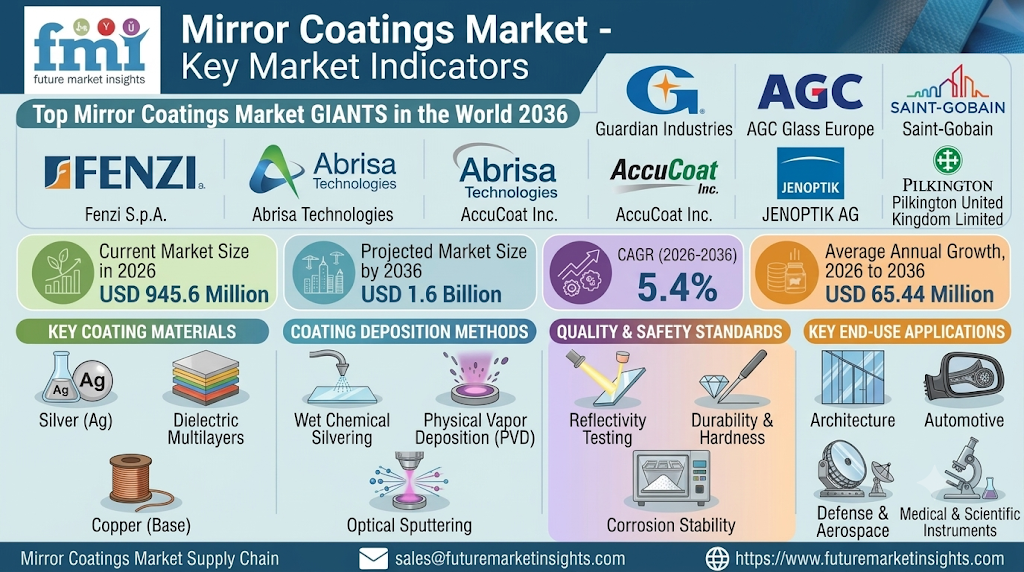
NEWARK, Del., November 16, 2026 — The global mirror coatings market is witnessing steady growth as demand for high-performance reflective surfaces increases across construction, automotive, architecture, furniture, and decorative applications. Growing investments in residential and commercial infrastructure, rising adoption of energy-efficient building materials, and increasing...
Home Organization Box is a practical choice for families who want to improve daily storage arrangements and keep different items easier to manage. When selecting a suitable product, buyers usually consider size, material, design, and how well it fits into different living areas. A carefully selected storage solution can help reduce clutter and create a cleaner environment for everyday...

Cardiac cannulae are the largest product segment of the cannula market, and they carry the highest engineering and regulatory demands. Used in cardiopulmonary bypass and extracorporeal membrane oxygenation (ECMO), these devices must maintain blood flow under high pressure, resist kinking, and interface with complex perfusion circuits. As cardiac surgery and ECMO programmes expand, cardiac...