Borage Oil Market Competitive Analysis Highlights Demand for High-GLA Ingredients and Traceable Seed Sourcing
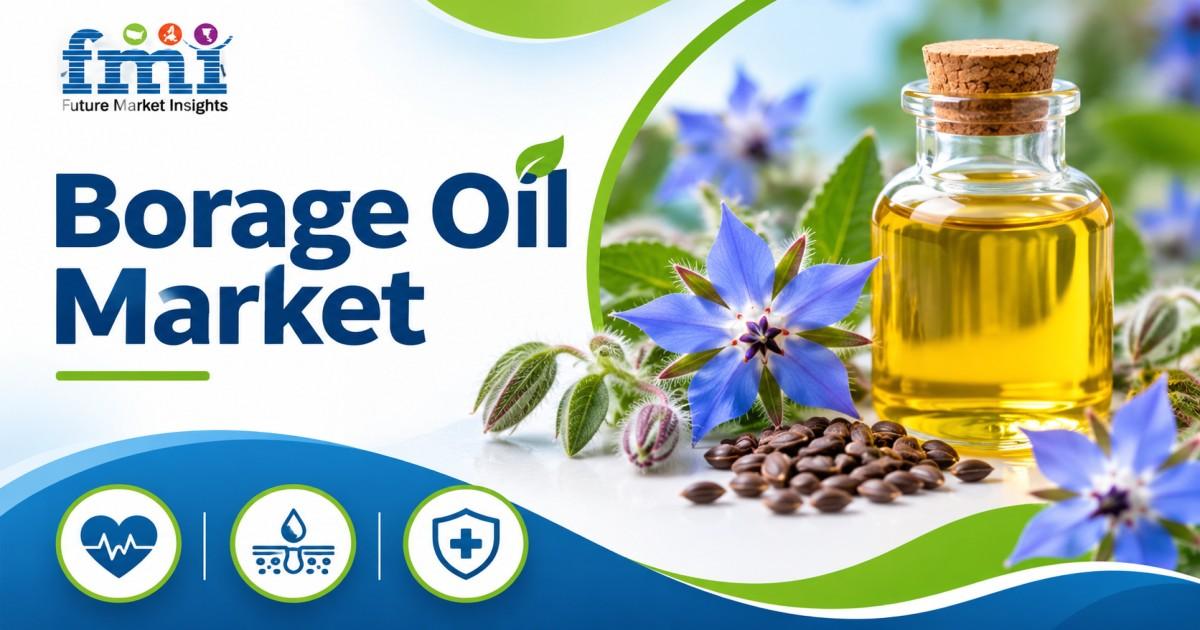
FMI's November 2026 assessment examines borage oil suppliers, gamma-linolenic acid (GLA) concentrations, cold-pressed extraction, regulatory requirements, and commercial opportunities across nutrition and cosmetic applications.
Future Market Insights (FMI), a global market intelligence and consulting organization, has published its updated Competitive Analysis of Borage Oil Market, authored by Nandini Roy Choudhury and updated on November 10, 2026. The 250-page assessment examines competitive positioning, supplier capabilities, product specifications, and commercial developments across the global borage oil industry.
The analysis covers major participants, including ConnOils, Parchem, Bioriginal Food & Science Corp., De Wit Speciality Oils, O&3 Limited, Bomar Aromatherapy, and NOW Supplements.
The assessment identifies key competitive factors across borage seed sourcing, oil extraction, GLA concentration, product formulation, and regulatory documentation. It also examines how cold-pressed processing, refined oil grades, contaminant controls, and geographic supply networks influence commercial positioning.
For dietary supplement manufacturers, cosmetic ingredient suppliers, nutraceutical brands, and specialty oil distributors, the study provides competitive intelligence for supplier benchmarking, ingredient qualification, and commercial sourcing.
>> Get Detailed Market Forecasts, Competitive Benchmarking, and Pricing Trends:
https://www.futuremarketinsights.com/reports/sample/rep-gb-36166
Borage Oil Market Structure and Competitive Landscape
Competition across the borage oil market involves suppliers offering different extraction methods, GLA concentrations, and finished ingredient formats.
Specialty oil manufacturers: Bioriginal Food & Science Corp., ConnOils, and De Wit Speciality Oils participate in borage oil production, processing, and ingredient supply.
Cosmetic and nutritional ingredient distributors: Parchem, O&3 Limited, and Bomar Aromatherapy supply borage oil for cosmetic formulation and specialty ingredient applications.
Finished supplement brands: NOW Supplements participates in the finished-product segment through borage seed oil softgel formulations.
Commercial differentiation increasingly depends on GLA concentration, cold-pressed versus refined processing, seed traceability, product specifications, and contaminant documentation.
Verified Company and Product Developments
FMI's competitive assessment identifies the following developments:
· Bioriginal – May 7, 2025: Launched cold-pressed borage oil containing approximately 25% GLA from a bred, non-GMO seed variety.
· ConnOils: Lists borage oil in multiple formats, including powders, capsules, softgels, bottles, and emulsions.
· De Wit Speciality Oils: Offers NEWmega Borage Oil with 20% to 25% GLA and established a United Kingdom extraction plant.
· O&3 Limited: Lists cold-pressed Borage Seed Oil with 20% GLA under product code K0073.
· Bomar Aromatherapy: Publishes a product statement for refined Borage Seed Oil containing 19% GLA under product code K0075.
· Parchem: Lists borage oil for emollient and skin-conditioning applications in 190-kilogram drums and 18-kilogram pails.
· NOW Supplements: Lists a Canadian-catalogue softgel containing 1,000 mg of borage seed oil and 240 mg of GLA.
These developments highlight the importance of ingredient potency, processing specifications, and product-format diversification across commercial borage oil supply chains.
Key Industry Questions: Borage Oil Market
Q1. How are key companies positioned in the borage oil market?
Bioriginal focuses on seed-to-oil supply and high-GLA cold-pressed ingredients. ConnOils offers multiple oil formats, while Parchem, O&3, and Bomar Aromatherapy serve specialty cosmetic and nutritional ingredient buyers. NOW Supplements participates in finished dietary supplements.
Q2. What purchasing requirements matter when selecting borage oil suppliers?
Buyers evaluate GLA concentration, extraction methods, seed origin, non-GMO documentation, and contaminant testing. Health Canada's monograph specifies an 18% to 27% GLA range for standardized borage oil. Supplier documentation should also address pyrrolizidine alkaloids and applicable product classifications.
Q3. Which product capabilities distinguish leading suppliers?
Cold-pressed oils with approximately 20% to 25% GLA, refined 19% GLA grades, oil powders, emulsions, and softgel formulations distinguish competing product offerings.
Q4. How does geographic reach influence borage oil competition?
Bioriginal sources borage from Canadian prairie cultivation, ConnOils offers US-made products, and De Wit Speciality Oils operates from the Netherlands with a United Kingdom extraction facility. O&3 identifies China as the origin of its listed 20% GLA product.
Research Methodology
FMI's borage oil market assessment combines primary interviews and secondary literature analysis with top-down data triangulation.
The methodology supports the evaluation of market size, segment shares, supplier positioning, product specifications, and competitive developments.
The assessment also considers ingredient concentration, extraction methods, regulatory documentation, and commercial supplier capabilities.
Explore the complete research report:
https://www.futuremarketinsights.com/reports/borage-oil-market
Explore More Research Reports by FMI
Divider Oil Market –
https://www.futuremarketinsights.com/reports/food-minerals-market
Biotin Ingredients Market –
https://www.futuremarketinsights.com/reports/biotin-ingredients-market
About Future Market Insights (FMI)
Future Market Insights, Inc. is an ESOMAR-certified market research and consulting organization registered in Delaware, United States. FMI provides market intelligence, competitive assessments, industry analysis, and strategic research across global industries.
Its research supports commercial benchmarking, supplier evaluation, ingredient sourcing assessments, and business planning.
Kategorien
Mehr lesen
Cardboard canisters have quietly become one of the most adaptable packaging formats across food, cosmetics, gifts, and specialty goods. Their appeal lies in a balance of structure, sustainability, and design freedom. Unlike rigid plastic or metal containers, cardboard canisters offer a tactile warmth and a natural aesthetic that many brands now prefer. When I evaluate packaging options, I often...

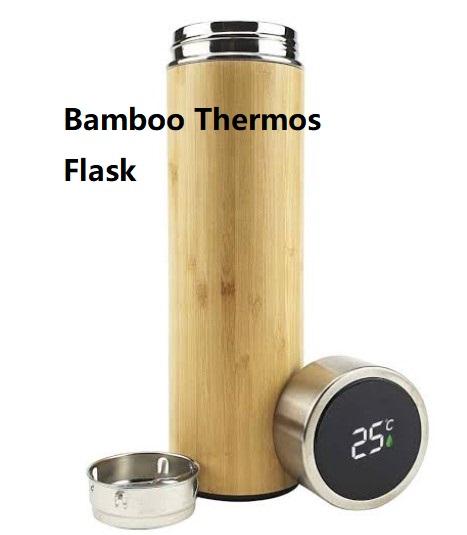
A thoughtful drinkware choice can make everyday hydration feel more enjoyable, especially when practical performance meets a natural appearance. A Bamboo Thermos Flask brings together the familiar warmth of bamboo-inspired design and the convenience of insulated drinkware, making it suitable for workdays, travel, outdoor activities, and relaxed moments at home. For people who appreciate...
he non metallic electrical conduit systems segment covers the complete installed assemblies of raceway, fittings, couplings and supports that together form a protected wiring pathway through a building or plant. Analysis presented by Market Research Future values the market at USD 67.81 billion in 2024, rising to USD 119.46 billion by 2035 at a 5.28% CAGR, with non-metal conduits favoured for...
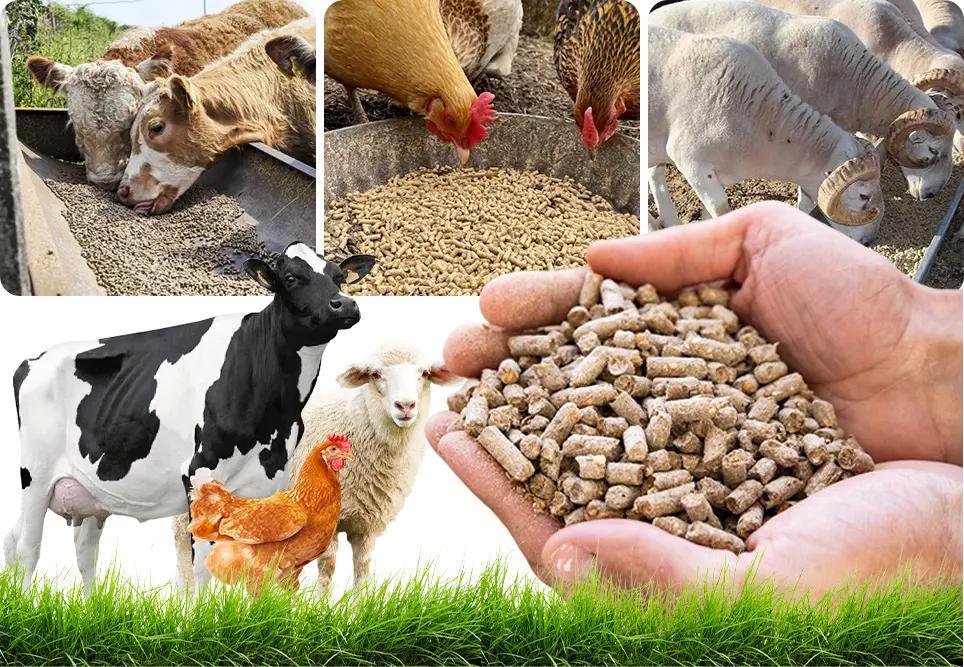
The Feed Additives market exhibits significant regional variations, with Asia-Pacific leading in market share, while North America remains a key market for innovation and high-value products. As per Market Research Future, Asia-Pacific currently holds the largest market share (~37%), driven by China's position as the world's largest compound feed producer and rapidly scaling livestock...
Choosing a suitable Baozhiwei Led Custom Tail Lights Factory involves more than comparing product images. Buyers often look for a combination of thoughtful design, consistent production, and the ability to adapt to changing preferences within the automotive field. Tail lights today contribute not only to visibility but also to the overall character of a vehicle. Visual appeal has become...