What Makes a Chocolate Ball Mill Supplier Suitable for Your Factory?
Chocolate Ball Mill Supplier evaluation should begin with a clear understanding of your factory requirements. Purchasing industrial machinery involves technical planning, budget management, production coordination, and long-term operating considerations. Buyers need to examine how a company understands their application, explains equipment specifications, handles customization, and manages communication throughout the order. A detailed evaluation can help importers, distributors, and manufacturers make informed purchasing decisions.
Prepare a Detailed Production Requirement List
Before requesting a quotation, identify the main requirements of your production process. Consider the raw materials, expected processing volume, required particle size, working hours, and available installation space.
These details provide a practical reference for technical discussions. For example, a factory processing different formulations may need to explain the differences in material characteristics and finished product requirements. A facility planning to increase output should also communicate its expected future production capacity.
Prepare a document containing the following information:
Intended material and formulation characteristics
Expected batch size or hourly output
Required particle size and texture
Daily operating schedule
Available floor space and utility conditions
Existing machinery and connection requirements
Providing this information early helps the technical team evaluate the application and discuss suitable equipment options.
Examine Technical Specifications Carefully
A catalogue can introduce the general structure of a machine, but buyers should request more detailed technical documents before making a purchasing decision.
Important specifications may include processing capacity, motor power, machine dimensions, electrical requirements, materials, and operating parameters. Buyers should also ask how the stated capacity is measured and whether it refers to a particular material or operating condition.
Do not assume that machines with similar descriptions have identical configurations. Differences in internal structures, accessories, control systems, and supporting components may affect how the equipment fits into a production process.
Request an itemized quotation that identifies the standard configuration and optional components separately. This makes it easier to compare proposals and calculate the actual investment required for the project.
Arrange Practical Testing Before Confirmation
A technical description cannot always explain how a machine will perform with a specific formulation. When testing services are available, buyers should ask whether representative materials can be evaluated before placing an order.
The testing process should be discussed in advance. Confirm the sample quantity, operating conditions, processing duration, and evaluation criteria. Depending on the application, the assessment may involve particle size, material temperature, texture, and discharge characteristics.
Buyers should also ask whether testing records, photographs, or videos can be provided. These materials allow purchasing and technical departments to review the results together, particularly when the decision involves several people.
If the proposed configuration changes after testing, request an updated specification sheet. The final equipment arrangement should correspond with the technical details agreed upon before production begins.
Understand Manufacturing and Inspection Arrangements
Manufacturing procedures are another important part of the evaluation. Buyers should understand how the company organizes assembly, component inspection, electrical checks, and final equipment testing.
Ask whether important components are inspected before assembly and whether the finished machine undergoes operational checks before shipment. Inspection documents can provide additional information about the procedures used during production.
For food processing applications, material selection and cleaning arrangements deserve attention. Confirm the materials used on product-contact surfaces and ask how routine cleaning and maintenance are performed. The proposed design should be considered in relation to the hygiene requirements and operating procedures of your facility.
When an overseas visit is not practical, online meetings and production videos can help buyers communicate with the manufacturing team and clarify questions about the equipment.
Check Compatibility With Existing Production Lines
Equipment selection should take the entire production process into account. A new machine may need to connect with storage tanks, pumps, mixers, pipelines, or other processing units.
Before ordering, provide a layout drawing or photographs of the installation area if available. Discuss inlet and outlet positions, pipeline dimensions, electrical connections, floor space, and operating sequence.
If automated operation is required, ask about control arrangements and communication between connected machines. The technical team should understand which functions need to be coordinated and whether additional components are necessary.
Any agreed customization should be recorded in updated drawings and written specifications. This provides a common reference during manufacturing, inspection, and installation.
Review Delivery Terms and Technical Documents
International machinery procurement requires coordination between production, packaging, shipping, and customs procedures. Buyers should confirm the estimated manufacturing schedule and clarify the responsibilities of both parties.
The quotation and contract should identify the machine model, included accessories, packaging arrangements, shipping terms, and any additional services. Buyers should also confirm which export documents will be supplied.
Technical documentation is equally important. Ask for an operation manual, maintenance instructions, electrical drawings, and a recommended spare parts list. These materials help the factory prepare for installation and daily operation.
If operator training or installation guidance is required, confirm the available service methods and whether related costs are included in the quotation.
Evaluate Long-Term Communication and Support
A purchasing relationship does not end when the machine leaves the factory. Buyers should understand how technical questions, maintenance requests, and spare parts inquiries will be handled after delivery.
Ask about warranty coverage, response procedures, replacement component arrangements, and available remote assistance. It is also useful to identify the appropriate contact person for technical and commercial matters.Pay attention to the quality of communication during the quotation stage. Detailed answers, consistent documentation, and clear explanations can make project coordination more manageable.For businesses planning to expand or adjust their processing operations, gusumachinery provides machinery options and technical communication for different manufacturing requirements. Buyers can share their material information, expected output, and facility layout to discuss an appropriate configuration. Visit https://www.gusumachinery.com/ to review the available equipment and contact the team about your upcoming project.
Κατηγορίες
Διαβάζω περισσότερα
Modern machinery relies on metal components that fit together properly and perform consistently during everyday operation. When manufacturers need customized components with practical shapes and production requirements, Mechanical Parts Castings can provide a useful foundation for different industrial applications. Properly planned Mechanical Parts Castings can also make it easier to combine...

Establishing precise empirical models of diagnostic component distribution requires robust research methodologies that track raw material supply chains, component manufacturing output, and global scanner installation bases. Researchers analyzing the diagnostic equipment ecosystem utilize multi-tier data integration methods, combining tungsten and molybdenum metal shipment figures with...
The global HVAC equipment market is experiencing a paradigm shift, driven by the convergence of technological innovation, regulatory pressure, and evolving end-user expectations. Insights published by Market Research Future indicate that the broader HVAC System Market, which encompasses this equipment, is on a robust growth trajectory. The market for HVAC equipment is being reshaped by the...

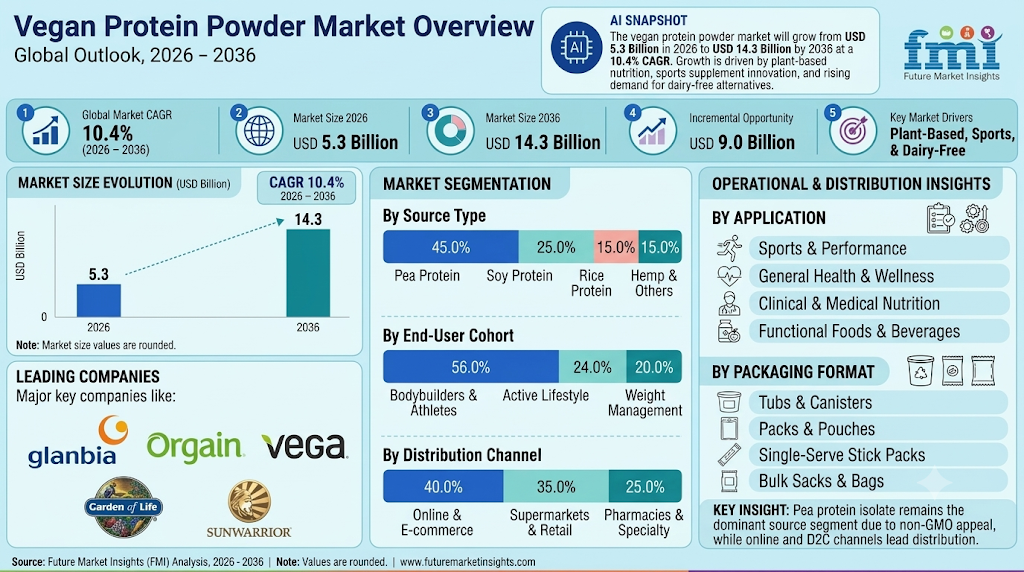
NEWARK, Del., November 19, 2026 — The global vegan protein powder market is witnessing significant growth as health-conscious consumers, athletes, fitness enthusiasts, and food manufacturers increasingly adopt plant-based nutritional solutions. Rising demand for dairy-free protein supplements, growing awareness of sustainable nutrition, and increasing interest in vegan lifestyles are...
The Dry Ice Market is experiencing steady growth, driven by increasing demand across food and beverage, pharmaceutical, and industrial cleaning applications. Dry ice, the solid form of carbon dioxide, is valued for its cooling and cleaning properties, widely used in food preservation, vaccine transport, and dry ice blasting for industrial cleaning. The Dry Ice Market is projected to...