


Evaluating Operational Database Management Market CAGR Drivers Across Global Industries
Sustained Push Toward Real-Time Enterprise Agility
The steady expansion of the Operational Database Management Market CAGR reflects enterprise urgency to turn live operational events into immediate business action. Across digital commerce, financial services, logistics, and connected manufacturing, competitive advantage increasingly belongs to organizations that respond fastest to customer behavior and operational shifts. Legacy databases constrained by rigid scaling or slow batch synchronization create bottlenecks that delay product features and degrade user experiences. Modernizing operational data infrastructure enables instant order fulfillment, real-time account updates, and responsive digital services. As software becomes the primary interface for customer relationships, sustained investment in high-speed operational databases remains a core pillar of enterprise modernization.
Surging AI and Data-Intensive Application Demand
Growing adoption of AI-driven applications, connected devices, and real-time analytics acts as another powerful catalyst behind compound market growth. Every connected sensor, mobile session, payment transaction, and automated workflow generates continuous operational state that must be captured reliably and queried quickly. Simultaneously, enterprises deploying intelligent assistants and real-time personalization require operational stores that combine transactional integrity with fast contextual retrieval. These expanding workload demands push organizations to upgrade from older database generations to scalable cloud and distributed architectures capable of sustaining heavy concurrent traffic without performance degradation.
Cloud Modernization and Hybrid Adoption Momentum
Cloud migration and hybrid infrastructure strategies continue to accelerate compound growth across both large enterprises and growing businesses. Managed cloud databases reduce upfront hardware commitments and streamline routine tasks such as patching, scaling, and high-availability failover. Meanwhile, hybrid models allow enterprises with substantial on-premises investments or strict compliance boundaries to bridge local systems with elastic cloud capacity. This flexibility enables phased modernization rather than risky all-at-once cutovers, encouraging broader adoption across business units and regional subsidiaries.
Regional Expansion Across High-Growth Economies
Geographic growth patterns combine established enterprise spending in North America and Europe with accelerating expansion across Asia-Pacific and other emerging regions. Rapid digital banking growth, mobile-first commerce, smart infrastructure initiatives, and expanding cloud ecosystems across Asia-Pacific fuel strong demand for scalable operational data platforms. North America and Europe continue to drive high-value modernization around cloud resilience, regulatory compliance, and advanced data-intensive applications. Together, global digital transformation across mature and developing markets supports durable multi-year expansion.
Overcoming Migration Friction and Talent Gaps
While growth drivers remain strong, compound expansion is tempered by practical challenges around database migration complexity, operational skills shortages, and vendor lock-in concerns. Moving mission-critical transactional workloads off legacy systems carries risks around downtime, data compatibility, and testing rigor. Organizations also navigate scarcity of specialized talent experienced in distributed and cloud-native database tuning. Providers that offer automated migration tooling, compatibility layers, and managed operational support help enterprises reduce transition risk and capture value faster.
➤ Latest Market Intelligence from Market Research Future:
Categorias
Leia mais
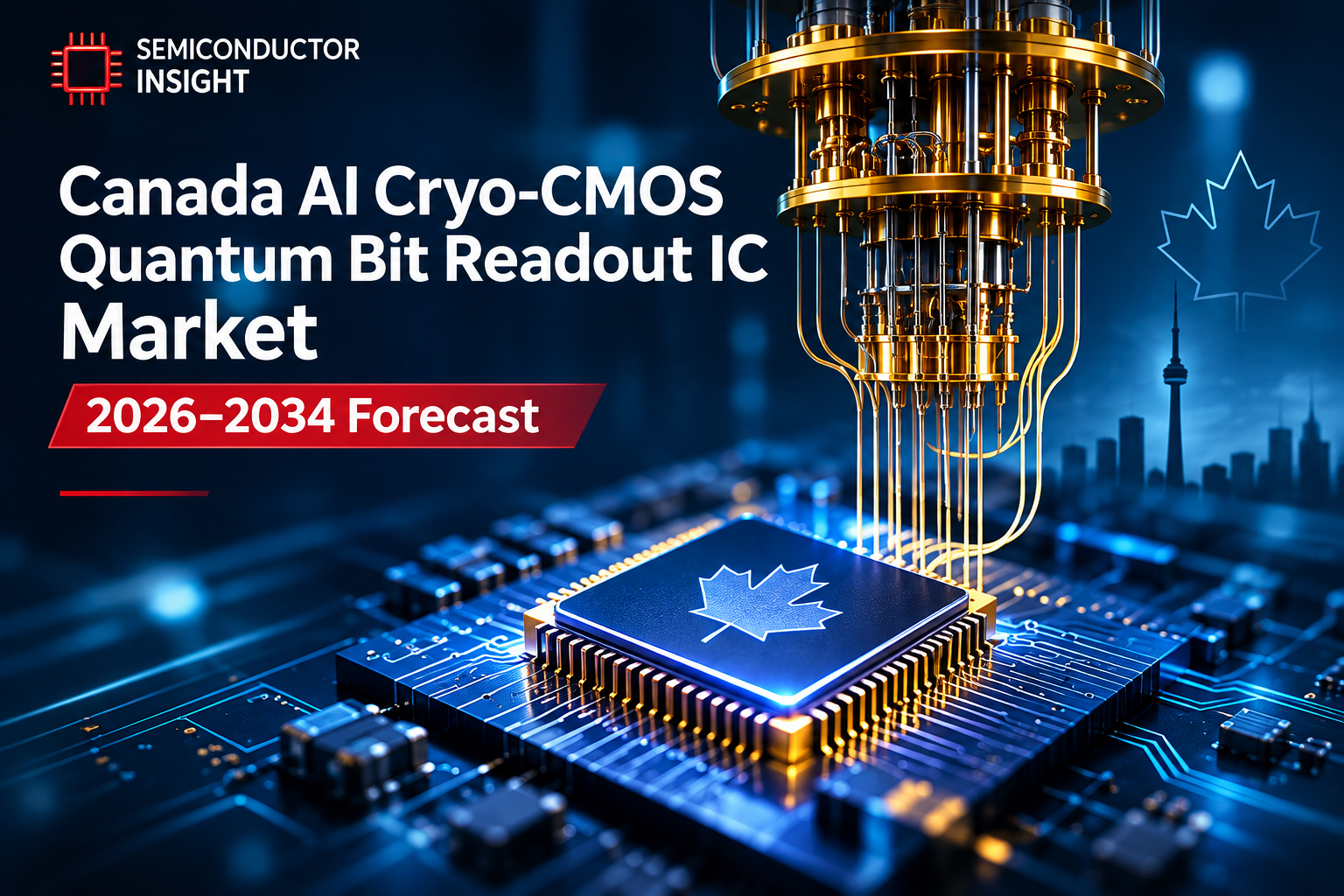
The development of scalable quantum computers is increasing demand for semiconductor components capable of operating reliably at extremely low temperatures. Cryogenic control and readout architectures are becoming important as quantum processors expand beyond small experimental systems and require more channels, lower noise and efficient signal handling. According to Semiconductor...
I've been living in Elden Ring: Nightreign's Deep of Night since it launched, and now that we're in 2026 I can say it's still the mode I boot up when I want the game to stop being polite. Deep of Night is basically a new endless mode and a ranked mode rolled into one, and it throws you against a much nastier version of the game with red-infused enemies and bosses. These red enemies hit harder,...

Die Veränderung der Glücksspielgesetze in Europa: Einfluss der neuen Regulierungen auf Online-Casinos und Spielertrends im Jahr 2025 Die Glücksspielindustrie in Europa hat sich in den letzten Jahren https://twindorcasino.com/de/category/megaways rasant entwickelt, angetrieben von technologischen Fortschritten, einer steigenden Akzeptanz von Online-Plattformen und einem Wandel im...

The Blockchain In Manufacturing Market is on the cusp of a significant transformation, with projections revealing an enormous surge in value. By 2025, the market size is anticipated to reach approximately USD 2.39 billion, escalating to a staggering USD 374.9 billion by 2035. This impressive growth rate signifies a robust compound annual growth rate (CAGR) of 65.8%. As companies increasingly...

Сегодня работы по бухгалтерскому учету как правило направляют на аутсорс. Причин тут несколько, мы назовем только ключевые. Экономия Смысл тратить в наше время средства на декреты, ЗП, отпуска, больничные, налоги, если возможно делегировать бухгалтерские услуги на аутсорсинг? Посетите наш проект 1C-WiseAdvice, где при помощи встроенного калькулятора рассчитайте, сколько конкретно нужно...