Why Choose Abrain Double-sided Fingerprint Lock for Modern Doors
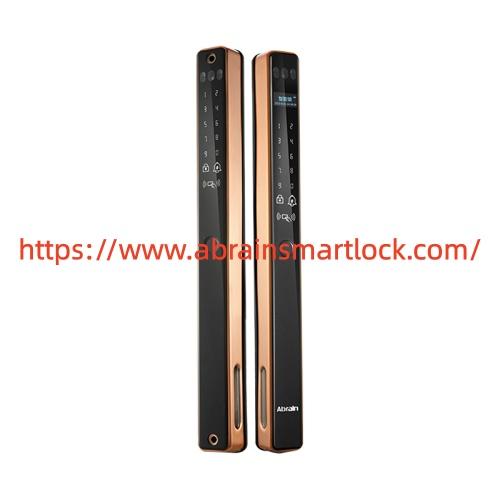
Double-sided Fingerprint Lock technology brings a different perspective to the way people think about building entrances. Traditionally, access control has focused on managing entry from the outside. However, modern residential and commercial environments may require more flexible arrangements on both sides of a doorway. This creates interesting questions about convenience, user management, installation planning, and the relationship between electronic hardware and everyday movement.
A doorway connects different areas of a building, and the way people move through it depends on the purpose of the space. A private residence, shared apartment, office, or accommodation facility may have different expectations for access management. Understanding these differences is an important starting point when evaluating electronic entrance equipment.
For households, convenience often means making daily movement easier for family members. People may enter and leave at different times, carry personal belongings, or need to move between indoor and outdoor spaces frequently. A suitable access arrangement should take these habits into account.
Shared environments introduce additional considerations. Property managers may need to coordinate access for residents, employees, service personnel, or temporary visitors. In these situations, user administration and access permissions become important parts of the purchasing process.
Fingerprint recognition provides a biometric approach to identifying authorized users. Unlike traditional keys, which can be misplaced or shared, biometric access uses registered fingerprint information as part of the identification process. This changes how users interact with an entrance and may reduce the need to manage physical keys.
The location of recognition areas is particularly relevant when evaluating products designed for access from different sides. Buyers should examine how the interface is arranged, whether the controls are easy to reach, and how the device communicates operating feedback. These details influence how naturally people can use the system.
It is also important to understand the available management functions. Questions about registering users, updating permissions, removing access records, and handling temporary users should be discussed before purchasing. Clear administration procedures can make a difference in properties where several people share the same entrance.
Product materials deserve attention as well. Electronic door hardware combines visible exterior components with internal mechanical and electronic structures. The material used for the housing influences its appearance, handling characteristics, and maintenance requirements.
Metal materials are frequently used in architectural hardware because they offer different structural and finishing possibilities. Stainless steel, zinc alloy, and other metal options can create different visual effects and functional characteristics. Buyers should compare the actual construction and intended application rather than assuming that all metal housings offer identical properties.
Surface treatment also contributes to the overall product experience. Brushed finishes can create a restrained architectural appearance, while polished surfaces may suit different decorative preferences. Dark finishes can coordinate with contemporary doors, whereas metallic tones may complement traditional interior details.
When choosing a product for a particular building, it is useful to consider how the hardware interacts with the door itself. Door material, structural arrangement, installation preparation, and locking compatibility can all influence the final result. Confirming these details with the manufacturer before purchasing can help reduce installation difficulties.
Another consideration is the experience of different users. Children, older residents, employees, and visitors may have different levels of familiarity with biometric technology. A clearly arranged interface can help reduce confusion, while understandable instructions make initial registration and daily operation easier.
Buyers should also investigate alternative access arrangements. Fingerprint recognition may not be convenient in every situation, such as when a user has an injured finger or when electronic functions require attention. Available backup entry methods and emergency procedures should therefore form part of the product evaluation.
The visual design of an entrance is equally relevant. Door hardware occupies a visible position and contributes to the character of the surrounding space. A coordinated design can help create a consistent appearance across residential projects, office interiors, and shared facilities.
For architects and interior designers, the relationship between functional hardware and decorative elements is worth considering early in the planning process. Handle shapes, panel finishes, sensor placement, and overall proportions can influence how the finished doorway looks and feels.
For distributors and project purchasers, a structured selection process can make sourcing more efficient. Comparing product documentation, installation guidance, customization possibilities, technical support, and supply arrangements provides a clearer understanding of the manufacturer's capabilities.
Rather than selecting equipment based on a single feature, buyers should consider the entire application. The intended users, movement patterns, door construction, access management requirements, and architectural style all contribute to a suitable purchasing decision.
Abrain develops electronic access products for residential and commercial applications, with attention to practical functions and contemporary hardware design. For property developers, distributors, and homeowners considering different entrance arrangements, reviewing the manufacturer's product range can help clarify available options. Visit https://www.abrainsmartlock.com/ to view Abrain products and evaluate which designs may correspond with the access requirements of your next project.
Категории
Больше
Modern personal care routines are increasingly shaped by convenience, efficiency, and comfort. Among grooming tools, the Home-Used Electric Hair Clipper has become a practical solution for individuals seeking flexible haircutting at home. Many consumers now prefer devices that simplify grooming tasks while maintaining consistent performance. Within this growing demand, Home-Used Electric...
Indoor air quality has become an important consideration for healthcare facilities, laboratories, commercial buildings, educational institutions, and other enclosed environments. Airborne microorganisms, particles, and certain chemical contaminants can affect occupant comfort and create challenges for maintaining hygienic indoor spaces. As organizations explore advanced air-treatment...

The Asia-Pacific Data Center Market Size reflects remarkable growth as digital transformation and AI adoption drive unprecedented demand for computing infrastructure across the region. The market reached substantial valuation in 2025 and is projected to grow exponentially through 2035, registering exceptional compound annual growth rate during the forecast period....
Традиционным, в сознании граждан старшего возраста, источником новостей являются газеты и телевидение. Несомненно, подобные новостные каналы и все еще считаются довольно востребованными, однако их время давно поджимает. Будущее за онлайн сетями, которые предлагают смотреть новости онлайн. На смену обычному телевидению пришло цифровое интерактивное вещание, основной чертой которого является...
Fan Motor Supplier evaluation should begin with the equipment in which the product will operate, rather than a catalogue or price list alone. For importers, appliance manufacturers, and industrial purchasing teams, selecting a suitable production partner involves checking application compatibility, electrical requirements, operating conditions, product construction, and order management. A...