Lighting Contactor Industry: Smart Controls and Automated Lighting Infrastructure

According to industry analysis published by Market Research Future, the Lighting Contactor Industry is evolving as commercial buildings, industrial facilities, and public infrastructure increasingly adopt automated lighting management systems. Lighting contactors are electrically operated switching devices designed to control lighting circuits, particularly where multiple fixtures or large electrical loads must be managed through centralized arrangements. These devices help simplify switching operations, support scheduled illumination, and improve the organization of electrical distribution systems. Their applications include warehouses, office buildings, shopping centers, manufacturing facilities, parking areas, and public lighting installations. Growing interest in energy conservation, smart buildings, occupancy-based controls, and digital facility management is encouraging manufacturers to improve product design and system compatibility. As lighting systems become more connected, the need for reliable electrical switching equipment continues to develop. This creates opportunities for manufacturers, electrical contractors, automation providers, and infrastructure developers.
Understanding Lighting Contactors and Their Applications
Lighting contactors allow electrical circuits to be controlled through an electrically operated mechanism.
They are particularly useful when several lighting loads need to be switched together.
Common applications include:
-
Commercial office lighting.
-
Industrial warehouse illumination.
-
Shopping center lighting.
-
Parking facility lighting.
-
Street and outdoor lighting.
-
Educational institution lighting.
-
Healthcare facility lighting.
Their centralized control capability can simplify facility management and reduce dependence on manual switching.
Operating Principles of Lighting Contactors
A typical lighting contactor includes an electromagnetic coil and switching contacts.
When the coil receives a control signal, the contacts change position and control the connected lighting circuit.
The control signal may originate from a manual switch, timer, sensor, or automation controller.
Electrically Held Designs
Electrically held contactors generally require continuous coil energization to maintain their operating state.
They are suitable for control arrangements where the operating signal remains active while lighting is required.
Mechanically Held Designs
Mechanically held contactors use a latching mechanism to maintain their contact position.
They can reduce the need for continuous coil energization and may be suitable for installations where operating characteristics favor this arrangement.
Major Industry Development Drivers
Smart Building Adoption
Modern buildings increasingly use automation to coordinate lighting, HVAC, security, and other electrical systems.
Lighting contactors can form part of centralized lighting arrangements.
Their integration with suitable controllers helps facility managers operate different lighting zones according to schedules and building requirements.
Energy Management Requirements
Commercial and industrial facilities are seeking ways to reduce unnecessary electricity consumption.
Lighting automation helps ensure that illumination operates according to occupancy and scheduling requirements.
Contactor-based switching can support these strategies in installations with multiple lighting circuits.
Expansion of Commercial Infrastructure
New offices, retail centers, hospitals, warehouses, and educational facilities require organized lighting infrastructure.
These developments support demand for switching devices and associated electrical control equipment.
Technology Developments in Lighting Control
Occupancy Sensors
Occupancy sensors identify whether people are present in a space.
When integrated with suitable controllers, they can automatically initiate lighting operations.
This is useful in corridors, storage rooms, meeting spaces, and other areas with changing occupancy.
Daylight Harvesting
Daylight harvesting uses available natural light to manage artificial illumination.
Sensors and controllers can adjust lighting operation according to daylight conditions.
This approach can support energy conservation in buildings with windows and skylights.
Connected Building Management
Digital building management systems coordinate multiple facility functions.
Lighting contactors can operate as part of broader control architectures when compatible switching and communication arrangements are provided.
Manufacturing and Product Development
Manufacturers must consider switching performance, electrical ratings, contact materials, enclosure requirements, and operating life.
Modern lighting installations frequently use LED fixtures, which can have different electrical characteristics from traditional lighting loads.
Selecting appropriate switching equipment is therefore important.
Product developers must evaluate inrush current, switching frequency, load compatibility, and operating conditions.
Opportunities Across End-Use Sectors
Industrial Facilities
Factories and warehouses require organized lighting control across production areas and storage sections.
Centralized switching can simplify management of large installations.
Commercial Buildings
Offices and retail centers often operate according to defined schedules.
Automated switching can support consistent lighting management.
Public Infrastructure
Roads, parking areas, and public facilities require dependable outdoor illumination.
Scheduled lighting controls can help coordinate operation across multiple locations.
Educational and Healthcare Facilities
Schools, colleges, hospitals, and medical centers require different lighting schedules for classrooms, treatment areas, corridors, and common spaces.
Organized electrical control helps facility managers manage these requirements.
Challenges Affecting the Industry
The growing adoption of electronic lighting systems creates new equipment selection considerations.
LED drivers may produce electrical characteristics that require careful evaluation before selecting switching devices.
Competition from smart relays and integrated electronic control systems may also influence purchasing decisions.
Manufacturers must maintain product compatibility, reliable switching performance, and compliance with electrical safety requirements.
Future Outlook for Lighting Control
Smart building investment and energy management initiatives are expected to influence product development.
Lighting contactors will remain relevant in installations requiring centralized switching of multiple circuits.
Manufacturers may increasingly focus on compact products, improved contact materials, and compatibility with digital controllers.
Conclusion
The Lighting Contactor Industry supports modern lighting infrastructure by providing reliable switching and centralized control capabilities. Smart buildings, commercial construction, industrial development, and energy management initiatives are creating opportunities for advanced lighting control equipment. Integration with occupancy sensors, timers, and digital building platforms is expanding the role of automated switching. However, changing lighting technologies and competition from alternative control solutions require continuous product improvement. Manufacturers that emphasize load compatibility, operational reliability, and installation flexibility can address evolving lighting management requirements.
Gain a competitive edge with insightful market reports:
China Directional Drilling Market
Russia Directional Drilling Market
الأقسام
إقرأ المزيد
Bearing Market: Industrial Automation Drives Demand Findings from Market Research Future indicate that the global Bearing Market was estimated at USD 199,200.4 million in 2024 and is projected to grow from USD 216,172.76 million in 2025 to USD 489,675.64 million by 2035, exhibiting a compound annual growth rate of 8.52% during the forecast period from 2025 to 2035. This remarkable expansion...

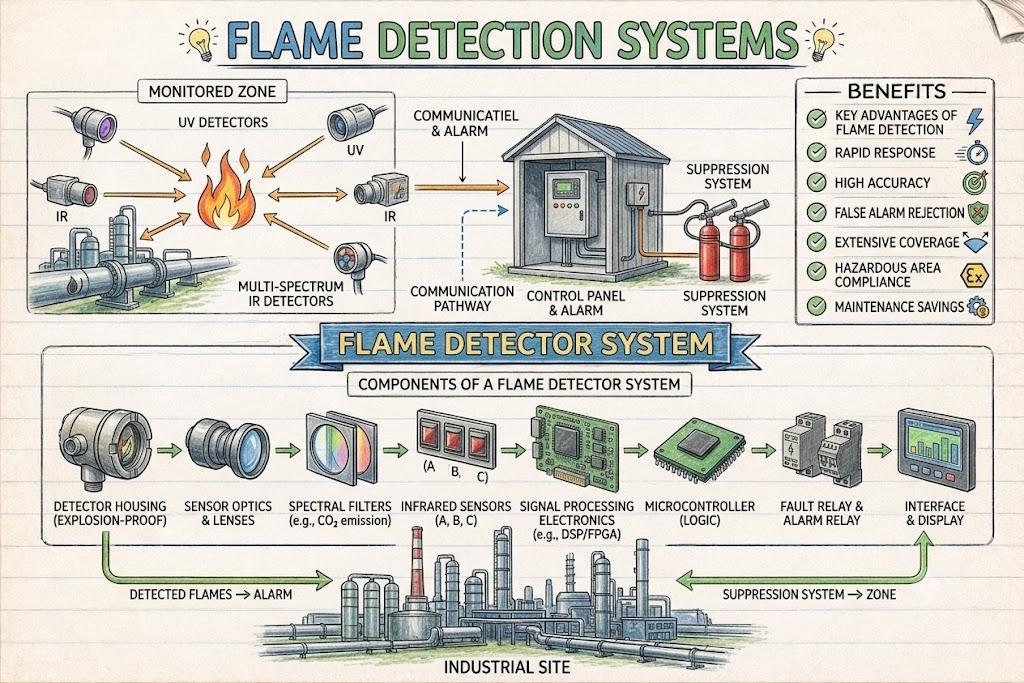
A structured understanding of the industrial fire protection ecosystem requires analyzing specific product categories, sensor types, and application environments. The granular Flame Detectors Market segment breakdown categorizes hardware solutions into single UV detectors, single IR detectors, dual UV/IR models, multi-spectrum IR platforms, and visual flame imaging systems. Multi-spectrum...
The have been making a lot of roster moves this offseason, acquiring a ton of talent to boost the offense and defense after a rough season in 2025. The focus has been primarily on defense, but the Jets have made two moves on offense, signing Dylan Parham and trading for Geno Smith Orogbo Jersey Smith to be their new starting quarterback. With Justin Fields now out of the picture, it would not...
Switch Panel selection is an important step when building or improving an electrical setup. Whether used in vehicles, equipment systems, or other applications, the right choice depends on more than appearance. Users need to consider installation space, connection requirements, operating habits, and the environment where the system will work. A suitable product can make daily control tasks...

The Non-Volatile Memory Market is witnessing remarkable growth, propelled by escalating demands for robust data storage solutions. Currently valued significantly, the sector is anticipated to expand with a compound annual growth rate (CAGR) of 9.4% through 2035. This rapid progression is primarily attributed to advancements in technology and the increasing prevalence of IoT devices, which...