What to Ask a Cabinet Door Supplier Before Placing an Order
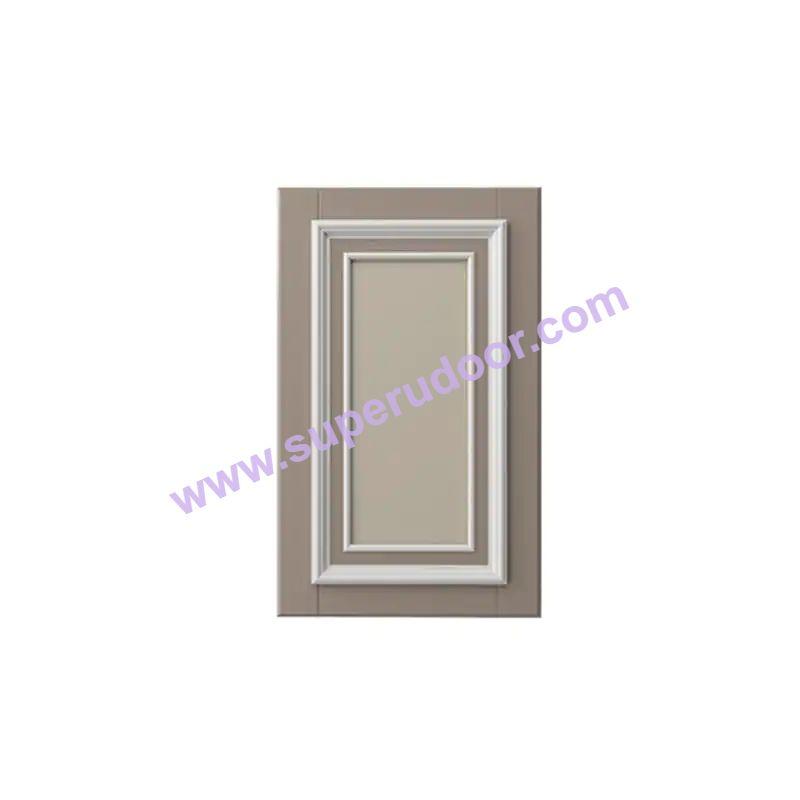
A man stood in a half-finished kitchen last spring with a drawer front in each hand, turning them toward the window and asking nobody in particular why two boards that looked alike in the brochure felt so different. The fitter told him the answer usually sits in the core, the banding and the surface skin, which is what a Cabinet Door Supplier is really quoting even when the quote itself only gives a size and a colour name.
Thickness is the figure people skip because it seems fixed, yet it decides how well the hinge cups bite and whether a long front stays flat through a humid summer. I lay a straightedge across the back of a sample and look for daylight underneath it, and I knock on the face with a knuckle, since a dull even sound suggests a solid core while a hollow patch hints at a gap inside. Fibreboard cores take paint smoothly and hold routed profiles cleanly, whereas particle-type cores crumble slightly along cut lines, so a decent listing names the core type instead of calling it simply wood.
The rim of a front takes knocks from every passing elbow, so I run a fingertip along it hunting for a lip where the banding meets the surface, and I press a thumbnail into the seam to see whether it lifts. Banding that is glued evenly sits flush and feels like one piece, and a seam near a corner is where water from a sink finds its way under the skin within the first year, which is why I check corners before I check anything else on a sample.
The boards laid out in that kitchen came from Shangpin, a company in Zhejiang established in 2016 that makes door sets under the SUPERU name in a large plant and takes OEM and ODM orders from buyers abroad, and the fitter handed them round without any sales talk. I could judge only what was in my hands, namely a square cut, a smooth paint skin and a back face that had been sealed along its borders.
Hinge holes are drilled into the back at the factory, so I ask for the drawing and read the cup diameter and the distance from the side to the hole centre, then compare them with the hinges that will actually be screwed on. Sizes deserve the same suspicion, because a front that runs a whisker wide will rub its neighbour and one that runs narrow leaves a gap you can see from the doorway. When a batch is promised I measure a few fronts against each other with a steel rule, and the differences between them tell me more about the factory habits than any paragraph in a catalogue.
Finish is where samples mislead, since a small square seen under a showroom lamp says very little about a whole run of fronts in a kitchen with a window on one side. I lean the sample against the wall where the cabinets will stand and look at it in the morning and again after the lights are on, and I rub a fingertip across it to see whether gloss shows every print or matte hides them. Painted, filmed and veneered surfaces age differently, so I ask which process made the sample and whether the production run will use the same one.
Anything near a sink or a kettle needs a question about moisture. I ask whether the back and the cut-outs are sealed, since bare fibre swells at an opening long before the face shows a mark, and I keep a small dish of water on a spare offcut overnight to see how the surface copes with a spill left behind by someone in a hurry.
Packing is the last practical point, because fronts travel a long way before they reach a kitchen. I ask how the boards are separated in the carton and whether the corners are guarded, and when a delivery arrives I open one carton at once and compare a front with the approved sample before anything is unpacked in bulk.
I kept a small offcut from that kitchen on a windowsill, and whenever I open a quote from a Cabinet Door Supplier I run my thumbnail along its rim first and read the core and banding lines before the price. The photographs on https://www.superudoor.com/ show finished fronts against plaster and worktops, and my eye goes to the corners, where the banding turns, before I put the offcut back on the sill.
Categorias
Leia mais
The Almond Ingredients Market Opportunity Is Getting Bigger—and More Sophisticated The global almond ingredients market was valued at USD 11.8 billion in 2025 and is projected to reach USD 27.4 billion by 2035, expanding at a CAGR of 8.9% between 2025 and 2035. That growth reflects more than rising almond consumption. It points to a broader transformation in how food manufacturers use...

A virtuális valóság és az online szerencsejátékok találkozása 2026-ban: Az immersive élmények forradalma és a játékosok pszichológiai reakciói Az online szerencsejátékok folyamatosan fejlődnek, és a technológiai https://xon.bet/hu/casino/new...

Reusable drinkware has become part of many everyday routines, from commuting and working to traveling and relaxing outdoors, and choosing a suitable Plastic Tumbler involves more than selecting a container for beverages. Material selection, purchasing priorities, functional engineering, manufacturing technology, user experience, maintenance, and appearance all influence how naturally a tumbler...
According to Market Research Future, the exhaust heat recovery system market size is influenced by various factors, including the increasing focus on fuel efficiency and advancements in heat recovery technology. Analyzing these factors is essential for industry stakeholders. Key Trends Impacting Market Size The exhaust heat recovery system market is characterized by several key trends that...

Industry analysis highlights that the Australia car finance market rates segment is where credit risk, funding costs, vehicle residuals, and competition converge to determine what borrowers actually pay. Australia's car finance market is projected to grow from USD 468.04 billion in 2024 to USD 713.07 billion by 2035, and understanding how rates are set is essential for anyone seeking to...