


Spinning Machinery Market Share: The Automation Race
The global spinning machinery industry is in the midst of a decisive race toward automation, driven by a complex interplay of economic pressures, technological maturity, and ambitious government policies. Insights published by Market Research Future reveal a market on a firm growth path, projected to rise from USD 14.69 billion in 2025 to USD 23.68 billion by 2035 with a 4.89% CAGR. However, the narrative behind these numbers is one of strategic investment in smart, connected systems. The Spinning Machinery Market Share is no longer a simple reflection of spindle counts; it is increasingly defined by the value added through automation and digitalization. Mills across the globe are facing a clear imperative: modernize or risk losing competitiveness in a market that demands higher efficiency, lower energy consumption, and verifiable sustainability credentials.
Key Drivers and Segment Performance
The push toward modernization is being led by a strong policy tailwind from Asia. India’s Production Linked Incentive (PLI) scheme and the PM MITRA textile park program are creating a massive order pipeline for machinery manufacturers, from blow-room to winding. This is a primary reason why Asia-Pacific commands a 68.5% revenue share of the market. The report highlights that while ring frames remain the most popular machine type with a 52.6% share due to their versatility, the future belongs to more specialized and automated systems. The real battleground is in the fastest-growing segments. Vortex/Compact systems are expected to grow at a 6.2% CAGR, and fully digital/smart factory lines are forecast to expand at a remarkable 7.1% CAGR. This shows a clear market preference for solutions that offer superior yarn quality, energy savings, and reduced reliance on manual labor. The Spinning Machinery Market Size is being propelled not just by volume, but by the higher value of these advanced systems.
The Automation and Data Imperative
At the core of this transformation is the shift from manual to automated operations. Rising wages in traditional manufacturing hubs like coastal China and Turkey are squeezing margins for mills that still rely on manual doffing and piecing. Auto-doffers, link-coners, and robotic piecing systems are no longer discretionary upgrades but defensive necessities for export-oriented spinners competing on a global stage. The value proposition is clear: reducing headcount per 1,000 spindles directly translates to lower operational costs and greater production stability.
Beyond labor savings, automation is unlocking a new world of data-driven optimization. Connected frames generate a continuous stream of data on end breaks, energy draw, and yarn quality. Market Research Future’s analysis suggests this creates new revenue streams for OEMs, who can offer predictive maintenance, quality benchmarking, and energy optimization as subscription services. This "data monetization" model smooths cyclical hardware revenues and deepens customer lock-in. The report notes that annual fees for such services can be worth 3-5% of the initial hardware value, a significant long-term value driver. This trend is also influencing the competitive landscape, as vendors are now evaluated not just on machine speed but on their ability to deliver whole-line efficiency guarantees and digital integration.
Navigating the Challenges and Restraints
The path to a fully automated future is not without obstacles. The primary restraint is the high capital cost of modern machinery. A new compact spinning line represents a multi-million-dollar investment, which can be challenging for small and medium-sized enterprises (SMEs) in Asia, Africa, and South America, where financing options are limited and interest rates can be high. This has slowed the adoption of new equipment and sustained a market for used and refurbished machinery.
Another significant challenge is the cyclical nature of the yarn market. Machinery orders tend to amplify the swings in yarn demand, as mills delay investments during downturns and accelerate them during peak periods. This volatility can compress margins for OEMs and disrupt production planning. Furthermore, the shortage of skilled technicians to service and maintain increasingly complex digital spinning lines is a critical bottleneck. As noted by European machinery associations, this skills gap can lengthen ramp-up periods and prevent mills from realizing the full efficiency gains of their investments. The Spinning Machinery Market Share of key players like Rieter, Saurer, and Trützschler is partly built on their ability to provide robust service and support networks to mitigate this challenge.
Future Outlook: Traceability, Energy, and Geographic Balancing
Looking toward 2035, the market will be shaped by the demand for greater traceability and energy efficiency. The EU’s Ecodesign for Sustainable Products Regulation will mandate Digital Product Passports, requiring machinery that can record and report on fiber origin and recycled content. This will create a significant competitive advantage for OEMs that build open data interfaces and traceability features into their equipment. Simultaneously, with the IEA projecting continued growth in industrial electricity demand, energy per kilogram of yarn will become a primary purchasing metric. Mills will seek frames with lower specific energy consumption, heat recovery systems, and integration with on-site renewable energy.
Geographically, the market will experience a gradual rebalancing. While Asia-Pacific will maintain its dominance, its growth rate will moderate as it shifts from greenfield expansion to replacement and automation upgrades. In contrast, regions like the Middle East and Africa, starting from a smaller base, will offer the highest growth momentum, driven by industrial diversification strategies in the Gulf and cotton value-addition programs in Egypt and Nigeria. The Spinning Machinery Market is thus entering a mature phase where value is derived from technological sophistication, data services, and adaptability to a more fragmented and regulated global supply chain.
Conclusion
The spinning machinery market is navigating a complex but promising landscape. Its current position is one of robust health, fueled by policy-driven investments and a universal recognition of the need for automation. The emerging opportunities are most pronounced in retrofit solutions, advanced digital services, and specialized equipment for recycling and high-performance yarns. Technological developments centered on AI, IoT connectivity, and traceability are not just trends but the foundational pillars of the industry's future. The long-term outlook is for sustained, quality-driven growth, where success hinges on the ability to integrate technology, sustainability, and market intelligence. For a deeper understanding of this evolving sector, analyzing the dynamics of the US Water Desalination Market can provide a parallel for how policy and technology intersect in capital-intensive infrastructure. The Spinning Machinery Market is on a clear trajectory toward a smarter, more efficient, and geographically diverse future.
Catégories
Lire la suite
Chemical peels have been used for centuries — Cleopatra reportedly bathed in sour milk — yet they remain one of the most requested aesthetic procedures worldwide. The reason is simple: peels deliver visible improvement in skin texture, tone, and clarity at a fraction of the cost of lasers or surgical treatments. As demand for non-invasive aesthetic procedures grows, the chemical...

Recycled Plastic Straw Matting Producer options are worth considering for households and businesses looking to organize everyday outdoor spaces with practical floor coverings. From a small balcony to a garden seating area, suitable matting can help define activity zones, create a consistent look, and provide a designated surface beneath outdoor furniture. When choosing a product, buyers should...

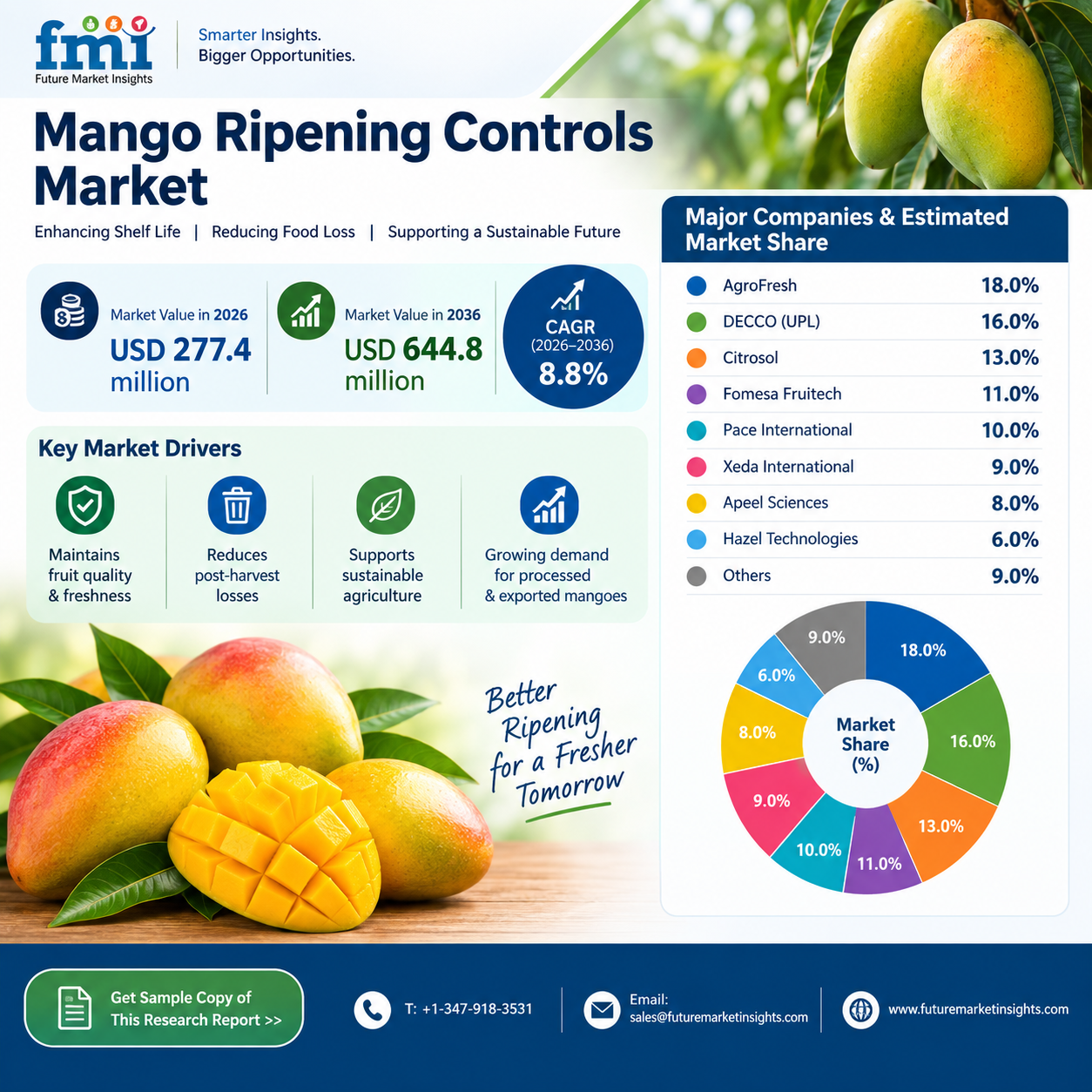
Mango Ripening Controls Market Edible Coatings Lead Product Type at 47.4% The global mango ripening controls market is forecast to increase from USD 277.4 million in 2026 to USD 644.8 million by 2036, expanding at an 8.8% CAGR during the 2026-2036 forecast period, according to Future Market Insights. The market stood at USD 255.0 million in 2025. Growth is being supported by the increasing...
Lighting plays one of the most important roles in shaping the comfort, beauty, and functionality of any home or commercial space. Whether you are renovating a room, building a new property, or simply upgrading your interior design, understanding proper lighting installation and chandelier installation is essential. Good lighting is not just about brightness; it is about mood, safety, energy...

The Fiberglass Pipes market is witnessing transformative trends that signal a promising future trajectory. As industries globally recognize the advantages of fiberglass pipes, the market is projected to grow significantly, reaching USD 9.213 million by 2035. The anticipated CAGR of 4.56% reflects mounting demand driven by escalating infrastructure developments and the need for durable,...