Power Tools Market: Cordless Migration Drives Growth
Power Tools Market: Cordless Migration Drives Growth
According to Market Research Future, the global Power Tools Market stood at USD 81.42 billion in 2025 and is projected to reach USD 86.47 billion by 2026 before climbing to USD 155.78 billion by 2035, expanding at a compound annual growth rate of 7.38% during the forecast period from 2026 to 2035. Accelerating public infrastructure budgets — including India's USD 133 billion capital expenditure allocation under Union Budget 2026 and the United States' CHIPS and Science Act fabrication commitments — are anchoring demand for high-precision, safety-compliant electric tools across construction sites and semiconductor cleanrooms alike.
The Cordless Platform Revolution
A dramatic technology change is taking place in the market. The corded and pneumatic platforms that have dominated workshops for decades are being replaced by lithium-ion cordless devices that can generate more than 550 watt-hours per charge. This change eliminates the risks of extension cords and exhaust fumes while matching — and in some torque-controlled applications surpassing — the output of older gasoline-powered systems.
Battery-powered angle grinder models and cordless brushless drill driver platforms are now the fastest-selling SKU categories in professional and retail channels. The rotary hammer SDS drill industry has also migrated to cordless designs, with key OEMs collectively investing more than USD 2.1 billion on brushless motor research and development between 2024 and 2027.
Mode of Operation and Product Segmentation
Electric tools captured 66.8% of market revenue in 2025, with cordless variants within this category growing fastest at an 8.18% CAGR through 2035. Pneumatic and hydraulic tools together account for the balance, though their combined share is contracting as battery energy density improvements accelerate platform migration.
By product, drilling and fastening tools held 33.6% share in 2025. Impact drivers and wrenches are forecast to grow at an 8.72% CAGR through 2035, the fastest among product sub-segments. Cutting and grinding tools, led by the angle grinder battery-powered segment, represent a USD 18.4 billion opportunity by 2035. Oscillating and multi-function tools are growing at 8.5% CAGR, driven by renovation versatility and oscillating multi-tool kit popularity.
End-User and Sales Channel Segmentation
Construction and infrastructure end-users accounted for 48.9% of market size in 2025, reflecting the scale of current global infrastructure programs. The residential and DIY segment is the fastest-growing end-user category, registering an 8.84% CAGR as power tool combo kit set bundles drive household penetration.
Offline distribution retains the lion's share of sales at 84.2% share in 2025 because professional buyers prefer to handle tools, test ergonomics and negotiate volume pricing through established distributor relationships. Yet the online channel is closing the gap rapidly, growing at 8.78% CAGR, with brand-owned digital storefronts offering same-day professional delivery in major metros.
Regional Market Dynamics
Asia-Pacific commands the dominant position, holding roughly 42% of global revenue, propelled by megaproject pipelines in China, India and Indonesia. China accounts for 38% of regional share through Belt-and-Road procurement and domestic housing recovery. India grows at 9.2% CAGR through Union Budget capex and PM Awas Yojana housing. Japan represents USD 5.36 billion through semiconductor fab expansion and earthquake-retrofit mandates.
Europe trails as the second-largest region at approximately 24% share, buoyed by renovation mandates under the EU Green Deal. Germany accounts for 22% of regional share through Industrie 4.0 smart-factory retooling. The UK represents USD 4.18 billion through housing retrofit subsidies.
North America is the third-largest contributor at USD 19.54 billion in 2025, with the residential and DIY segment expanding rapidly as oscillating multi-tool kit adoption climbs among homeowners. The United States accounts for 78% of regional share through CHIPS Act fab construction and residential remodeling.
Key Players and Competitive Landscape
The market exhibits medium concentration, with the top five players collectively holding an estimated 48% to 55% revenue share. The Herfindahl-Hirschman Index sits in the 900 to 1,100 range, reflecting a competitive but not fragmented structure.
Stanley Black & Decker holds an estimated 12% to 15% revenue share with its DeWalt 20V/60V cordless and Craftsman DIY lines, offering a full-spectrum portfolio spanning professional and consumer segments. Techtronic Industries holds about 10% to 13% with Milwaukee M18/M12 and Ryobi ONE+, emphasizing cordless-first innovation and rapid SKU launches. Robert Bosch holds roughly 9% to 12% with Bosch Professional 18V and ProCore battery system, leveraging German engineering and IoT-connected platforms.
Makita holds 8% to 11% with 18V LXT and 40V XGT brushless systems, benefiting from global distribution and durability reputation. Hilti holds 5% to 7% with its Nuron cordless platform and fleet management services, operating a premium professional tool-as-a-service model. Atlas Copco holds 4% to 6% with industrial assembly tools and smart tightening systems.
Challenges Facing Market Participants
Raw-material cost volatility creates a drag of approximately 18% on growth. Lithium carbonate prices varied from USD 12,000 to USD 80,000 per metric tonne between 2022 and 2024, directly raising battery-pack costs that account for 20% to 30% of a premium cordless tool bill of materials.
Counterfeit and grey-market product infiltration creates a drag of approximately 15% in Asia-Pacific and Middle East and Africa. Counterfeit power tools bearing lookalike branding cause severe revenue losses and present critical physical hazards on active worksites.
Skilled labor shortage for advanced tool operation creates a drag of approximately 12% in Europe and North America. Regulatory fragmentation on battery disposal creates a drag of approximately 10% in the EU and ASEAN.
Future Outlook and Strategic Opportunities
Embedded machine-learning chips in next-generation cordless tools automatically adjust real-time motor speed and torque based on material density feedback. This intelligence maximizes operation runtimes and limits physical bounce-back failures, prompting corporate construction fleets to accelerate equipment upgrades to protect worker safety.
Open battery alliances are putting pressure on proprietary ecosystems. If interoperability standards take hold, purchasers will choose tools by performance, not battery lock-in, increasing price competitiveness. OEMs that invest in differentiated software — use statistics, predictive maintenance warnings — will better maintain margin than those competing on hardware specs alone.
Market Research Future's analysis indicates that the Power Tools Market will continue to expand as infrastructure spending, cordless migration and IoT integration drive demand. By 2035, the market is expected to achieve USD 155.78 billion in value, supported by platform economics and emerging-market urbanization.
Kategorien
Mehr lesen
The first rate Circuit Breaker market report is a magnificent source that gives CAGR values with varieties during the estimate time of 2025-2034 for the market. The review incorporates market drivers and restrictions by utilizing SWOT investigation, alongside their effect on the interest over the conjecture period. This worldwide statistical surveying report enriches with a significant outline...

US gear pump market competition is shaped by key players emphasizing product innovation, strategic partnerships, and expanded distribution networks. Increasing adoption of advanced materials and smart monitoring technologies is expected to create new opportunities. The Gear pump market size is projected to reach US$ 15.4 billion by 2031 from US$ 11.22 billion in 2024. The market is...

Modern metal products often need to balance structural function, visual quality, manufacturing efficiency, and application-specific requirements. In this context, Custom Cast Aluminum can provide manufacturers with a flexible approach to developing components around particular product structures and design concepts. Yongkang Ruizan Industry and Trade Co., Ltd. is involved in customized...

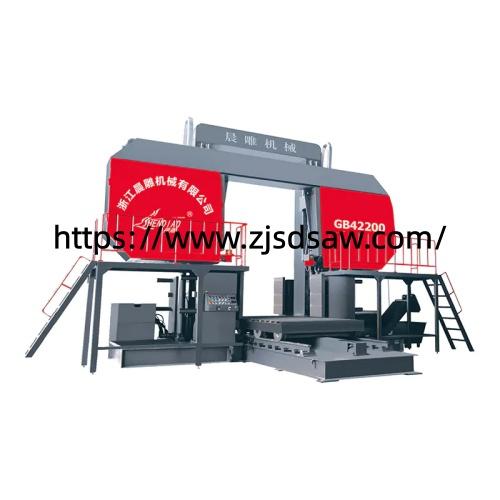
Band Saw Factory selection is an important step for manufacturers seeking dependable equipment for metal processing. Before choosing a supplier, buyers should evaluate the materials they handle, the dimensions of their workpieces, the required cutting accuracy, and their expected production volume. These factors help determine which equipment configuration suits a particular application. A...
Между Кишинёвом и Яссами сто двадцать километров. Это меньше, чем от Кишинёва до Бельц, и делает Яссы ближайшим к молдавской столице крупным городом за границей — ближе, чем большинство собственных райцентров по времени в пути без учёта перехода. Города связаны плотно и буднично: учёба, медицина, работа, покупки, родня. Эта статья про сам город — про то, что в нём есть и зачем туда...