


How Can Custom Electronic Connectors Meet Different Project Needs?
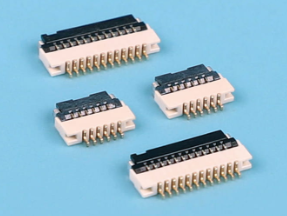
Custom Electronic Connectors play an important role in transferring signals and power between circuit boards, cables, and connected devices. For purchasing teams, selecting a suitable supplier involves more than comparing quotations. Buyers should review technical requirements, product dimensions, material options, production capabilities, and quality procedures before confirming an order. Careful preparation can help reduce design changes, avoid compatibility problems, and support a smoother purchasing process.
Prepare a Clear Application Description
Before contacting a manufacturer, buyers should explain where the connector will be installed and how it will function. Relevant details include the operating environment, connection method, installation space, expected service life, and equipment type.
A clear application description gives the engineering team a practical starting point. It also helps identify possible design concerns before samples are produced. If the product will operate in a location exposed to vibration, moisture, dust, or temperature changes, these conditions should be included in the initial discussion.
Buyers should also clarify whether the connection needs to be removable or permanently installed. This information can influence the housing structure, locking method, and contact arrangement.
Define Electrical Requirements
Electrical specifications should be confirmed before selecting a product structure. Buyers need to provide the required voltage, current, contact resistance, insulation resistance, and operating frequency where applicable.
These values help the manufacturer evaluate whether a proposed design is suitable for the intended application. If the rated current is too low, the connector may experience excessive heating during operation. Inadequate insulation performance may also create reliability concerns.
It is useful to provide the expected operating range rather than relying on a single typical value. This allows the engineering team to consider normal conditions as well as possible variations during actual use.
Check Dimensions and Contact Arrangement
Physical compatibility is another important purchasing consideration. Buyers should confirm the overall length, width, height, mounting position, pin pitch, terminal layout, and available installation clearance.
Even a small dimensional difference can affect assembly efficiency or prevent a component from fitting into its designated position. Drawings, reference samples, and three-dimensional files can help both parties review the design more accurately.
The number and arrangement of contacts should also match the application requirements. Buyers should check the pin sequence, terminal orientation, mating direction, and locking structure before approving a sample. Any changes to these details should be documented to avoid misunderstandings during production.
Discuss Contact and Housing Materials
Material selection affects conductivity, mechanical strength, corrosion resistance, and service life. Buyers should ask which materials are available for the contact terminals and insulating housing.
Copper alloys are commonly considered for conductive parts, while different engineering plastics may be used for insulation and structural support. The appropriate choice depends on operating conditions, cost targets, manufacturing methods, and applicable standards.
Surface treatment also deserves attention. Plating options can influence contact performance and resistance to environmental exposure. Buyers should discuss the expected usage conditions with the manufacturer instead of selecting a finish based only on appearance or initial price.
Request Samples and Review Testing
A sample provides an opportunity to evaluate the proposed design before a larger order is placed. Buyers should check dimensions, assembly fit, contact stability, locking performance, and compatibility with the mating component.
Testing requirements should be discussed at the beginning of the project. Depending on the application, evaluation may include continuity checks, insulation tests, temperature-rise assessment, mechanical endurance, and vibration testing.
Both parties should agree on the inspection criteria and acceptance limits. A written sample approval record can help ensure that subsequent production follows the confirmed design.
Examine Manufacturing and Quality Procedures
A reliable supplier should be able to explain its production workflow and inspection arrangements. Buyers can ask how incoming materials are checked, how production parameters are controlled, and how finished products are inspected before shipment.
It is also useful to understand whether the manufacturer maintains traceability records for materials and production batches. Such records can support quality investigations if a problem occurs after delivery.
Production capacity matters as well. Buyers should discuss available equipment, workforce arrangements, order volume, and the supplier's ability to maintain consistent output. These details help purchasing teams assess whether the manufacturer can support both initial orders and future demand.
Confirm Pricing, Packaging, and Delivery
A quotation should clearly identify the product specifications, order quantity, unit price, tooling costs if applicable, sample charges, packaging method, and estimated lead time. Buyers should compare quotations according to the same technical requirements to avoid misleading cost differences.
Packaging should protect the products during storage and transportation. For components with delicate contacts or specific handling requirements, buyers should confirm whether individual protection, moisture control, or special labeling is necessary.
Before placing an order, both parties should also confirm payment terms, delivery arrangements, documentation, and procedures for handling nonconforming products.
Discuss Your Project with wendaelectronics
A well-prepared purchasing process begins with accurate specifications and open communication. Buyers who provide clear drawings, application details, performance requirements, and expected order quantities can help the manufacturer assess project needs more efficiently. Reviewing samples and agreeing on inspection criteria before mass production can also reduce avoidable changes and improve coordination.For purchasing teams evaluating connector suppliers, wendaelectronics provides a starting point for discussing product requirements, design details, and manufacturing arrangements. Visit https://www.wendaelectronics.com/ to review the company's product information and contact its team about your project.
الأقسام
إقرأ المزيد
The Optogenetics Market report is made with accurate usage of tools such as Porter’s Five Forces and SWOT analysis technique. A team of talented people dedicatedly worked with their prospective capacities to come up with this good market research report. The report considers novel product development right from the commencement to its launch through a complete market study. Focusing on...

Οδηγός για τα καλύτερα διαδικτυακά καζίνο του 2025: Πώς να επιλέξετε το ιδανικό...

The global Wide Bandgap Semiconductor Power Devices and Modules Market was valued at USD 8.7 billion in 2026 and is projected to reach USD 18.9 billion by 2034, exhibiting a CAGR of 10% during the forecast period. This growth is detailed in a comprehensive new report published by Semiconductor Insight. The study highlights the increasing importance of silicon carbide (SiC) and gallium nitride...

304 Stainless Steel Smart Lock selection requires more than checking whether the product description simply lists stainless steel. Buyers should examine the actual material grade, surface condition, manufacturing process, structural design, testing information, and intended installation environment. Grade 304 is commonly used in door hardware because its chromium and nickel composition provides...

The Breast Pads Market is witnessing consistent growth as awareness regarding breastfeeding benefits and maternal healthcare continues to increase worldwide. Breast pads are widely used by nursing mothers to manage milk leakage, maintain hygiene, and improve comfort during breastfeeding periods. Growing participation of women in the workforce and increasing demand for convenient maternity care...