Which Slant-Bed CNC Lathe Suits Your Workshop Needs?
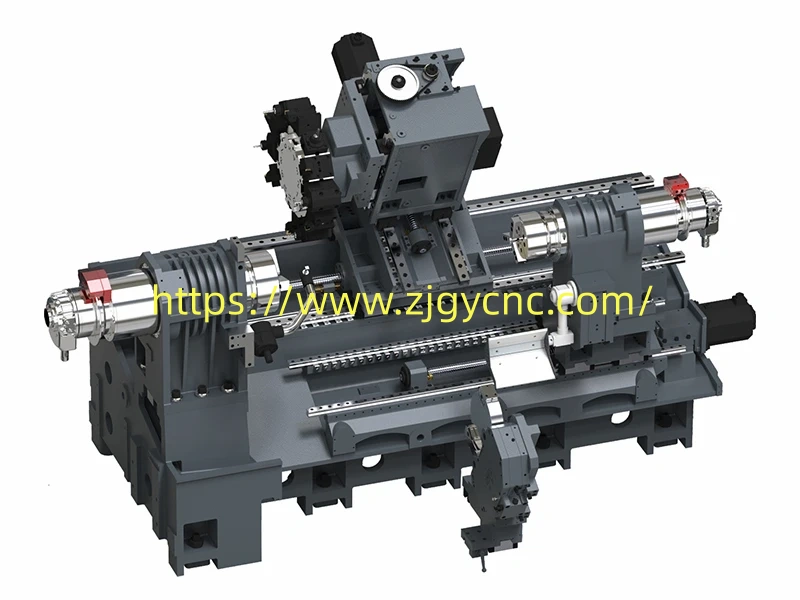
Slant-Bed CNC Lathe selection should be based on the actual parts, materials, and production processes a workshop needs to handle. Buyers should consider workpiece geometry, machining operations, spindle performance, tooling requirements, and expected output before comparing machine models. A clear purchasing plan helps manufacturers identify suitable configurations and avoid paying for functions that their production does not require.
Analyze the Parts You Plan to Manufacture
Start by collecting drawings of representative workpieces. Pay attention to outside diameter, overall length, material grade, hole positions, grooves, threads, and dimensional tolerances. These details help determine the machining range and operations required.
Production quantity is another important factor. A workshop handling small custom batches may need flexible setup arrangements, while repeated production calls for attention to cycle time, tool changes, and material loading. Buyers should explain whether the equipment will process one product family or several different component types.
It is useful to provide both drawings and physical samples when available. This gives the manufacturer a clearer picture of the required machining tasks and allows technical discussions to focus on practical production needs.
Check Spindle Specifications Carefully
Spindle performance affects the materials, dimensions, and cutting conditions that the machine can accommodate. Buyers should review spindle power, speed range, torque, bore diameter, and chuck compatibility.
Maximum rotational speed alone does not explain how a machine will perform during different cutting operations. The torque available at the working speed may be more relevant for certain materials and heavier cuts. Ask the manufacturer for detailed specifications rather than relying on a single headline figure.
For bar-fed production, confirm the spindle bore and compatible bar diameter. If larger workpieces are involved, examine the chuck arrangement and clamping requirements. Matching these details to the raw material can help prevent restrictions after installation.
Examine Structural Design and Axis Movement
The machine frame, guideways, and axis arrangement influence movement, cutting support, and chip handling. Buyers should ask about the structural materials, guideway type, axis travel, and positioning specifications.
Consider the intended cutting load and the size of the workpiece. Different applications may require different combinations of structural support and axis movement. Buyers can also ask how the manufacturer controls vibration and maintains alignment during assembly.
Chip removal deserves attention as well. Metal chips and coolant need an effective path away from the machining area. Review the enclosure layout, coolant arrangement, and available chip conveyor options according to the materials and cutting processes involved.
Compare Turret and Tooling Options
The turret configuration should correspond with the operations required by the workpiece. Buyers need to check the number of tool stations, toolholder dimensions, indexing method, and compatibility with their existing cutting tools.
For parts involving turning, grooving, boring, and threading, the tool arrangement can influence setup time and production flow. If milling or off-center drilling is required, ask whether driven tooling or additional axis functions are available.
Prepare a tooling list for several typical parts and share it with the manufacturer. This makes it easier to discuss the appropriate configuration and identify any accessories that may be needed for the planned process.
Consider Workholding and Material Loading
Workholding has a direct impact on how parts are secured during machining. Buyers should compare chuck size, clamping method, collet options, and tailstock availability where applicable. The selected arrangement should suit the workpiece dimensions and machining forces.
Material loading also deserves attention. Manual operation may be practical for varied, small-batch work. For repeated production, a bar feeder or automatic loading system may help coordinate material supply and reduce routine handling.
Before choosing automation accessories, check the available floor space, material length, electrical interfaces, and control compatibility. Discuss possible future upgrades during the initial configuration review if production requirements may change.
Review the Control System and Software
The control system determines how operators create programs, adjust machining parameters, and monitor machine operations. Buyers should confirm the controller model, programming functions, interface language, and compatibility with existing workshop practices.
If the production team already uses a particular programming method, explain this to the supplier. Ask whether the proposed system supports the required functions and whether operator training or technical guidance is available.
Documentation should also be included in the purchasing discussion. Operating instructions, electrical diagrams, maintenance guidance, and parameter information can help the workshop organize installation and daily operation.
Plan Maintenance and Inspection
Before placing an order, ask how routine maintenance is carried out. Review lubrication points, coolant management, access to service areas, and the replacement process for commonly used components.
Buyers should also clarify the inspection procedure before shipment. Depending on the agreement, this may include checking machine configuration, axis movement, spindle operation, and sample-part machining results. Acceptance criteria should be documented so both parties understand what will be evaluated.
Spare-parts availability and technical support are also worth discussing. These arrangements help production managers prepare for routine service and coordinate responses when technical questions arise.
Discuss Your Project With the Manufacturer
A detailed inquiry helps the manufacturer recommend a configuration based on actual machining requirements. Include workpiece drawings, material information, production targets, required tolerances, tooling preferences, and automation plans. Ask for a written quotation that clearly identifies standard equipment, optional accessories, and any project-specific arrangements.
zjgycnc provides turning equipment options for different metalworking applications. Buyers can discuss machine configurations, spindle arrangements, tooling requirements, and supporting accessories according to their production plans.Before confirming the purchase, review the technical specification, included accessories, delivery schedule, installation conditions, and agreed inspection requirements. For further product information and project discussions, visit https://www.zjgycnc.com/ and contact zjgycnc with your drawings, machining requirements, or equipment inquiry.
Categorias
Leia mais
The global material handling equipment repair and overhaul services market is experiencing steady growth, driven by the increasing automation of warehouses and industrial facilities. The Material Handling Equipment Repair market is a critical component of the broader industrial MRO industry. The market is driven by the increasing demand for reliable and efficient material handling...

The global Blast Containment Receptacle Market is experiencing steady growth as heightened security concerns, stringent safety regulations, and the modernization of critical infrastructure drive demand for explosion-proof waste and hazardous material containment solutions . This comprehensive Blast Containment Receptacle Market analysis explores the evolving landscape of...

Air Purifier Market Size: Growth Drivers, Industry Trends, and Future Forecast Understanding Market Size and Growth The Air Purifier Market Size reflects increasing demand for indoor air-quality solutions across residential, commercial, healthcare, and industrial environments. Air purifiers help remove airborne particles and selected pollutants through technologies such as HEPA filtration,...

The In-Car Wireless Charging Market is on the cusp of a significant transformation, projected to reach an impressive market size of $454.0 billion by 2035, reflecting a robust compound annual growth rate (CAGR) of 4.72%. This upward trajectory highlights an evolving consumer preference for advanced charging solutions that enhance user convenience while incorporating sustainable practices. The...

The first rate Liver Diagnostics market report is a magnificent source that gives CAGR values with varieties during the estimate time of 2025-2034 for the market. The review incorporates market drivers and restrictions by utilizing SWOT investigation, alongside their effect on the interest over the conjecture period. This worldwide statistical surveying report enriches with a significant...