


Commonwealth of Independent States Underground Mining Equipment Industry Adapts to Modern Extraction Demands

According to Market Research Future, the Commonwealth of Independent States Underground Mining Equipment Industry is navigating a period of significant change as mining operators across the region confront aging fleets, evolving safety standards, and the need to improve productivity from increasingly complex deposits. The CIS region holds substantial mineral wealth, and underground mining remains central to extracting coal, metals, and industrial minerals. However, the equipment used in these operations reflects a mix of legacy machinery and gradual modernization, creating a diverse and nuanced market landscape that rewards suppliers able to serve both worlds.
Legacy Equipment and the Modernization Imperative
Much of the underground equipment in service across CIS mining operations was commissioned decades ago. While robust and familiar to operators, these machines often lag in automation, energy efficiency, and safety features compared with contemporary alternatives. The modernization imperative is driven by several factors: deeper deposits requiring more capable equipment, labor availability challenges in remote mining regions, and regulatory pressure to improve workplace safety. Manufacturers that can offer retrofit solutions alongside new machines are finding opportunities to bridge the gap between legacy fleets and modern requirements. Gradual upgrades often fit budget realities better than wholesale fleet replacement.
Safety Standards and Operator Protection
Underground mining presents inherent hazards, and equipment design plays a direct role in reducing risk. Modern machines incorporate improved ventilation, dust suppression, collision avoidance systems, and operator health monitoring. Regulatory frameworks across CIS countries are evolving, and mining companies are increasingly proactive about safety investments independent of regulatory mandates. The Commonwealth of Independent States Underground Mining Equipment Market Size conversation reflects this safety emphasis, as buyers prioritize features that protect workers and reduce operational risk. Suppliers with strong safety credentials and local service capability are better positioned to win contracts in a market where trust and reliability matter deeply.
Automation and Remote Operation Capabilities
Automation is gradually entering CIS underground mining operations, though adoption rates vary widely. Remote-controlled loaders and drills are becoming more common in hazardous zones, reducing operator exposure. Fully autonomous haulage remains limited to a few advanced operations, but interest is growing as technology matures and workforce challenges persist. The business case for automation in the region often centers on safety and consistency rather than pure labor cost reduction. Suppliers that can demonstrate reliable performance in challenging underground conditions, with strong local support networks, are gaining traction. Training programs and change management support are also important, as operators adapt to new ways of working.
Aftermarket Support and Local Service Networks
Given the geographic expanse of the CIS region and the remoteness of many mining sites, aftermarket support is a decisive factor in equipment purchasing decisions. Downtime costs are severe, and access to spare parts and skilled technicians can determine whether an operation meets production targets. The Commonwealth of Independent States Underground Mining Equipment Market Share picture is shaped significantly by service network strength. Manufacturers investing in local warehouses, technical training centers, and partnerships with regional distributors are building durable competitive advantages. Conversely, suppliers without robust local presence struggle to convert interest into orders, regardless of product quality.
Energy Efficiency and Operational Cost Pressures
Energy costs represent a substantial portion of underground mining operating expenses, and equipment efficiency directly affects profitability. Electric-powered equipment is gaining attention for its lower ventilation requirements and reduced emissions underground, though infrastructure requirements can be significant. Hybrid and battery-electric loaders are being evaluated in pilot projects, with results informing broader adoption decisions. Mining companies are increasingly calculating total cost of ownership over equipment lifespans, weighing energy savings against capital costs. Suppliers that can provide transparent efficiency data and support energy transition planning are better equipped to build long-term customer relationships.
Geological Complexity and Equipment Customization
CIS mining operations span diverse geological conditions, from deep coal seams to hard rock metal deposits. Equipment must be tailored to specific conditions, including seam height, rock hardness, and ventilation constraints. This diversity rewards suppliers with flexible design capabilities and deep application knowledge. Standardized global products often require adaptation for local conditions, and manufacturers that invest in understanding regional geology and operator practices can deliver better-fit solutions. Customization also extends to training and documentation, which should be available in local languages to support effective use.
Economic Cycles and Investment Planning
Mining investment is cyclical, tied to commodity prices and global demand patterns. Equipment purchases often follow commodity upswings, with deferrals during downturns. This cyclicality creates challenges for suppliers planning production and inventory. Companies with diversified customer bases and strong aftermarket revenue streams are more resilient through cycles. Understanding commodity market dynamics and maintaining dialogue with major mining houses helps suppliers anticipate demand shifts and align capacity accordingly. Long-term service agreements can also smooth revenue variability.
Workforce Development and Skills Transfer
Skilled equipment operators and maintenance technicians are in short supply in many mining regions. As equipment becomes more sophisticated, the skills gap widens. Manufacturers are increasingly involved in training programs, both to support customers and to build goodwill. Partnerships with technical institutes and on-site training centers help develop local talent. Suppliers that treat workforce development as part of their value proposition are strengthening customer relationships and improving equipment utilization outcomes.
Future Outlook and Strategic Considerations
The future of underground mining equipment in the CIS region will be shaped by safety regulation, automation advances, energy transition pressures, and commodity market cycles. Stakeholders should monitor policy developments, infrastructure investments, and shifts in mining company strategies. For a structured perspective on these dynamics, the Commonwealth of Independent States Underground Mining Equipment Market remains a valuable reference for companies planning investments and market entry strategies in a region where local presence, technical depth, and long-term partnership are essential to success.
Explore key developments shaping industry transformation:
Brazil Off Road Motorcycle Market
South Korea Electric Bicycles Market
Germany Electric Bicycles Market
Categories
Read More
Cardiovascular diseases remain a major healthcare concern, creating ongoing demand for medicines used in prevention, treatment, and diagnostic procedures. Dipyridamole is a pharmaceutical compound with antiplatelet and vasodilatory properties. It has applications in selected cardiovascular settings, including stroke prevention in combination with other medicines and pharmacological stress...

The packaging floor presents a constant challenge: incoming paperboard varies from thin folding carton stock to heavy corrugated sheets. Each material demands specific folding pressures, glue application rates, and transport speeds. A machine that handles only one weight restricts production flexibility and forces manufacturers to maintain separate lines or accept frequent changeover delays....

Global Analog Compute for AI Edge Vision System‑on‑Chip Market is experiencing a rapid acceleration as enterprises across automotive, industrial, security, and consumer sectors intensify their focus on low‑latency, power‑efficient visual intelligence at the edge. Driven by the convergence of advanced sensor technologies, mixed‑signal processing breakthroughs, and heightened demand for...
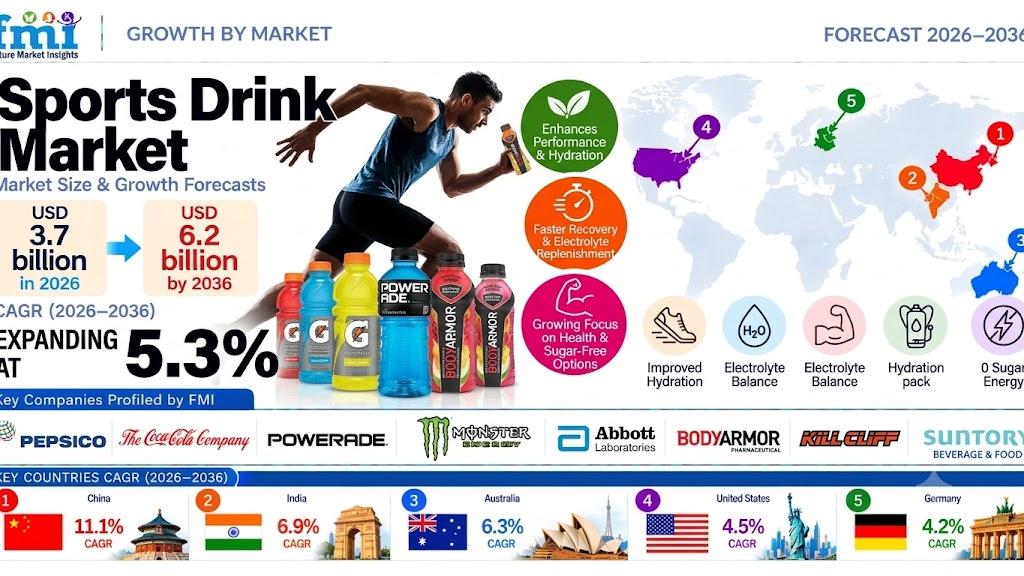
Sports Drink Market Due to demand for Convenient Hydration Products NEWARK, Del., October 22, 2026 — The global sports drink market is gaining momentum as beverage manufacturers respond to growing interest in hydration, electrolyte replenishment, sports nutrition, and functional beverages. According to the latest market intelligence report published by Future Market Insights (FMI), the...
Dental tourism—traveling abroad for dental care at lower costs—has grown into a multi-billion-dollar industry, with implant procedures among the most sought-after treatments. Countries like Thailand, Mexico, Hungary, Turkey, and India have become destinations for patients seeking affordable implants. This trend, combined with rising dental awareness and investment in emerging...