The Smart Gas Meter Industry: Certification Bottlenecks and the Hydrogen Qualification Race

A smart gas meter is a legal measuring instrument before it is a connected device. That ordering matters: a meter that cannot demonstrate metrological accuracy to a national authority cannot be sold, regardless of its software capability. The Smart Gas Meter Industry is therefore organised around certification and metrology engineering first, and around connectivity second. This analysis maps the industry's structure and identifies where competitive advantage accumulates.
The Industry Value Chain
The sector operates across five interconnected layers.
Metrology components. Diaphragms, ultrasonic transducers, turbine rotors, and MEMS sensors. This layer determines measurement accuracy—and metrology-grade transducers remain a supply constraint with reported lead times measured in months.
Low-power electronics. Microcontrollers, communications modules, and battery systems. Battery life determines replacement cycle economics—and twenty-year field service ratings are becoming a specification expectation rather than a premium feature.
Firmware and embedded software. Measurement algorithms, communications stacks, and security implementations. This layer increasingly determines product differentiation as hardware converges.
Head-end systems and meter data management. Collection platforms, analytics engines, and billing integration. The research identifies analytics attach rates exceeding 60% on new AMI contracts—confirming that software is now part of the core product.
Certification and deployment services. National metrology approvals, cybersecurity evaluation, installation, and maintenance. Certification is the industry's principal barrier to entry.
The market splits into two competitive tiers: Western platform vendors selling integrated head-end software with premium metrology, and Chinese manufacturers competing on unit economics and domestic tender access.
Certification as the Binding Constraint
No factor shapes industry competition more than certification lead time.
Every meter must be approved by national metrology authorities before deployment. Every component change requires recertification—the research notes each component substitution adds three to six months due to recertification periods. And cybersecurity certification differs materially by region: Europe requires conformance to protection profiles with formal evaluation, while North America relies more on utility-specific security assessments. The European route adds six to twelve months to product qualification.
Three industry consequences follow:
Component dual-sourcing has limits. Vendors offer dual-sourcing and design-for-substitution in response to lead times, but recertification costs blunt the benefit.
Certification breadth functions as a moat. A manufacturer certified across multiple national regimes can compete for multinational specifications that regionally limited competitors cannot serve.
Hydrogen qualification is a race with a deadline. European networks blending hydrogen require measurement that stays accurate across shifting calorific values. Certified hydrogen-tolerant ultrasonic units command a significant price premium, and asset registers increasingly reject non-compliant stock outright.
The Hydrogen Specification Shift
The industry's defining product transition is toward hydrogen-ready metrology.
The research identifies hydrogen-ready metrology as a premium tier and describes it as the clearest margin expansion path in the market. The mechanism is straightforward: calorific variability breaks legacy volumetric assumptions, pushing energy-based billing and forcing metrology revalidation across installed fleets.
The competitive consequence is that hydrogen certification is becoming a tender disqualifier rather than a differentiator—particularly in Europe, where blending pilots are active across multiple networks.
Recent industry activity confirms the race: Landis+Gyr launched a hydrogen-tolerant ultrasonic residential meter certified for blends up to 20%, targeting German and Dutch network operators facing revised asset qualification rules.
Analytics and the Service Transition
The industry's second structural shift is the migration of value from hardware to data.
Utilities are buying inference, not indices. The research notes most tenders will score pressure-anomaly detection accuracy alongside metrological class—and that analytics attach rates already exceed 60% on new AMI contracts.
The commercial model emerging is subscription-based. Vendors sell pressure-profile leak inference, theft detection, and load forecasting as recurring services, with annual per-endpoint fees that can eventually rival hardware gross profit over a long asset life.
The research identifies distribution-level pressure mapping as the fastest-emerging non-billing use case: aggregated endpoint telemetry lets operators locate leaks and model network stress without dedicated sensor deployment.
The industrial logic is that hardware is commoditising while data platforms are not. A meter manufacturer without a data management estate competes in a shrinking portion of the value chain.
The Safety Reframing
The industry's third structural force is regulatory reframing of what a meter is for.
Regulators increasingly treat the smart gas meter as a network safety asset rather than a billing device. US pipeline safety rulemaking has expanded distribution integrity obligations covering substantial mains and services mileage, pushing operators toward endpoints with excess-flow shutoff and pressure telemetry.
That reframing changes specification requirements: safety capability commands a price premium that billing efficiency alone does not justify.
Connectivity Economics
RF mesh retains the largest share because utilities with existing electricity mesh add gas endpoints at near-zero marginal backhaul cost. NB-IoT and LTE-M grow fastest through carrier longevity commitments, low power draw, and improved basement penetration. GSM/GPRS persists through legacy fleet continuity. PLC serves multi-utility shared infrastructure. LoRaWAN provides private network control.
The research notes narrowband module pricing declined substantially between 2021 and 2025, removing the stranding risk that stalled earlier rollouts.
Restraints Worth Attention
Five restraints cap growth. Semiconductor and module lead-time volatility is the sharpest near-term constraint, with metrology-grade transducers and approved low-power modules facing extended lead times. Upfront capex and rate-recovery lag creates working capital exposure in markets where regulators require assets in service before cost recovery. Consumer privacy resistance keeps residential refusal rates low but persistent, raising cost per completed installation because trucks still roll. Residential electrification erodes gas connection volumes in some markets. Cybersecurity certification burden adds cost and time, particularly in Europe.
Regional Industry Structure
Asia-Pacific holds the largest revenue share and grows fastest, with China dominating through domestic manufacturing scale and India expanding through city gas distribution licensing.
Europe holds substantial share and leads on specification stringency—hydrogen readiness, metrological requirements, and cybersecurity evaluation all set here first.
North America deployment is state-by-state, driven by pipeline safety compliance and rate-base modernisation.
South America growth runs through loss reduction and concession renewals. Middle East and Africa demand centres on prepayment billing and subsidy reform.
Strategic Priorities for Industry Participants
Four priorities separate competitive positioning from commoditization:
-
Hydrogen certification — qualifying for the premium tier before mandates arrive
-
Certification breadth across regions — market access as competitive moat
-
Analytics and meter data management — capturing the subscription layer
-
Battery life engineering — meeting twenty-year field service expectations
Conclusion
The smart gas meter industry is shaped by certification lead times and hydrogen qualification. Growth through 2035 will accrue to manufacturers who certify early, hold multi-region approval, deliver analytics alongside hardware, and engineer for extended field life. The meter still measures gas—but the industry's competitive logic runs through who can prove it does so accurately, safely, and for two decades.
Medium Voltage Commercial Switchgear Market
Oil Filled High voltage Power Transformer Market
Rechargeable Thin Film Battery Market
Petroleum Refining Hydrogen Generation Market
Gasifier Balance of Plant Component Market
Shale Gas Processing Equipment Market
Single Phase Gasoline Genset Market
Residential Lithium Ion Battery Energy Storage System Market
Categorias
Leia mais
Den globala påverkan av kulturella skillnader på spelbeteende inom nätcasinon 2025 I takt med att den digitala världen fortsätter att växa och utvecklas, har också nätcasinon blivit en betydande del av den globala underhållningsindustrin. År 2025 ser vi en alltmer komplex och mångfacetterad spelmarknad som är starkt...

Есть люди, которые зарабатывают большие деньги, при этом не являясь специалистами в какой-либо области. Это группа лиц, что хорошо осознает где есть средства, а кроме того умеет при помощи своих стратегий или же чуйки, их доставать. Пойдет речь про арбитражников! Фактически все, что вокруг видите - это товар или какая-то услуга. Порой людям сложно вызвать специалиста или же продукт, ну а...

Smart Kettle Thermostat Coupler is a temperature related connection component designed for appliances that require accurate heat management. It helps different internal sections communicate properly, allowing the product system to respond according to changing temperature conditions during operation. Modern household products include many internal elements that work together to provide smooth...
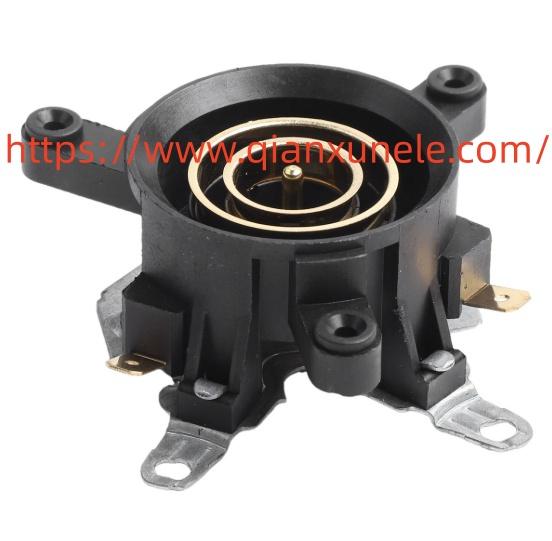
The Industrial Packaging Market is undergoing significant transformation as manufacturers across food and beverages, chemicals, pharmaceuticals, electronics, and construction seek packaging solutions that combine durability, efficiency, safety, and sustainability. According to Market Research Future, the market was valued at USD 74.4 billion in 2024 and is projected to reach USD 120.7 billion...
Logistic Pallet Mould selection involves several technical decisions that can affect product dimensions, structural performance, production efficiency, and maintenance requirements. Buyers should examine cavity construction, plastic resin compatibility, cooling design, ejection structure, machine conditions, expected output, and application requirements before confirming an order. A...