


Ring Main Unit Market Share Shifts to SF₆-Free
Market share analysis in the ring main unit sector reveals a competitive landscape where established gas-insulated leaders retain dominance while SF₆-free platforms and smart automation reshape positioning. Based on Market Research Future's assessment, the Ring Main Unit Market Share is distributed across a market valued at USD 2.87 billion in 2025 and projected to reach USD 5.48 billion by 2035 at a 7.24% compound annual growth rate. Tracking where share sits today, and where it is migrating, provides a clearer picture of competitive dynamics than aggregate growth figures alone.
Share Distribution Across Insulation Types
Gas-insulated configurations continue to dominate because the majority of global utilities still operate legacy SF₆ platforms installed between 2005 and 2018, with replacement cycles typically spanning 25–30 years so a large portion of the installed fleet will not reach end-of-life until the early 2030s, holding an estimated 62% of revenue in 2025. Yet procurement sentiment has shifted decisively: over 70% of new European tenders issued in 2024 specified SF₆-free vacuum or solid insulated platforms as mandatory. The solid-dielectric segment is the fastest-growing insulation category at a 10.3% CAGR, buoyed by compact form factors and zero greenhouse-gas liability.
Share Dynamics Across Installation and Automation
Outdoor units lead in volume at 61% of 2025 shipments because most distribution feeders terminate at pad-mounted or pole-mounted locations. Indoor designs compound faster at 9.1% CAGR as mega-cities bury secondary substations beneath commercial buildings and transit stations. Conventional manually operated units comprise 82% of 2025 shipments on cost sensitivity and simple feeder topology, while smart motorized and digital variants register a 9.7% CAGR on SAIDI reduction and IEC 61850 mandates, integrating motorized load-break switches, fault-passage indicators, and GOOSE-capable communication boards that enable remote switching from SCADA control centers.
Share Dynamics Across End Users
Distribution utilities remain the largest customer class at USD 1.52 billion in 2025, purchasing outdoor enclosure units for both new-build feeders and aging-asset replacement. Renewable energy developers constitute the fastest-growing bracket at 9.5% CAGR, as every new solar or wind park above 20 MW typically incorporates a medium-voltage ring-main loop for redundancy. Industrial facilities grow at 6.9% CAGR for factory micro-grids and mining operations, and commercial and data centers represent USD 0.22 billion in 2025 for uptime SLAs and campus ring feeds.
Regional Share Concentration
Asia-Pacific leads all regions at 46% of 2025 sales, with China at 52% of regional share through State Grid underground cable mandates, India growing at 9.5% CAGR through RDSS smart-metering districts, Japan at USD 0.18 billion through typhoon-resilient underground feeders, South Korea growing at 8.7% CAGR through KEPCO digital substation roll-out, ASEAN growing at 9.2% CAGR, and Rest of Asia-Pacific at USD 0.11 billion. Europe holds the second-largest share at approximately 24%, with Germany growing at 8.6% CAGR, the UK at 7.9% CAGR, France at USD 0.16 billion, Italy at 6.8% CAGR, Spain at USD 0.09 billion, Nordic Countries at 8.2% CAGR, Russia at USD 0.05 billion, and Rest of Europe at 7.1% CAGR. North America holds 18%, with the United States at 72% of regional share, Canada at 16%, and Mexico at 12%. South America holds 5%, and the Middle East and Africa holds 7%.
Competitive Forces Reshaping Share
The market exhibits moderate concentration, with the five largest vendors controlling an estimated 52–58% of 2025 global revenue and the Herfindahl-Hirschman Index sitting in the 800–1,100 range, indicating a moderately fragmented structure where global incumbents compete with regional specialists in price-sensitive tenders, and Chinese manufacturers such as CHINT and TBEA exert downward pricing pressure in the Asia-Pacific and Middle East corridors.
ABB holds approximately 10–14% through SafeLink dry-air and UniSec MV offerings, positioned as global leader in SF₆-free innovation. Schneider Electric holds approximately 9–13% through RM AirSeT, SM6, and Premset, with broad digital-ecosystem integration through EcoStruxure. Siemens Energy holds approximately 8–12% through 8DJH compact and NXPLUS C, with strong European utility relationships. Eaton holds approximately 6–9% through Xiria solid-dielectric and Power Xpert, as solid-dielectric pioneer with modular design. Lucy Electric holds approximately 4–7% through Gemini, Sabre, and Aegis, as specialist MV switchgear with strong UK and MEA presence. LS Electric holds approximately 3–6% through SIS series and GIS Ring Main, as leading South Korean OEM with KEPCO partnerships. Alfanar Group holds approximately 2–4% as Middle East regional champion. CHINT Group holds approximately 3–5% through HXGN-12 and XGN-12 series, as cost-competitive Chinese manufacturer. TBEA Co. holds approximately 2–4% through transformer-integrated packages. Toshiba Energy Systems holds approximately 2–3% through VRB series and typhoon-rated enclosures.
Recent developments include Siemens Energy opening a vacuum-interrupter production facility in Berlin in October 2024. Eaton expanding the Xiria solid insulated range to 24 kV in July 2024. The European Commission publishing the final text of F-Gas Regulation (EU) 2024/573 in June 2024. LS Electric winning a KRW 82 billion contract from KEPCO in February 2024. CHINT Group commissioning a new MV switchgear factory in Wenzhou in November 2023.
Challenges Affecting Share Stability
Share positions are not fixed. Vacuum and solid insulated platforms carry a 20–35% price premium over incumbent gas-insulated designs, creating procurement resistance in markets such as Southeast Asia, sub-Saharan Africa, and parts of South America until manufacturing scale drives per-unit costs below parity — projected around 2029. Fragmented standards require OEMs to maintain parallel type-test portfolios, inflating compliance costs and lengthening go-to-market timelines. CIGRÉ's 2024 workforce survey found that 38% of distribution utilities in OECD countries report insufficient in-house competency to commission IEC 61850 devices, delaying digital deployments by 6–12 months on average.
Future Outlook for Share Distribution
The forward view anticipates share migration rather than wholesale displacement. Gas-insulated configurations are expected to retain leadership, while SF₆-free platforms gain share decisively after 2026 as European regulation takes effect. Smart automation is expected to gain share relative to manual units. Renewable energy developers are expected to gain share relative to distribution utilities in percentage terms. OEMs exploring outcome-based contracts where utilities lease solid insulated platforms and pay per switching operation rather than purchasing outright could reshape competitive dynamics by favoring vendors with strong digital-services ecosystems.
Expert Discussion
Analysts note that share leadership in ring main units is less about any single insulation type than about fit between unit characteristics and installation requirements. Gas-insulated units suit mature grids with established SF₆ handling capability; SF₆-free vacuum and solid dielectric units suit regulated markets with phase-down mandates; outdoor units suit rural and peri-urban feeder loops; indoor units suit confined urban substations; conventional manual units suit cost-sensitive simple feeder topologies; smart IEC 61850 variants suit utilities pursuing feeder automation and SAIDI reduction.
Experts also emphasize that from 2026, the EU's Corporate Sustainability Reporting Directive requires large utilities to disclose Scope 3 emissions including SF₆ leakage from installed switchgear, providing a financial incentive to replace aging gas-insulated units with SF₆-free alternatives and reinforcing the transition trajectory.
Conclusion
The ring main unit market share landscape reflects a sector where leadership is distributed across insulation types, installation formats, and regions. Current share positions favor gas-insulated configurations and distribution utilities, while SF₆-free platforms and renewable developers represent the fastest-moving share gainers. Emerging opportunities lie in retrofit programs, micro-grid packages, and edge intelligence. Technological developments in solid dielectric insulation and IEC 61850 automation are steadily reshaping competitive positioning. The long-term outlook anticipates continued share migration toward integrated, digitally enabled providers, with the Ring Main Unit Market evolving into a more technology-segmented competitive arena by 2035.
Категории
Больше
The global travel industry is experiencing a major revival, and this resurgence is directly boosting the Duty Free Retail Market. Duty free retail refers to the sale of products exempt from certain local or national taxes and duties, primarily available at airports, cruise terminals, border shops, and international transit hubs. As international tourism rebounds and consumer spending on luxury...

The Mycotoxin Binders Market is segmented by type and target livestock, each offering unique growth dynamics. A deep understanding of these segments is crucial for stakeholders to identify high-growth opportunities and tailor their strategies effectively. This article provides a detailed analysis of these key segments. Market Dynamics Product Type Segment: Inorganic Binders Dominate...

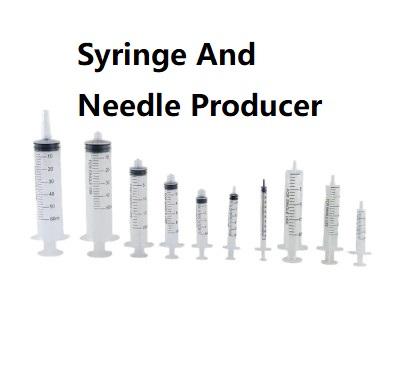
For healthcare distributors and procurement teams, comparing Disposable Syringe Suppliers carefully can make product sourcing more efficient and organized. Reliable Disposable Syringe Suppliers should offer clear specifications, consistent production, suitable packaging, and practical options for different market requirements. Disposable syringes are used across a wide range of professional...
Understanding the Vibration Monitoring Market Value distribution involves examining key global tech institutions, specialized software developers, and major industrial conglomerates that dominate through extensive active frameworks, robust product durability, and worldwide service networks. Established market players continually invest heavily in R&D to maintain competitive superiority over...

The luxury boat market is experiencing remarkable growth as affluent consumers increasingly seek exclusive leisure experiences on the water. Rising disposable incomes, expanding marine tourism, and growing interest in recreational boating are driving demand for high-end vessels worldwide. Luxury boats offer comfort, advanced technology, and personalized features, making them an attractive...