


Comprehensive Strategic Evolution of Electrochemical Double-Layer Charge Storage Dynamics and High-Power Ultracapacitor Architectures
Modern automotive regenerative braking subsystems, utility grid frequency regulation banks, heavy industrial lift equipment, and defense pulsed-power platforms depend fundamentally on instantaneous burst-power delivery, establishing the operational foundation of the Electric Double Layer Capacitor Industry. For decades, electrical energy storage was divided between two contrasting technologies: conventional dielectric electrostatic capacitors and chemical secondary batteries. Dielectric capacitors deliver rapid sub-microsecond charge and discharge rates with virtually unlimited cycle lives, but suffer from low energy densities that restrict energy storage to micro-joules or millijoules. Conversely, chemical lithium-ion and lead-acid batteries store high volumetric and gravimetric energy densities, but rely on slow, temperature-sensitive Faradaic redox reactions across bulk electrode materials, limiting burst-power delivery (c-rates) and degrading chemically after a few thousand charge-discharge cycles. Electric Double-Layer Capacitors (EDLCs)—commonly termed supercapacitors or ultracapacitors—resolve this fundamental energy-power trade-off by storing electrical charge electrostatically at the microscopic interface between a high-surface-area porous electrode and an electrolyte solution. Operating with non-Faradaic electrostatic adsorption and desorption of ions across Helmholtz double layers, EDLCs achieve capacitance values reaching thousands of farads, deliver power densities exceeding 10 kW/kg, operate reliably across extreme temperatures (-40°C to +65°C), and survive over one million deep-discharge cycles without capacity loss.
The foundational engineering of contemporary EDLC architectures centers on nanoscale electrode synthesis, porous separator design, and electrolyte transport kinetics. In a commercial cylindrical or prismatic EDLC cell, two opposing current collectors (typically etched high-purity aluminum foils) are coated with an active material layer composed of highly porous activated carbon derived from coconut shells or synthetic precursors. The activated carbon exhibits specific surface areas exceeding 1,500 to 2,500 square meters per gram ($m^2/g$), packed with hierarchical networks of micropores (<2 nm) and mesopores (2 to 50 nm) tailored to match the bare and solvated ionic radii of electrolyte ions. The electrodes are separated by an ultra-thin, porous polymeric or cellulose separator membrane that prevents physical electrical contact while permitting rapid ionic migration. The cell is impregnated with a non-aqueous liquid electrolyte—predominantly quaternary ammonium salts (such as tetraethylammonium tetrafluoroborate / $TEABF_4$) dissolved in acetonitrile (AN) or propylene carbonate (PC) solvents—yielding operational cell voltages of 2.7V to 3.0V. When voltage is applied, solvated cations and anions migrate electrostatically to the oppositely charged electrode surfaces, forming electric double layers separated by sub-nanometer molecular distances ($d \approx 0.5\text{ to }1.0\text{ nm}$), producing enormous capacitance governed by the electrostatic interface equation ($C = \frac{\varepsilon A}{d}$).
Deploying comprehensive EDLC platforms delivers decisive burst-power efficiency, cold-cranking reliability, and operational lifecycle advantages across electric transportation, renewable power, and critical industrial automation. In hybrid and battery electric vehicles (EVs), modular EDLC packs interface with the high-voltage DC bus via bidirectional DC-DC converters: during rapid vehicle deceleration, the ultracapacitor captures high-current regenerative braking surges that would otherwise overheat and degrade lithium-ion battery cells, releasing that captured energy immediately during subsequent vehicle acceleration to preserve main battery health. In wind turbine pitch control systems, EDLC banks replace failure-prone lead-acid battery packs inside rotor hubs: when emergency grid power is severed, the ultracapacitors deliver instantaneous peak current to feather massive turbine blades out of high-velocity storm winds, operating with high reliability in freezing offshore maritime environments without requiring heated enclosures. Furthermore, in automated material handling and automated guided vehicles (AGVs) operating in 24/7 logistics warehouses, EDLC-powered vehicles recharge via inductive floor charging pads in under thirty seconds while loading cargo pallets, eliminating multi-hour battery swapping downtime.
Looking toward strategic long-term energy storage roadmaps, EDLC architectures are converging with graphene and carbon nanotube (CNT) nanostructures, ionic liquid electrolytes, and hybrid lithium-ion capacitor (LIC) bridges. Packaging foundries and material science laboratories are deploying vertically aligned carbon nanotube arrays that eliminate tortuous pore pathways, accelerating ionic transport and boosting cell frequency response. Concurrently, room-temperature ionic liquids (RTILs) with wide electrochemical stability windows push operating cell voltages beyond 3.5V to 4.0V: because stored electrostatic energy scales quadratically with operating voltage ($E = \frac{1}{2}CV^2$), elevating cell voltage dramatically expands volumetric energy density. Supported by international standards governing ultracapacitor testing and safety (such as IEC 62391 and ISO 12405 for automotive power systems), electric double-layer capacitors maintain an indispensable technological foundation driving the global transition toward high-efficiency industrial electrification, grid stabilization, and peak-power management worldwide.
Top Trending Reports :
Human Resources Due Diligence Services Market
Immigration And Visa Law Consulting Services Market
Industrial 3D Printing Services Market
Categorias
Leia Mais
The beverage industry is experiencing a paradigm shift as consumers redefine what it means to enjoy a drink. The non-alcoholic RTD beverages market has capitalized on this cultural moment, offering products that deliver on taste, experience, and social connection without the effects of alcohol. This category has moved from the margins to the mainstream, attracting investment from major beverage...

The Non Dairy Coffee Creamers Market is experiencing a strong surge in demand, fueled by shifting consumer preferences and increasing awareness of dietary choices. One of the key growth drivers is the rising popularity of plant-based coffee creamer demand, which reflects a broader movement toward healthier and sustainable consumption patterns. Consumers today are actively seeking alternatives...
This final article provides a data-driven projection of the industry's future. It examines the 2 In 1 Laptops Market Forecast as we move toward the next decade, focusing on critical development vectors. Market Overview and Introduction The projected growth for this segment is robust, buoyed by continuous technological integration. As the digital and physical worlds become increasingly linked,...

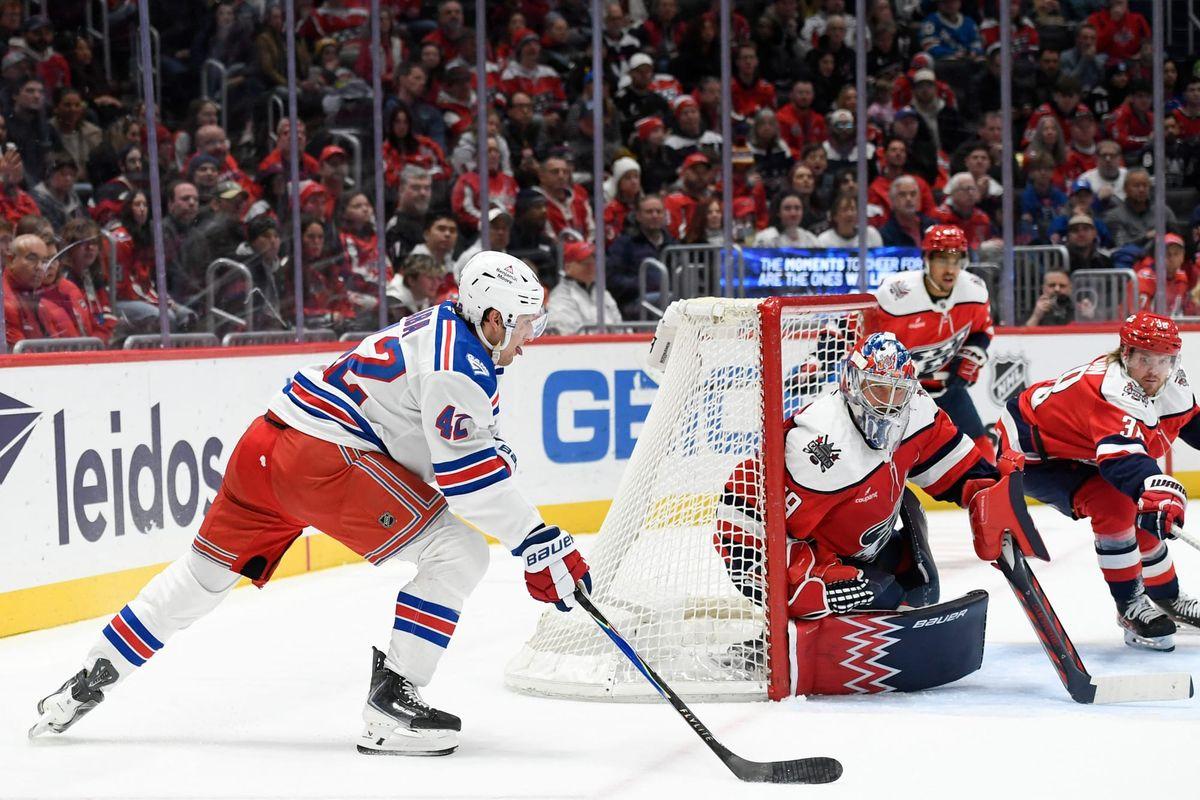
Refreshing York Rangers President and Over-all Supervisor Chris Drury introduced currently that the personnel contains agreed in direction of phrases with defenseman Braden Schneider upon a a person-yr , 24, skated within just 82 video games with the Rangers this outside of period, registering 2 plans and 16 allows for 18 specifics, together with 26 penalty minutes. He was 1 of 4 Rangers who...
The high density polyethylene plastic pail market is witnessing a robust surge in demand, driven by an expanding array of applications across various sectors. With the market size projected to reach USD 15.19 million by 2035, a significant increase from USD 10.11 million in 2024, this upward trajectory highlights the growing relevance of these durable containers in industrial use. The expected...