


The Industrial Separator Industry: Application Diversity and the Engineering of Separation Efficiency
There is no such thing as a general-purpose separator. The device that removes ferrous contamination from food powder operates on a completely different principle from the centrifuge that separates cream from milk, which operates differently again from the cyclone that removes solids from gas. The Industrial Separator Industry is therefore not one industry but a family of related technology segments, each with its own engineering logic, competitive field, and customer base. This analysis maps that structure and identifies where competitive advantage accumulates.
The Industry's Technology Families
The industry organizes around distinct separation principles.
Magnetic separation exploits magnetic susceptibility to remove ferrous and weakly magnetic contamination. Applications span food safety, chemical purity, recycling, and mineral processing. Recent development—such as Goudsmit Magnetics' enhanced Easy Clean Flow magnet designed to extract metal particles from powders—illustrates the segment's continuing refinement toward finer particle capture and easier cleaning.
Centrifugal separation exploits density differences, using rotational force to separate materials of differing density. Applications span dairy processing, beverage clarification, oil-water separation, and chemical processing. This is the fastest-growing technology family, driven by separation speed and efficiency advantages.
Cyclone separation uses centrifugal force in a static geometry to separate solids from gas or liquid streams. Valued for simplicity, low maintenance, and no moving parts.
Gas-liquid separation removes entrained liquid from gas streams or entrained gas from liquid streams. Essential in oil and gas production and processing.
Liquid-liquid separation separates immiscible fluids—most commonly oil from water—using gravity, coalescing media, or centrifugal force.
Membrane separation uses semi-permeable barriers to separate dissolved species. The research identifies advanced membrane separation for water treatment as a specific growth opportunity.
Each technology family has its own competitive field, its own standards regime, and its own customer relationships. A manufacturer strong in magnetic separation is not necessarily strong in centrifugal separation—and vice versa.
The Engineering of Selection
The industry's defining characteristic is that separator selection is engineering, not purchasing.
Effective separation depends on matching technology to feedstock characteristics:
-
Particle size distribution determines whether magnetic, screening, or centrifugal methods apply
-
Density differences determine whether gravity or centrifugal separation is viable
-
Flow rate determines equipment scale and residence time requirements
-
Feed variability determines whether fixed or adjustable separation parameters are needed
-
Purity requirements determine the number of separation stages required
-
Regulatory discharge limits determine acceptable residual contamination
Choosing the wrong separator does not produce suboptimal results—it produces failed separation. That makes application expertise a genuine competitive moat, and it explains why the industry's leading players combine equipment supply with process engineering services.
The Digitalization Shift
The industry's second structural force is digitalization.
Traditional separators operate on fixed parameters set at commissioning. Modern separators increasingly monitor their own performance and adjust accordingly:
-
Differential pressure monitoring indicates filter or screen loading
-
Efficiency measurement identifies performance degradation
-
Predictive maintenance anticipates component failure
-
Automated adjustment responds to feed condition changes
The research identifies the integration of automation and smart technologies as a prevailing trend, with real-time monitoring and optimization becoming standard in advanced systems.
The industrial consequence is that separators are migrating from mechanical equipment into monitored process components. This favors manufacturers with instrumentation and software capability over purely mechanical specialists, and it creates service revenue opportunities through monitoring and maintenance contracts.
Sustainability as Industry Structure
Environmental regulation shapes the industry in two distinct ways.
Compliance demand. Tightening discharge and emission standards require better separation performance. A plant facing stricter effluent limits must upgrade separation equipment—making regulation a demand driver rather than a burden.
Resource recovery. Separators enable recovery of valuable materials from waste streams—metals from recycling, oil from coolant, water from process streams. As resource costs rise, recovery economics improve, creating demand for separation equipment in applications that previously treated waste as disposal.
The research identifies sustainability initiatives as a prominent trend, with companies actively seeking solutions that improve efficiency while reducing environmental footprints.
End-User Structure
Power holds the largest end-user share, reflecting continuous separation requirements in generation and associated water treatment.
Oil and gas represents a dominant segment, with the research noting its critical role in hydrocarbon recovery and processing, supported by diverse separator technologies including centrifugal and membrane separations.
Chemical is the fastest-growing end-user segment, driven by investment in sustainable processes, environmental compliance, and increasing process complexity.
Mining is an emerging segment, stimulated by demand for minerals essential to infrastructure and renewable technologies, with deeper mining operations increasing separation requirements.
Food and beverage contributes substantial demand through filtration and separation essential to product quality and safety.
Regional Industry Structure
North America holds approximately 40% of global share, with oil and gas, food and beverage, and wastewater treatment driving demand, supported by regulatory frameworks. Schlumberger, Eaton, and Parker Hannifin anchor the competitive landscape.
Europe accounts for roughly 30%, driven by stringent environmental regulation and sustainability focus. Alfa Laval and GEA Group are prominent, with Germany and France leading.
Asia-Pacific represents about 25% and grows fastest, driven by industrialization, urbanization, and infrastructure investment. Andritz AG and Siemens AG compete alongside regional manufacturers in China, India, and Japan.
Middle East and Africa accounts for roughly 5%, driven by oil and gas plus growing water treatment and food processing investment, with Koch Industries and Flottweg SE establishing positions.
Strategic Priorities for Industry Participants
Four priorities separate competitive positioning from commoditization:
-
Application-specific engineering — matching technology to feedstock, not selling catalogue products
-
Digitalization and monitoring — converting separators into instrumented process components
-
Sustainability positioning — serving compliance and resource recovery demand
-
Localized manufacturing — reducing lead times and managing trade exposure
Conclusion
The industrial separator industry is a collection of technology families unified by a common engineering logic: separation must be designed for the specific mixture being separated. Growth through 2035 will accrue to manufacturers who combine application depth with digital capability and sustainability positioning. The industry's fragmentation by technology is also its protection—no single competitor can dominate across all separation principles, and expertise remains the primary competitive currency.
US Managed Pressure drilling Market
US Traction Transformer Market
US Air Operated Double Diaphragm Pumps Market
الأقسام
إقرأ المزيد
The global fishing industry relies on durable and dependable materials to support commercial fishing, aquaculture, and recreational activities. Monofilament products are widely used in fishing lines, nets, ropes, and related equipment because of their strength, flexibility, and resistance to repeated mechanical stress. As seafood consumption increases and commercial fishing operations expand,...

Next record the width and height of the panel along with the distance from the pivot line to the free edge. Wider panels generate greater leverage forces that concentrate stress on the upper connector. Taller panels may require an additional central support point to limit flex over time. These geometric details influence both the length of each arm and the total number of units recommended for...
Если необходимо справку получить, при этом намерены выполнить все оперативно, а кроме того по разумной цене, заехать надо в центр медицинских услуг МосКлиник! Существует немало разнообразных центров, там возможно заказать врачебные справки. В случае если позволяет время, то в общем-то можно будет на текущий день отправиться в любую клинику лечения. А если время цените, а кроме этого...

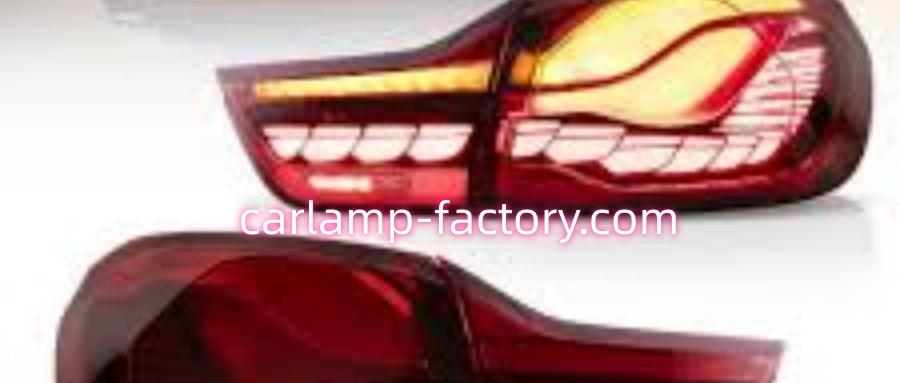
Have you ever wondered how to make your vehicle stand out subtly during evening drives? Dark Tail Lights Supplier emerges as a trusted avenue for those pursuing refined rear lighting solutions. Picture navigating winding roads under starry skies, with your car's tail end emitting a soft, enigmatic shine that intrigues passersby. This kind of refinement adds a layer of sophistication, appealing...
Global DPU (Data Processing Unit) Market is poised for robust expansion, driven by the accelerating need for high‑performance data‑plane acceleration across cloud, edge and enterprise environments. The study projects a compound annual growth rate (CAGR) of 9.5 % through 2034, underscoring the transformative impact of DPUs on modern compute architectures. Data Processing Units act as...