


The Double Diaphragm Pumps Industry: Value Chain, Materials, and the Push Toward Smart Fluid Handling

Fluid handling is one of the least glamorous corners of industrial equipment—and one of the most essential. The Double Diaphragm Pumps Industry sits at the intersection of chemical processing, water infrastructure, food production, and pharmaceutical manufacturing, supplying the equipment that moves fluids too difficult for conventional pumps to handle. What distinguishes the current period is not volume growth, which is modest, but structural change: electrification of drive systems, tightening hygiene and environmental standards, and the arrival of IoT monitoring are all altering what manufacturers must supply. This analysis maps the industry's structure and identifies where competitive advantage is accumulating.
The Industry Value Chain
The sector operates across five interconnected layers:
Diaphragm and elastomer materials. PTFE, EPDM, nitrile, and thermoplastic elastomers determine chemical compatibility, temperature range, and service life. This layer is where pump performance is fundamentally constrained.
Wetted-path materials. Thermoplastics, stainless steel, aluminum, and cast iron form the fluid-contacting components. Material selection determines which applications a pump can serve—and increasingly, which regulatory standards it can meet.
Drive systems. Air valves and compressors for air-operated units; motors and variable-speed drives for electric units; hydraulic power packs for high-pressure units. This layer is where the industry's efficiency story is being written.
Control, monitoring, and connectivity. Sensors, controllers, and increasingly IoT gateways for remote monitoring and predictive maintenance.
Assembly, testing, and certification. Hygiene certification for food and pharmaceutical service, ATEX and hazardous-area approvals, and performance verification. Certification functions as a barrier to entry.
Market Research Future characterizes the sector as moderately fragmented—a concentrated global tier holds substantial share, with regional manufacturers occupying meaningful positions, particularly in Asia-Pacific.
Materials as Competitive Terrain
The material segmentation reveals where the industry's technical contest is concentrated. Thermoplastics hold the largest share—lightweight, corrosion-resistant, and cost-effective across general industrial duty.
Stainless steel is the fastest-growing material segment. Two forces drive it: hygienic applications in food and pharmaceuticals, where cleanability and corrosion resistance are non-negotiable, and aggressive chemical service where durability justifies premium pricing.
Cast iron serves heavy-duty applications requiring strength and wear resistance at high flow rates and pressures. Aluminum occupies the cost-sensitive middle ground.
The industry implication: as pharmaceutical and food applications grow faster than general industrial demand, material capability becomes a specification gatekeeper. Manufacturers without credible stainless steel and hygienic-grade portfolios will be excluded from the fastest-growing demand pools.
The Electrification Transition
The type segmentation captures the industry's central transition. Air-operated units hold the largest share—reflecting decades of installed base, simplicity, and intrinsic safety in hazardous areas.
Electric-operated units grow fastest, driven by four industry realities:
-
Energy cost pressure — compressed air is an expensive utility, and plants are actively reducing air consumption
-
Decarbonization targets — electric drive aligns with plant-level emissions reduction programs
-
Noise regulation — occupational noise limits increasingly restrict air exhaust
-
Precision requirements — variable-speed control enables accurate dosing and flow regulation
Hydraulic-operated units remain a specialized segment for very high discharge pressures.
For manufacturers, the strategic question is whether to defend air-operated share, invest in electric capability, or both—a capital allocation decision with long-term competitive consequences.
Standards and Regulation as Industry Structure
Regulation shapes industry structure in three distinct ways.
Hygiene standards. Food safety and pharmaceutical regulations require documented cleanability, material compliance, and in some cases design certification. Meeting these standards requires dedicated product lines and testing infrastructure.
Hazardous-area approvals. ATEX and equivalent certifications are essential for chemical and oil and gas applications. Certification breadth functions as a market access moat.
Environmental regulation. Emissions rules, volatile organic compound limits, and efficiency standards influence drive-system selection and leak-tightness requirements.
For the industry, regulation is simultaneously a compliance cost and a competitive barrier that protects established players.
Digitalization and the Service Model Shift
The industry's emerging disruption is connectivity. IoT-enabled pumps offer real-time performance monitoring, predictive maintenance alerts, and remote diagnostics.
The consequences extend beyond product features:
-
Service revenue models — monitoring enables condition-based maintenance contracts
-
Downtime reduction — predictive alerts prevent unplanned process stoppages
-
Documentation automation — performance logs support regulatory compliance and validation
Recent industry activity reflects this shift: Yamada's partnership integrating IoT capability, and SPX FLOW's launch of an IoT-enabled pump series, both signal that connectivity is moving from differentiator to expectation.
Demand-Side Structural Change
Industry demand is being reshaped by forces outside the pump sector itself.
Water infrastructure investment drives demand for slurry and chemical dosing pumps in municipal treatment plants.
Pharmaceutical expansion requires precise, sterile fluid handling with validation documentation.
Chemical industry modernization favors pumps capable of handling aggressive media with reduced maintenance.
Food safety regulation increases specification requirements for hygienic equipment.
Industrial automation pushes demand toward pumps that integrate with plant control systems.
Regional Industry Structure
North America holds roughly 45% of global share, supported by industrial base depth and manufacturer concentration. Graco, Wilden, and Aro anchor the competitive landscape.
Europe accounts for approximately 30%, with regulatory pressure on efficiency and hygiene shaping product requirements. Almatec and Binks are prominent.
Asia-Pacific represents about 20% and grows fastest, driven by industrialization. Yamada and Parker Hannifin compete alongside expanding domestic manufacturers.
Middle East and Africa, at roughly 5%, is driven by oil and gas and water infrastructure.
Strategic Priorities for Industry Participants
Four priorities separate competitive positioning from commoditization:
-
Electric drive capability — capturing the fastest-growing type segment
-
Hygienic material and certification breadth — access to pharmaceutical and food demand
-
IoT and monitoring capability — enabling service models and specification advantage
-
Regional manufacturing — lead-time and trade-exposure management
Conclusion
The double diaphragm pumps industry is transitioning from mechanical equipment supply into monitored fluid-handling solutions. Growth through 2035 will accrue to manufacturers who combine material depth in stainless steel and hygienic grades, electric drive capability, and connectivity that supports service-based relationships. The pumps may still look like familiar metal and plastic housings—but the industry behind them is becoming a monitoring and materials business with a mechanical component.
US Microgrid Monitoring Market
US Solar Thermal Collectors Market
US Fault Current Limiter Market
US Vacuum Circuit Breaker Market
Categorie
Leggi tutto
La gamificación en los casinos en línea: cómo las tendencias de 2025 están transformando la lealtad del jugador y la experiencia de juego En la última década, el crecimiento de los casinos en https://mr.bet/uy línea ha sido meteórico, impulsado por la innovación tecnológica y la creciente aceptación del juego digital....

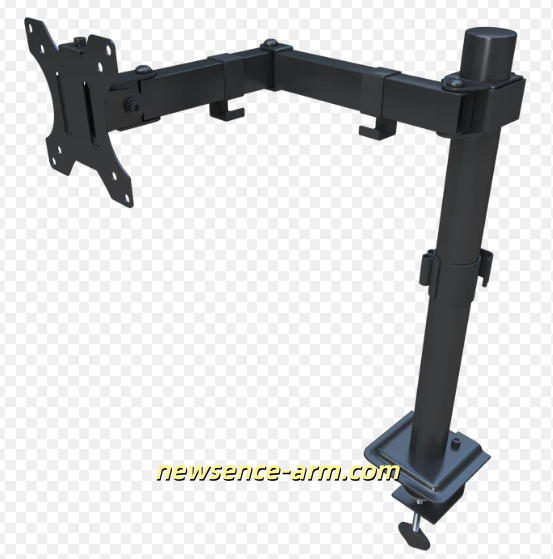
A Medical Monitor Arm provides healthcare environments with flexible support for displays, allowing screens to be positioned according to procedural needs, room layout, or staff preferences. Adjustable height, tilt, and reach enable caregivers to maintain comfortable postures while accessing patient data or imaging systems. Unlike fixed mounts, a movable monitor arm improves workflow...
Raw material interface separation during composite manufacturing creates extra processing waste for production plants, many workshop technicians seek unified operating standards to balance substrate compatibility and raw material activity,silane coupling agent delivers stable bridging performance only under matched preparation and heating settings, industrial users may collect all...

Manufacturing executives and plant managers regularly assess production system options when they aim to strengthen operational structures and many direct attention toward Automaticmachinefactory during reviews of Automation Machinery And Equipment opportunities. The possibility of achieving meaningful changes in labor allocation through these systems generates substantial interest among...

Selecting a dependable Lightweight Scooter Factory is an important part of building a successful product strategy, and Sweetrichmobility reflects a manufacturing philosophy centered on practical design, open collaboration, and continuous refinement. A productive partnership grows through clear communication, shared objectives, and careful attention to every stage of product development....
