


Top Conditions Treated with Minimally Invasive Lumbar Spine Surgery
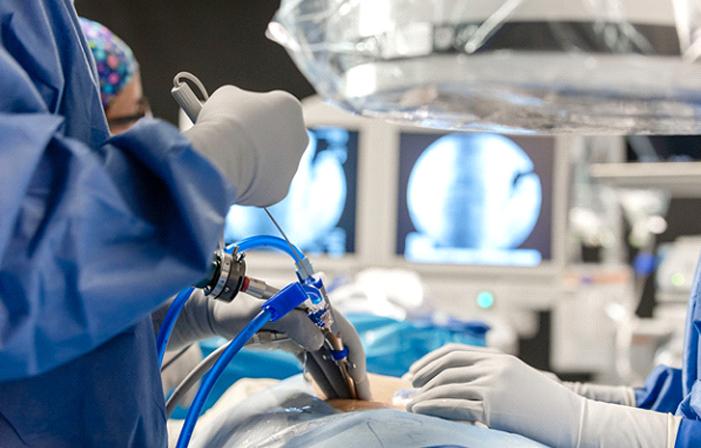
Minimally invasive lumbar spine surgery (MIS) has revolutionized the treatment of chronic back pain and nerve dysfunction by prioritizing smaller incisions and minimal tissue disruption. While traditional open surgeries often require significant muscle retraction and longer recovery periods, MIS techniques allow surgeons to address several debilitating spinal conditions with significantly reduced trauma to the body.
One of the primary conditions treated with this approach is a lumbar herniated disc. Through a procedure known as a microdiscectomy, surgeons can remove the portion of the disc that is pressing against spinal nerves, effectively relieving symptoms of sciatica and weakness. Another frequent application is for spinal stenosis, a narrowing of the spinal canal that often occurs with aging. By performing a minimally invasive laminectomy or foraminotomy, surgeons can create space for the nerves, alleviating the leg pain and heaviness associated with the condition.
Furthermore, MIS is highly effective for managing degenerative disc disease and spondylolisthesis—a condition where one vertebra slips forward over another. In these cases, procedures like a Transforaminal Lumbar Interbody Fusion (TLIF) can stabilize the spine using specialized instruments that navigate through small portals rather than large incisions.
The clinical benefits of these techniques are substantial: patients typically experience less postoperative pain, reduced blood loss, and a significantly lower risk of infection. By preserving the integrity of the surrounding muscles and ligaments, Minimally Invasive Lumbar Spine Surgery allows patients to return to their daily activities and work much faster than traditional methods, often turning what was once a major hospital stay into an outpatient-friendly recovery.
Категории
Больше
Plastic Toolbox storage can make a noticeable difference in a busy workshop where every work surface, shelf, and walkway has a purpose. When tools are scattered across benches or stored in oversized cabinets, workers may spend unnecessary time looking for equipment before a task even begins. Stackable storage offers a straightforward alternative by making better use of vertical space....

The Ferroelectric RAM (FeRAM) Market was valued at USD 269 million in 2025 and is projected to reach USD 360 million by 2033, expanding at a CAGR of 4.3% during the forecast period. Ferroelectric RAM is a non-volatile memory technology that combines data retention without power with fast write performance and high endurance. Download FREE Sample Report: Download Sample Report What Makes the...

The Space Power Electronics Market is emerging as a critical enabler of modern space missions, supporting everything from communication satellites to deep space exploration. As global investments in space technology accelerate, the demand for efficient, reliable, and radiation-hardened power systems is increasing significantly. Space power electronics refer to specialized electronic systems...
Semiconductor Insight Publishes Comprehensive Research on the Through Glass Vias Packaging Solution Market, Highlighting Glass Interposers, High-Density Interconnects, and Advanced Integration Technologies The increasing complexity of semiconductor packaging is creating demand for advanced interconnect technologies that support compact designs, high-frequency performance, and precise electrical...
The global Wide Mouth Bottle Market has gained substantial momentum as industries increasingly demand convenient, durable, and easy-to-use packaging formats. Wide mouth bottles are designed with larger openings compared to traditional bottles, allowing users to fill, pour, and clean containers more efficiently. This design advantage makes them highly desirable across sectors such as food...