


Automotive AHSS Market Size: Why Press-Hardened Steel Grows Twice as Fast as the Market

According to recent analysis published by Market Research Future, the Automotive AHSS Market Size reached USD 24.90 billion in 2025 and is projected to reach USD 49.59 billion by 2035 at a 6.26 percent CAGR. Within that growth, one segment is expanding at nearly twice the market rate: Press-Hardened Steel, which posts a CAGR of 8.1 percent and grew from USD 5,477 million in 2025.
The PHS Mechanism
Press-Hardened Steel is produced by heating blank steel to austenitization temperature, forming it in a die, and simultaneously quenching it to achieve martensitic transformation. The result is tensile strength exceeding 1,500 MPa post-quenching—strength that cannot be achieved through conventional cold stamping.
The consequence is that PHS occupies a specific application territory: A-pillars, B-pillars, roof rails, and rocker panels where crash intrusion resistance is the primary design criterion. A pillar must prevent the roof from collapsing onto occupants during a rollover. A B-pillar must prevent side intrusion during a side impact. These applications require strength that ordinary AHSS cannot deliver.
The Regulatory Escalation
The growth driver is regulatory. NHTSA's FMVSS 214 side impact protection standard and FMVSS 216 roof crush resistance standard establish minimum intrusion thresholds that effectively require PHS-grade strength in critical structural members.
The IIHS small-overlap front crash test, introduced to address a specific fatality pattern, requires structural members that can withstand concentrated impact forces on a narrow front section—a requirement that has driven expanded PHS use in front structures including A-pillar reinforcements and door ring assemblies.
Euro NCAP's tightening protocols and China NCAP's alignment with European methodologies extend these requirements globally.
The Structural Integration Trend
Baosteel's integrated hot-stamped double door ring solution, launched in November 2024, illustrates how hot-forming technology is advancing structural integration. A single-piece PHS component replaces multiple welded sub-assemblies in the vehicle side structure, offering improved intrusion resistance, reduced part count, and lower assembly complexity.
The consequence is that PHS is not simply replacing other steel grades—it is reshaping how structures are designed. A component that would have required multiple stampings and welds can now be produced as a single hot-stamped part.
Grade Segmentation Context
Dual Phase steel remains dominant at USD 8,713 million in 2025, reflecting its balanced formability-strength profile suited to high-volume BiW applications. DP steel's 5.8 percent CAGR reflects maturity.
Complex Phase steel held USD 3,486 million with a 6.2 percent CAGR, offering high energy absorption for crash zones. Martensitic steel held USD 2,739 million at 5.5 percent CAGR, offering maximum strength for bumper beams and intrusion resistance. TRIP steel held USD 2,490 million at 6.5 percent CAGR, offering superior strain hardening.
Third-generation grades held USD 1,991 million at 7.2 percent CAGR, combining strength and ductility through retained austenite engineering.
The pattern is clear: grades that offer higher strength or better formability grow faster than the mature DP baseline.
Application and Vehicle Dynamics
Body-in-White held USD 8,464 million in 2025 at 34.0 percent share. Chassis and suspension held USD 5,726 million at 6.1 percent CAGR, driven by third-generation AHSS replacing cast and forged components in subframes. Bumpers and impact beams held USD 3,735 million at 6.5 percent CAGR.
Door intrusion beams held USD 2,739 million at 6.0 percent CAGR, driven by side impact protection mandates. Seat structures held USD 2,241 million at 7.8 percent CAGR.
Passenger vehicles held USD 14,937 million at 60.0 percent share. Electric vehicles held USD 3,236 million at a 10.2 percent CAGR, driven by battery enclosure protection and crash energy management requirements.
Manufacturing Capacity Expansion
Hot stamping is the fastest-growing manufacturing process at 7.8 percent CAGR, valued at USD 8,464 million. Global hot-stamping capacity is expanding aggressively, with new production lines being installed across China, Germany, the United States, South Korea, and India.
The capital intensity of hot stamping is a barrier. Furnace-die-quench lines require significant investment and longer cycle times compared to cold stamping. That constrains adoption among cost-sensitive vehicle programs and emerging market OEMs.
Regional Growth Patterns
Asia-Pacific grows fastest at 7.5 percent CAGR, valued at USD 7,469 million. China is the largest national market in the region at USD 3,287 million, driven by C-NCAP tightening and the world's largest auto production base.
Europe holds USD 6,722 million, with Germany leading at USD 2,353 million. European OEMs have led in hot-stamped PHS adoption, and the region's premium automaker concentration supports continued investment in hot-stamping capacity.
North America holds USD 7,967 million, with the United States at USD 5,577 million. The dominance of full-size trucks and SUVs creates outsized demand for AHSS in large-structure BiW and frame applications.
Recent Industry Developments
Baosteel's Fuxi Base digital platform enables real-time collaboration between metallurgical engineering teams and OEM vehicle design departments, accelerating AHSS application development.
Nucor's EAF-based UHSS capability offers a domestic, low-carbon alternative for AHSS procurement in North America.
The Road Ahead
The trajectory of the Automotive AHSS Market Size points toward expansion shaped by crash regulation, structural integration, and electric vehicle requirements. Steel producers who invest in hot-stamping capacity, integrated door ring solutions, and third-generation PHS grades will be best positioned—because in a market where crash intrusion resistance determines occupant survival, advantage comes from delivering the highest strength at a cost the platform can absorb.
Gain valuable insights through comprehensive industry analysis:
Bi Directional Electric Vehicle Charger Market
الأقسام
إقرأ المزيد
The transition toward renewable energy is creating new applications for long steel products. Wind farms, solar installations, transmission networks, energy-storage facilities, and supporting infrastructure all require steel components, creating opportunities beyond traditional construction. The global Long Steel Market is benefiting from rising investment in renewable energy infrastructure....

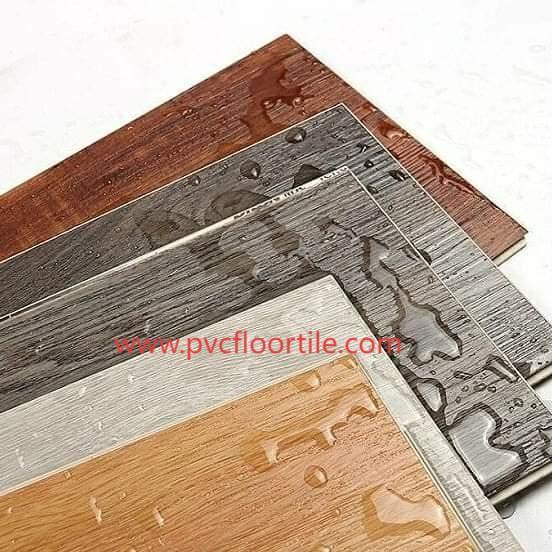
SPC Flooring is a practical option for customers looking for suitable surface materials in residential, commercial, and public spaces. Before selecting products for a project, buyers should review material structure, installation requirements, design preferences, maintenance needs, and supplier information to make a suitable decision. Every interior project has different requirements, so...
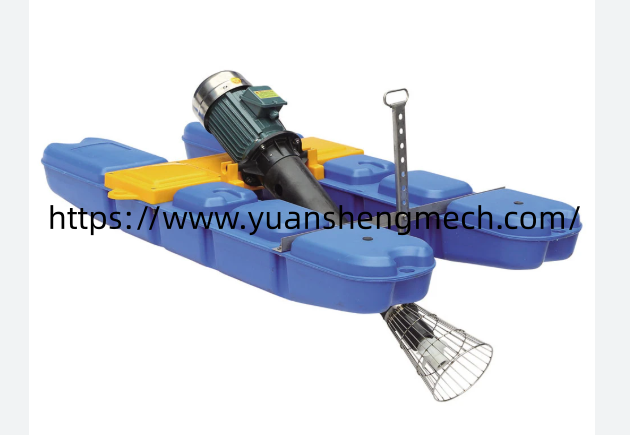
Aquaculture Machine Aerator systems are commonly used in fish farming operations to help maintain stable oxygen levels and improve water circulation. In aquaculture environments, water quality directly affects fish growth, feeding behavior, and overall pond stability. Proper use of aeration equipment can support healthier and more controlled farming conditions. One important tip is correct...
Observing a vehicle's turn signal sweep smoothly across the tail lamp housing creates an undeniably modern impression, yet this fluid motion originates from a surprisingly straightforward electronic principle. The automotive industry has largely abandoned mechanical solutions for lighting effects, favoring solid-state control systems that offer superior reliability and design flexibility. A...
The global Anti-Static Eliminators Market was valued at USD 475 million in 2026 and is expected to reach USD 790 million by 2034, expanding at a CAGR of 7.7% during the forecast period. Growing demand for electrostatic discharge protection across electronics manufacturing, semiconductor fabrication, cleanrooms, automotive production, pharmaceuticals, and plastics processing is supporting market...