Why a Liquid Blush Factory Is Judged by Its Worst Batch
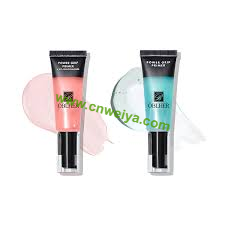
Liquid blush is deceptive. It looks like a simple tint in a small bottle, yet its behavior on skin changes within seconds of application, and that narrow window is where most of the manufacturing difficulty hides. A Liquid Blush Factory that grasps this builds its entire process around controlling the transition from wet pigment to blended flush, because once the formula sets, no amount of skill recovers it. Zhejiang Weiya Cosmetics Co., Ltd. works within this constraint, treating liquid blush as a time-sensitive system rather than a colored liquid.
From the materials standpoint, the formula is a suspension problem before it is anything else. Pigments must stay evenly dispersed through the carrier so that every pump delivers the same intensity, which means careful selection of suspending agents and rheology modifiers. Water-based systems dominate the category because they blend easily and feel light, but water invites separation and microbial risk, so preservative systems and pH stability carry unusual weight. Emollients and silicone alternatives soften the finish and improve spreadability, though too much slip delays set and pushes the product toward patchiness. Film formers extend wear, but they also shorten the blending window—a trade-off that defines the category more than any single ingredient.
The buying guide angle begins with the intended application style. A sheer, buildable blush demands a formula that stays movable for several seconds, while a pigmented, one-swipe product prioritizes immediate color payoff and faster set. Skin tone range matters as much as shade selection: highly translucent pigments can look ashy on deeper skin, while heavily loaded formulas risk patchiness on dry cheeks. Buyers should also test across packaging types, because a pump bottle, a doe-foot applicator, and a squeeze tube each deliver different volumes and change how the product behaves in the user's hand. And as always in this category, sampling across multiple production runs reveals separation and shade drift that a single pilot batch conceals.
Function and technology converge on stability and set time. The pigment must resist settling during storage without becoming so viscous that it cannot be pumped. Color must stay true after weeks on a shelf, since oxidation and light exposure shift shades in ways that only accelerated testing exposes. Homogeneity during filling determines whether the first unit and the last behave identically.
Design and appearance carry unusual commercial weight because liquid blush is sold on trust in color. A transparent or frosted bottle lets shoppers judge the shade, while opaque packaging must work harder to communicate it. Applicator design shapes the experience: a doe-foot gives control at the cheek, a pump offers measured dosing, and a dropper suits custom mixing. The dispenser's precision quietly determines whether users apply the right amount or waste product chasing intensity.
What a Liquid Blush Factory ultimately proves is its discipline in the least forgiving moments—the seconds after application and the months on the shelf. The industry overview at https://www.cnweiya.com offers a useful perspective on how operations and product development are managed in practice.
Categorias
Leia mais
Global Renewable Energy Power Semiconductor Market is experiencing a rapid acceleration as the worldwide transition to clean electricity intensifies. Power semiconductor technologies-particularly silicon‑carbide (SiC) and gallium‑nitride (GaN)-are becoming the backbone of solar‑inverter, wind‑turbine, grid‑scale storage, and electric‑vehicle‑charging converters, delivering higher...

Unpacking the Powerful Catalysts of the Delivery-Only Food Boom The restaurant industry is experiencing a seismic shift, with the traditional dine-in model being rapidly complemented and, in some cases, replaced by a more agile, digital-first approach. The phenomenal and sustained Virtual Kitchen Market Growth is the most potent evidence of this transformation. This rapid expansion is not a...

De Toekomst van Verantwoord Gokken in Online Casino's: Strategieën en Innovaties voor Veilige Spelomgevingen De opkomst van online casino's heeft een revolutie teweeggebracht in de wereld van kansspelen. Terwijl technologie onze toegang tot gokken vergemakkelijkt, roept het ook belangrijke vragen op over de verantwoordelijkheden die daarbij komen kijken. Verantwoord gokken is essentieel om...

In many industrial processes, mixing is not simply about putting two or more materials together. The real challenge is achieving a uniform result without wasting time, energy, or raw materials. This is where an inline disperser can make a noticeable difference. Designed to work directly within a processing line, it can disperse powders, pigments, fillers, and other materials while the product...
In a visually driven market, PVC Flex Banner from ShanghaiMsd provides a practical material option for businesses, designers, and display creators seeking adaptable ways to present messages and visual concepts. From promotional environments to temporary displays, choosing an appropriate banner material can influence how effectively a design fits its intended space and communicates with its...