What Salons Should Ask Before Buying a Professional Electric Hair Clipper
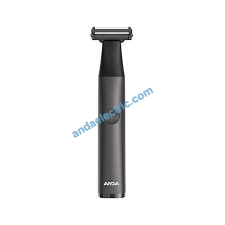
A barber's clipper is touched more often than almost any other tool in the shop, which makes every small flaw in its design accumulate into real fatigue by the end of a shift. That is why evaluating a Professional Electric Hair Clipper requires looking past the headline features and into the details that only surface after weeks of daily use: how the blade cuts through wet versus dry hair, how the motor behaves under load, and how the tool feels in a hand that has already been working for hours. Zhejiang Anda Electric Co., Ltd. builds its clipper range around these practical realities, treating the tool as an extension of the barber's hand rather than a standalone appliance.
From the materials standpoint, the cutting blade is the heart of the machine. Ceramic blades resist heat buildup and stay cooler against the skin, which matters during longer sessions, while titanium-coated steel offers durability and a sharp edge that holds its geometry through repeated sharpening. The comb attachment material influences how smoothly hair feeds into the blade; poorly molded plastic combs can snag or flex, disrupting the cut. The housing material plays a less obvious but equally important role, since a body that dampens vibration reduces hand fatigue over a full day. Motor selection and bearing quality determine how the tool performs under thick or wet hair, where resistance increases and a weaker drive begins to bog down.
The buying guide angle begins with the kind of work the clipper will do. A barber focused on fades and precision work needs a tool that responds smoothly at low speeds and stays cool during close contact, while a stylist handling bulk removal prioritizes cutting power and feed rate. Cordless versus corded is another decision that should follow workflow rather than preference: cordless offers freedom but requires charging discipline, while corded units demand constant access to an outlet. Buyers should also examine how easy the blade is to remove and clean, since hygiene routines in a busy shop depend on quick, repeatable maintenance.
Function and technology converge on the interaction between blade geometry and motor response. A well-designed blade set cuts efficiently without pulling, and the taper lever allows the barber to adjust cutting length without swapping guards. The drive system should deliver consistent torque across speed settings, so the tool does not stall when it meets resistance. Heat management is a quiet but critical consideration; a clipper that runs hot forces the barber to pause, breaking the rhythm of a cut and reducing client comfort.
Design and appearance communicate professionalism before the tool is even switched on. A well-balanced body, a grip that suits both larger and smaller hands, and an interface that can be adjusted without looking all contribute to confident use. The position of the on-off switch and the taper lever should match natural hand movement, reducing the small fumbles that interrupt a cut. Visual design also matters in a salon setting, since clients notice the tools being used on them.
In practice, the right clipper is the one that disappears into the work, letting the barber focus on the cut rather than on managing the tool. Zhejiang Anda Electric Co., Ltd. designs its range with this goal in mind, tuning blade materials and drive characteristics for the demands of daily professional use. For teams comparing options, the clipper lineup at https://www.andaelectric.com/product offers a grounded reference for what a well-engineered Professional Electric Hair Clipper can deliver in a working salon.
Categories
Read More
Life science tools are evolving rapidly, driven by technology, research needs, and the growth of precision medicine. The future promises more powerful, automated, and integrated tools. Understanding these trends helps manufacturers, researchers, and investors anticipate what is coming. Several developments will shape the field. Advances in sequencing will enable faster, cheaper genomic...

Examining the polyfluoroalkyl substances waste management market, covering global market dynamics, regional insights including North America and Asia-Pacific, and the future outlook for PFAS waste management through 2035. The Polyfluoroalkyl Substances Waste Management Market represents the comprehensive landscape of global environmental remediation innovations, providing essential...
The grinding media industry is moving toward more application-specific product development as industrial operators seek improved milling performance and predictable operating costs. Different materials, mill configurations, ore characteristics, and processing requirements create demand for products with varied mechanical and wear properties. Manufacturers are therefore focusing on...
The Smart Meters market is experiencing significant growth, driven by the global imperative to modernize aging energy infrastructure and enhance efficiency. According to Market Research Future, smart meters are the cornerstone of the digital energy transition, providing real-time data on energy, gas, and water consumption. These intelligent devices empower consumers with insights to manage...

The reliability and efficiency of electrical power delivery to homes, businesses, and industries depend fundamentally on robust distribution infrastructure, with Medium voltage utility distribution panels emerging as essential components for managing and protecting electrical circuits across utility networks. Insights published by Market Research Future reveal that the market is...