Flare Stack Safety Instrumentation Protects Offshore Assets
Flare stack safety instrumentation monitors combustion integrity, flame presence and structural condition to prevent the unplanned releases and equipment failures that endanger offshore platforms and refinery operations. According to Market Research Future, flare stack safety instrumentation is increasingly specified as integrated packages, with acoustic flare tip monitor transducers detecting low-frequency vibrations from incomplete combustion that infrared cameras may miss during steam-assisted flaring. The market stood at USD 1.15 billion in 2025 and is projected to reach USD 1.96 billion by 2035 at a 6.12% CAGR.
Report Key Statistics
Insights published by Market Research Future show offshore installations growing at 6.75% CAGR, faster than onshore, as new FPSO deployments in Brazil, Guyana and West Africa integrate acoustic flare tip monitor packages from the commissioning stage. Upstream offshore operations grow at 7.45% CAGR, the strongest end-user trajectory. Remote mounting expands at 6.55% CAGR, driven by satellite-linked thermal imaging arrays and drone-mounted optical pyrometry equipment. Flame detection and imaging hold 50.7% share by measurement parameter.
Safety Architecture and Detection Reliability
Combined deployment of acoustic and infrared sensing improves detection probability to above 99.5%, since each technology compensates for the other's blind spots. Acoustic transducers identify the low-frequency signature of unstable combustion. Infrared cameras map spatial temperature distribution across the flame envelope. Both feed shutdown logic and alarm systems, and in high-integrity installations they interface with safety instrumented systems rated to SIL requirements. Remote mounting extends coverage to locations where personnel access is impractical.
Industry Trends
Findings from Market Research Future identify several drivers. First, EU ETS expansion and methane regulation add about 1.1 percentage points to CAGR, with the EU Methane Regulation adopted in 2024 requiring acoustic flare tip monitor installations at essential sites to supplement leak detection and repair procedures. Second, offshore digital twin integration contributes 0.6 points, with digital-twin models ingesting acoustic and thermal data to predict burner degradation before unplanned shutdowns occur. Third, insurance and ESG disclosure mandates add 0.4 points.
Challenges Facing the Segment
Harsh operating environments degrade sensors, subtracting about 0.4 points from CAGR, with offshore flare tips operating at temperatures exceeding 1,200°C and salt-laden atmospheres accelerating corrosion of transducer housings. Cybersecurity risks in connected monitoring networks add 0.3 points, since connected safety instrumentation falls within industrial cybersecurity frameworks requiring network segmentation and encrypted communications. Certified calibration technician shortages affect emerging markets.
Future Outlook
Analysis presented by Market Research Future points to predictive maintenance and digital twins as a significant opportunity, with offshore platform operators deploying models that ingest acoustic and thermal data to predict burner degradation, reducing flare system downtime by 25–30% and translating to annual savings of USD 500,000 to 1.2 million per platform. Drone-integrated inspection services allow flare-tip inspection during live operations, eliminating shutdowns and scaffolding.
Expert Discussion
Industry observations from Market Research Future note that John Zink Hamworthy holds an estimated 4–6% revenue share as a vertically integrated combustion OEM with flare-tip design and monitoring packages, while Williamson IR holds 1–3% as a niche temperature measurement specialist with infrared pyrometers and ratio thermometry. The combination of combustion design expertise and measurement capability creates a defensible position in safety-critical applications.
Conclusion
Flare stack safety instrumentation protects the assets and personnel that offshore and refinery operations depend upon, with combined acoustic and infrared sensing achieving detection reliability that neither technology delivers alone. Digital twin integration, drone inspection and predictive maintenance define the competitive frontier. Within the flare monitoring market, suppliers who combine combustion engineering depth with integrated safety packages and remote monitoring capability will capture demand as offshore development expands into deeper and more remote waters
Explore key developments shaping industry transformation:
US Solid State Transformer Market
US Carbon Capture Storage Market
US Arc Flash Protection System Market
US Hydrogen Energy Storage Market
US Thermal Energy Storage Market
US Biomass Gasification Market
Κατηγορίες
Διαβάζω περισσότερα
The global Smart Outlet Market is experiencing significant growth as the increasing adoption of smart home technologies drives demand for connected, energy-efficient solutions. According to comprehensive market analysis, the industry is projected to grow substantially during the forecast period, driven by the rapid expansion of the Internet of Things (IoT) ecosystem and growing...

Telecom generator manufacturers are reengineering their product lines around connectivity, emissions and uptime as network operators demand more from backup power than simple engine reliability. According to Market Research Future, the telecom generator manufacturers landscape is moderately fragmented, led by Caterpillar, Cummins, Generac Holdings and Kohler Co., with MTU Onsite Energy, Atlas...

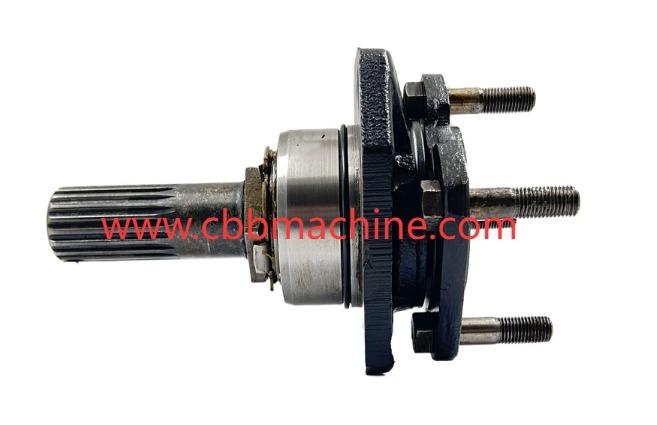
In modern web-processing industries, maintaining consistent winding performance is essential for smooth production. A Differential Shaft from Cbbmachine is designed to support this objective by helping manage tension variations across multiple winding positions. Through its specialized operating principle, it contributes to more balanced roll formation and improved coordination during material...
Gold ring design has always been a symbol of elegance, tradition, and timeless beauty. Whether worn daily or on special occasions, gold rings hold emotional as well as financial value. From classic styles to modern creations, gold rings are an essential part of every jewellery collection. Today, people are more focused on unique and stylish designs that reflect their personality while...

Accessibility and ease of use are essential factors when selecting bathroom fixtures, particularly for seniors or individuals with limited mobility. Thermostatic Basin Faucet provides a practical solution by offering precise temperature control and ergonomic operation. Compared to standard Bathroom Basin Faucets, thermostatic models require minimal adjustments, reducing the risk of...