QNX Operating System Delivers Safety-Critical Reliability for Vehicle Systems

According to Market Research Future, the automotive operating system market QNX segment maintains a critical position in automotive software, providing the safety-certified, real-time foundation required for vehicle control systems. While Android dominates infotainment, QNX serves applications where failure is not an option.
QNX Fundamentals
QNX is a real-time operating system (RTOS) designed for applications requiring deterministic response times and high reliability. The microkernel architecture isolates components, preventing failures from spreading. The design enables the safety certifications required for automotive safety systems.
The system runs in millions of vehicles, handling functions including instrument clusters, advanced driver assistance systems, and engine control. The track record of reliability supports the trust that manufacturers place in the platform.
Safety Certifications
QNX holds certifications required for automotive safety applications. ISO 26262 ASIL-D certification enables use in the most safety-critical systems. The certification validates development processes, documentation, and verification evidence required for safety cases.
The certifications differentiate QNX from general-purpose operating systems. Manufacturers integrating QNX can leverage its safety credentials in their own safety cases. The certifications reduce development effort for safety-critical applications.
Mixed-Criticality Systems
QNX's architecture enables mixed-criticality systems where safety-critical and non-safety functions share hardware. The hypervisor creates isolated partitions that prevent interference between applications. Safety-critical functions continue operating even if infotainment crashes.
The capability addresses the consolidation trend in vehicle electronics. Rather than separate controllers for each function, manufacturers combine multiple systems on shared hardware. QNX enables this consolidation while maintaining safety and reliability.
Real-Time Performance
QNX provides deterministic response times required for control applications. Interrupt latency is bounded and predictable. The guarantee enables designs that meet timing requirements for engine control, braking, and steering.
The real-time performance distinguishes QNX from general-purpose systems. Applications that must respond within milliseconds rely on the predictable timing that QNX provides. The capability is essential for safety-critical control systems.
Automotive Market Position
QNX has established a strong position in the automotive market. The platform runs on more than 200 million vehicles worldwide. Major manufacturers rely on QNX for critical systems. The installed base creates ongoing support requirements and upgrade opportunities.
The position reflects decades of investment in automotive capabilities. QNX has developed specific features for automotive applications. The relationships with manufacturers and suppliers create barriers to competition.
Evolution and Competition
QNX continues evolving to address new requirements. Support for advanced driver assistance systems extends capabilities. Integration with cloud services enables new functionality. The platform keeps pace with vehicle technology advancement.
Competition comes from Linux-based alternatives and emerging platforms. Some manufacturers pursue open-source solutions for cost reduction. The competition challenges QNX to demonstrate value that justifies its licensing costs. The safety certifications and track record provide defense.
Future Directions
The QNX segment of the automotive operating system market will continue serving safety-critical applications as vehicle technology evolves.
Gain a competitive edge with insightful market reports:
US Automotive Electronics for HVAC Systems Market
Категории
Больше
Recent findings suggest that the explosive growth of e-commerce has created unprecedented demand for last-mile delivery solutions that are efficient, sustainable, and cost-effective. According to Market Research Future, the Electric three wheeler market cargo segment represents the fastest-growing application of electric three-wheeler technology, projected to expand at a 20.0% CAGR through...

На отечественном рынке достаточно много фирм, что смогут предложить кессоны и септики из самых разных материалов: полимерных листов, металла, гидробетона и стеклопластика. Естественно, каждый материал имеет свои особенности, что следует заблаговременно учесть. Кроме этого, стоит убедиться, что вы позвонили профессионалам, ведь от правильности монтажа зависеть будет надежность...

we've seen an influx of ese designers at and MFW Men in recent seasons, as organizers understand the much needed innovation in menswear silhouettes that talents from the East can provide. For buyers and editors, was among the highlights. Ancient healing systems such as understand health as cyclical and seasonal, rather than linear. Designer names like or popped up on Hermes towels and children...

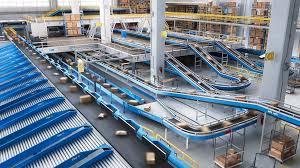
As global supply chains realign to mitigate geopolitical risks and optimize regional distribution networks, the demand for advanced logistics infrastructure is expanding globally. Different regions exhibit distinct operational priorities shaped by local labor availability, real estate dynamics, and e-commerce adoption rates. Investigating the Automated Sortation System Market region dynamic...
Recent findings suggest that customization and personalization have become major drivers of the SUV and truck exterior and outdoor accessories market, with consumers increasingly seeking products that reflect their individual style and lifestyle. According to Market Research Future, the SUV and truck exterior and outdoor accessories market is projected to grow from USD 8,911.18 million in 2025...