


Deep Dive Engineering Comparative Assessment of Silicon Superjunction MOSFETs Against Silicon Carbide Transistors
Designing high-efficiency power conversion architectures requires balancing operational voltage domains, switching frequency envelopes, thermal dissipation dynamics, and manufacturing cost structures, engineering criteria examined within the MOSFET Market Analysis. When power electronics systems architects and hardware design directors configure power stages for electric vehicle onboard chargers, photovoltaic central inverters, or server power factor correction circuits, they must evaluate the fundamental operational trade-offs between mature Silicon Superjunction (SJ) MOSFETs and emerging wide-bandgap Silicon Carbide (SiC) MOSFETs. Evaluating how these contrasting semiconductor technologies perform across 650-volt to 1200-volt applications, manage reverse-recovery losses, and impact total bill-of-materials expenditures is critical for selecting the optimal switching device.
The primary engineering distinction between silicon superjunction MOSFETs and silicon carbide MOSFETs lies in underlying material physical constants, critical breakdown electric fields, and high-temperature performance. Elemental silicon exhibits an energy bandgap of 1.12 electron-volts and a critical electric breakdown field of approximately 0.3 megavolts per centimeter ($MV/cm$). In contrast, 4H-SiC possesses a wide energy bandgap of 3.26 eV and a critical breakdown field nearly ten times higher, around 2.8 to 3.0 $MV/cm$. This material property allows a SiC MOSFET drift layer to be engineered nearly ten times thinner and ten times more heavily doped than an equivalent-voltage silicon drift layer, yielding lower internal resistance and smaller physical die sizes. Furthermore, SiC features a thermal conductivity three times higher than silicon (3.7 W/cm·K versus 1.3 W/cm·K), allowing SiC devices to operate at higher continuous junction temperatures (up to 175°C to 200°C) with minimal on-resistance degradation, whereas silicon MOSFET on-resistance roughly doubles as junction temperatures rise from 25°C to 125°C.
From a dynamic switching loss and body-diode reverse recovery perspective, SiC MOSFETs demonstrate decisive performance advantages in hard-switched bridge topologies. In a silicon superjunction MOSFET, the internal p-n junction body diode stores significant minority carrier charge during forward conduction. When the switch turns off, this stored charge generates a high reverse-recovery charge ($Q_{rr}$) and prolonged reverse-recovery time ($t_{rr}$), causing high turn-on power losses and severe voltage overshoot spikes in half-bridge configurations (such as bridgeless totem-pole PFC). SiC MOSFETs exhibit virtually zero minority carrier storage in their body diodes, slashing $Q_{rr}$ by over eighty to ninety percent. This near-zero reverse recovery allows SiC power stages to switch at frequencies exceeding 100 kHz to 200 kHz with high efficiency, enabling significant downsizing of passive magnetic inductors and transformers.
However, analyzing manufacturing maturity, gate-oxide reliability, and cost-per-ampere economics reveals why silicon superjunction MOSFETs retain substantial commercial dominance in cost-sensitive applications. Silicon superjunction MOSFETs benefit from decades of high-volume manufacturing optimization on mature 200mm and 300mm silicon wafer fabrication lines, delivering high wafer yields and low cost-per-ampere metrics. Conversely, SiC wafers are plagued by crystalline basal-plane dislocations, brittle physical handling, and smaller 150mm to 200mm wafer diameters that result in higher substrate manufacturing costs. A silicon superjunction MOSFET costs a fraction of an equivalent-rated SiC MOSFET. In consumer laptop chargers, flat-panel television power boards, and standard telecom rectifiers operating under 650 volts, the modest efficiency gain of SiC does not justify its price premium. Consequently, power architects maintain a clear segmentation: deploying silicon superjunction MOSFETs for cost-optimized 400V to 650V consumer, telecom, and industrial power supplies, while reserving Silicon Carbide MOSFETs for high-voltage (800V to 1200V) EV traction drives and utility-scale solar grid inverters.
Top Trending Reports :
Semiconductor Laser Equipment Market
Semiconductor Rectifiers Market
Semiconductor Wafer Polishing Grinding Equipment Market
Sensors In Consumer Electronics Advanced Technologies Market
الأقسام
إقرأ المزيد
The Cordwood and Firewood Wholesale Market represents the comprehensive landscape of renewable wood fuel supply innovations, providing the essential infrastructure and distribution networks that enable efficient, sustainable, and reliable firewood delivery through integrated systems of cordwood harvesting, firewood processing, mixed wood supply chains, and advanced wholesale logistics platforms...

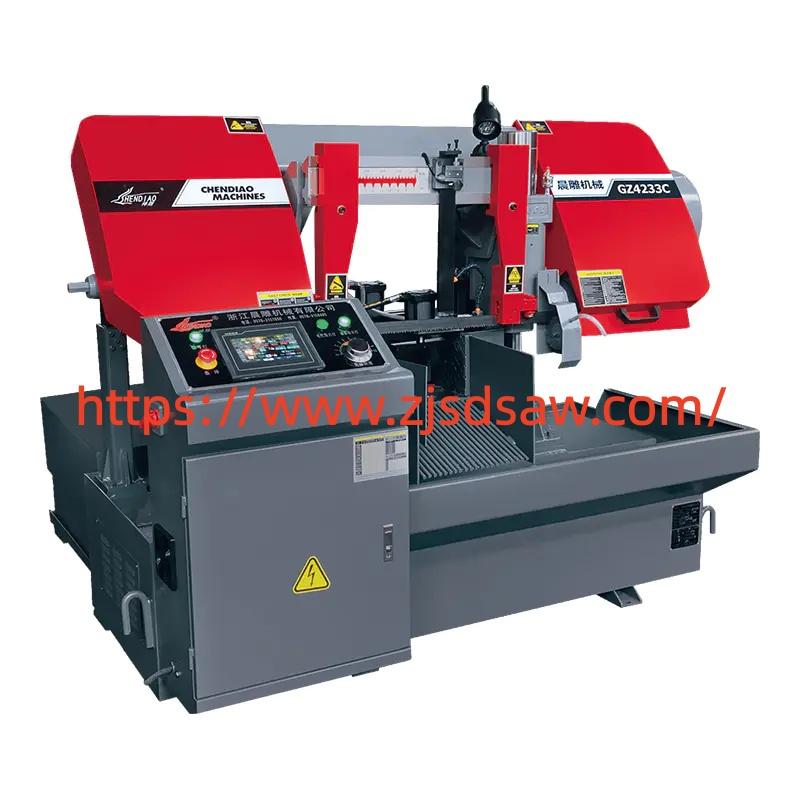
Horizontal Metal Cutting Band Saw Machine requires consistent daily attention to stay in reliable working order over extended periods. Proper habits help avoid sudden interruptions and support steady production flow in busy workshops. Start each shift by removing chips and loose particles from all accessible surfaces. Accumulated debris can interfere with movement and create uneven contact...
Cloud-based solutions are transforming the Blood Bank Management Software Market, offering significant advantages over traditional on-premise systems. Cloud-based software provides improved accessibility, scalability, and cost-effectiveness, allowing blood banks to manage operations more efficiently and securely. As healthcare systems increasingly embrace digital transformation, cloud-based...
Sports Nutrition Market Outlook Growing fitness participation, wider retail access and demand for convenient protein, hydration and recovery formats are reshaping purchasing patterns, according to Future Market Insights. NEWARK, Del., October 8, 2026. — The global sports nutrition market is estimated at USD 29.58 billion in 2026 and is projected to reach USD 65.65 billion by 2036,...

When it comes to creating smooth, high-quality paper, every step in the process counts. One compound that has gained attention among paper producers is Papermaking Polyacryalmide . By introducing this material, factories notice improvements in how fibers combine, how water moves, and how sheets take shape during production. Hengfeng provides products that allow operators to experiment with...
