Deep Dive Engineering Comparative Assessment of Water-Cooled Centrifugal Against Air-Cooled Screw Chiller Architectures
Designing high-reliability, mission-critical thermal rejection infrastructure for modern data centers requires balancing full-load and part-load thermodynamic efficiency, municipal water consumption footprints, mechanical plant spatial requirements, and capital construction expenditures, engineering criteria examined within the Data Center Chiller Market Analysis. When mechanical engineering directors, data center infrastructure architects, and sustainability officers design central cooling plants for enterprise or colocation data halls, they must evaluate the fundamental operational trade-offs between water-cooled centrifugal chiller systems (paired with cooling towers) and outdoor air-cooled screw chiller installations. Evaluating how these contrasting chiller topologies manage peak ambient summer heat, comply with municipal water usage effectiveness (WUE) limits, and maintain thermal ride-through stability is critical for deploying dependable mechanical infrastructure.
The primary engineering distinction between water-cooled and air-cooled chiller platforms lies in heat rejection thermodynamics, compressor mechanics, and energy efficiency ratings. A water-cooled centrifugal chiller utilizes an evaporative cooling tower to reject heat to the atmosphere via water evaporation, rejecting heat against the ambient wet-bulb temperature, which is consistently significantly lower than the ambient dry-bulb temperature. Because of this favorable thermodynamic heat sink and the high isentropic efficiency of centrifugal impellers, water-cooled centrifugal chillers achieve high electrical efficiencies, operating with full-load power draws of 0.45 to 0.55 kW per ton of refrigeration (kW/ton) and Integrated Part Load Values (IPLV) reaching below 0.35 kW/ton. In contrast, an air-cooled screw chiller utilizes finned condenser coils and mechanical fans to reject heat directly to ambient outdoor air, operating against the higher dry-bulb temperature. Air-cooled screw chillers operate with higher full-load power draws (typically 0.90 to 1.20 kW/ton), consuming thirty to forty percent more electrical power under identical cooling loads compared to water-cooled alternatives.
From a municipal water conservation, site permitting, and maintenance complexity perspective, air-cooled screw chillers deliver decisive operational advantages in water-stressed regions. Water-cooled chiller plants consume millions of gallons of water annually through evaporative cooling tower drift and blowdown, which can be contentious in drought-prone regions (such as the American Southwest, Southern Europe, and parts of the Middle East) where local municipal authorities restrict industrial water consumption or impose high sewer discharge fees. Furthermore, open cooling tower water requires continuous chemical water treatment (biocides, corrosion inhibitors, and anti-scalants) to prevent mineral scaling and eliminate biological pathogen risks (such as Legionella bacteria outbreaks). Air-cooled screw chillers operate as sealed, closed-loop systems that consume zero water during operation, eliminating chemical handling overhead, simplifying municipal building permitting, and providing environmental sustainability in arid climates.
However, analyzing physical site spatial footprints, maximum plant capacity scaling, and equipment longevity highlights why water-cooled centrifugal plants dominate massive hyperscale computing campuses. Air-cooled chillers require expansive outdoor ground yard space or reinforced rooftop decks to accommodate large condenser coils and maintain unrestricted airflow clearance. For a multi-hundred-megawatt facility, installing dozens of air-cooled chillers requires acres of outdoor real estate that could otherwise be utilized for additional computing halls. Water-cooled centrifugal chillers are physically compact machines housed within indoor mechanical basements, delivering single-machine cooling capacities exceeding one thousand to three thousand tons of refrigeration per unit. Furthermore, because water-cooled chillers are protected indoors away from outdoor weather extremes and corrosive atmospheric elements, they deliver operating lifespans exceeding twenty to twenty-five years, compared to fifteen to twenty years for outdoor air-cooled chillers exposed to rain, snow, and direct sunlight. Consequently, modern data center planning deploys a regional approach: utilizing water-cooled centrifugal plants in water-rich northern and temperate corridors to maximize electrical efficiency, while standardizing on high-efficiency air-cooled screw chillers equipped with adiabatic pre-cooling pads in water-scarce regions to eliminate municipal water consumption.
Top Trending Reports :
Категории
Больше
Global EMI/RFI Suppression Choke Market, driven by accelerating electrification, 5G roll‑outs, and heightened regulatory focus on electromagnetic compatibility, is on a trajectory of significant expansion, projected to sustain a robust compound annual growth rate (CAGR) through 2032. This growth, detailed in a comprehensive new report published by Semiconductor Insight, underscores the...

The global WiFi HaLow (802.11ah) SoC Chip for Long-Range IoT Market was valued at USD 0.48 billion in 2025 and is projected to grow from USD 0.55 billion in 2026 to USD 1.34 billion by 2034, expanding at a CAGR of approximately 9.8% during the forecast period. This growth is detailed in a comprehensive new report published by Semiconductor Insight, examining long-range IoT connectivity, smart...
The future of the Ibuprofen Soft Capsules Market is promising, characterized by steady growth, evolving consumer preferences, and a healthcare system that is increasingly focused on convenience and accessibility. As we look ahead to 2035, the market is projected to grow to $3 billion, driven by a combination of factors, including the rising prevalence of pain conditions, technological...
The demand for reliable and high-capacity Commercial Food Blending Equipment is surging as the hospitality industry seeks consistency, speed, and durability in food preparation. Restaurants, cafés, juice bars, and catering businesses rely on commercial-grade blenders to handle high-volume tasks, from silky purées and sauces to frozen cocktails and nut butters. These...
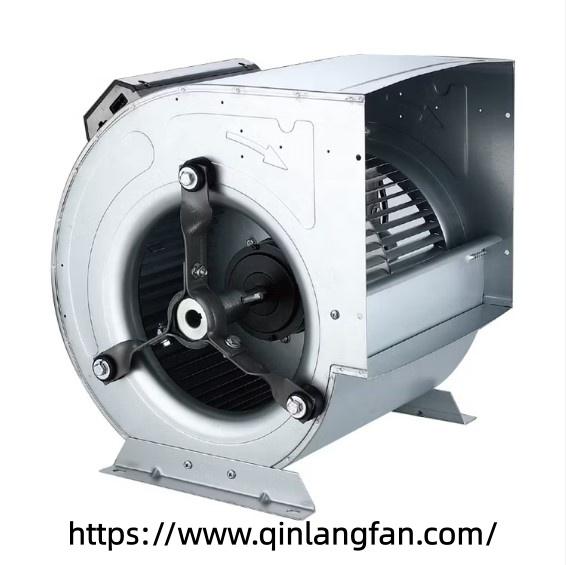
Qinlang HVAC Centrifugal Fan units from Qinlang are built to provide long-term operational reliability. Maintenance is a key consideration, including inspection of bearings, shafts, and fan wheels to ensure alignment and balance are maintained. Regular lubrication, cleaning, and monitoring prevent wear, reduce vibration, and prolong service life. Engineering considerations include...