


Orientation Stability in Automated Zipper Arranging Processes
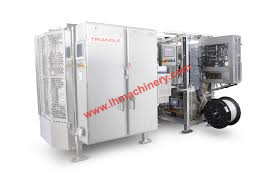
Assembly lines that attach sliders to zipper chains frequently encounter the problem of mixed orientation, which interrupts downstream processes and requires manual intervention. The central concern is whether an automated unit can detect and correct the direction of each slider so that the pull tab always faces the required way before the chain advances. In this context a zipper arranging machine such as lhmachinery resolves the issue through a combination of mechanical guides, sensing elements, and controlled motion that forces every slider into a single, repeatable attitude. Does the equipment actually deliver that uniformity once the line reaches continuous operating speed?
Orientation control begins at the feeding stage. Vibratory or centrifugal bowls introduce the loose sliders into a narrow track whose cross-section matches the slider profile. As the parts travel, asymmetric features on the track walls allow only one orientation to pass freely; any slider that enters reversed encounters a physical stop or is redirected into a recirculation path. This passive sorting removes the majority of incorrect pieces before they reach the active stations.
Active verification follows the mechanical pre-sort. Optical or inductive sensors examine each slider for the presence and position of the pull tab or locking elements. When a reversed unit is identified, a small actuator or air jet diverts it back to the bowl, while correctly oriented sliders continue forward. The dual-stage approach—mechanical filtering plus electronic confirmation—keeps the error rate low even when the incoming mix contains a high proportion of random orientations.
Track geometry further reinforces consistency. Once a slider has passed inspection, side rails and overhead retainers lock its position so that vibration or acceleration cannot rotate it before it reaches the transfer point. The exit section presents the oriented slider to the next machine element in a fixed attitude, ready for automatic insertion or attachment. Because the final presentation remains identical for every cycle, downstream tooling can be designed with tight clearances that would otherwise be impossible.
Material and surface considerations also play a role. Tracks and contact surfaces are finished to minimize friction differences that might allow a borderline slider to slip past the orientation filters. Wear-resistant coatings extend the interval during which the geometric references stay accurate, so the same sorting performance continues after many hours of operation.
Changeover between zipper styles is accommodated by interchangeable track inserts and adjustable sensor thresholds. When the slider body size or tab shape changes, operators replace the relevant guides and update the detection parameters rather than redesigning the entire feed system. This modular arrangement limits downtime while preserving the core orientation logic.
Selection of such equipment therefore depends on documented orientation success rates, the range of slider geometries that can be handled, and the ease with which new profiles can be introduced. Builders who supply test data on mixed-orientation feed streams give production teams clear evidence of capability. A compact footprint that integrates directly with existing chain lines further simplifies adoption without extensive layout changes.
Facilities that require uninterrupted slider attachment find the necessary directional reliability attainable when passive geometry and active sensing operate together, and a zipper arranging machine such as lhmachinery provides the arrangement that upholds this standard while further details on workflow integration appear at https://www.lhmachinery.com/ for process insights and application notes.
Categorias
Leia Mais
I learned the hard way that Pharloom does not hand out second chances. My first few hours in Hollow Knight: Silksong were a blur of boss attempts, risky jumps, and far too many deaths because I treated healing like something I could do whenever I wanted. It is not. Healing here is a deliberate choice, and once I understood the rhythm, everything clicked. If you are just starting out, here is...

Modern construction environments demand precise alignment tools that can function across both indoor and outdoor conditions. Among widely used measuring instruments, the 12 Lines Laser Level has become an essential solution for layout accuracy, structural alignment, and installation guidance. In many engineering applications developed by shijingtools, this type of device is designed to...
The global power liftgate market is experiencing steady growth, driven by technological advancements and evolving consumer preferences. According to Market Research Future, the Power Liftgate Market was valued at USD 3.93 billion in 2024 and is projected to grow from USD 4.13 billion in 2025 to USD 6.86 billion by 2035, exhibiting a compound annual growth rate of 5.2% during the...

The eye surgery robot market encompasses a diverse range of applications, technologies, and end-user settings that are critical to providing precise and effective ophthalmic care. From retinal surgery and cataract surgery to corneal surgery and oculoplastic surgery, each application benefits from the enhanced precision and control offered by robotic systems. Understanding these segments is...

The Chargers 53 are upon the highway this 7 days in direction of confront the Titans 17 within Angeles is coming off a dominant acquire previously mentioned the Vikings at the rear of stellar performances by means of their quarterback Justin Herbert and jogging again Kimani Vidal. Joe Alt return versus a large ankle sprain was moreover mystery within just unlocking the offense upcoming after 7...