The Control Plane: Exploring the Data Center Infrastructure Market Platform 2035
The Software Brain of the Physical Facility
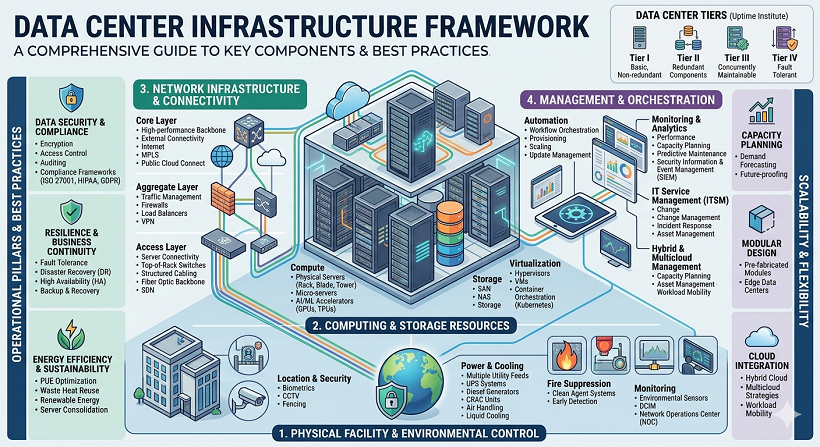
While data center infrastructure is fundamentally about physical hardware, its efficient operation is governed by a crucial layer of software known as the Data Center Infrastructure Market Platform. This term primarily refers to Data Center Infrastructure Management (DCIM) software, the central nervous system that provides visibility, control, and automation over the entire physical facility. A DCIM platform acts as a single pane of glass, collecting and consolidating real-time data from thousands of sensors on power, cooling, and environmental systems, as well as information about the IT assets themselves. By bridging the traditional gap between the facilities team (managing the building) and the IT team (managing the servers), these platforms provide a holistic, data-driven view of the data center, enabling operators to move from reactive problem-solving to proactive, intelligent management of their critical environment.
The Evolution from Monitoring to Management
The role and capabilities of DCIM platforms have evolved significantly over the years. Early iterations were often little more than sophisticated monitoring tools, providing dashboards and alerts related to power consumption and temperature. However, modern DCIM has transformed into a comprehensive management platform. Today's platforms include detailed asset management capabilities, allowing operators to track the exact physical location, power draw, and network connectivity of every server in the facility. They incorporate capacity planning tools that help managers forecast future needs for space, power, and cooling, ensuring that the data center can scale to meet future business demands. They also include workflow automation engines that can streamline common tasks like provisioning a new server, simplifying operations and reducing the potential for human error in a complex, mission-critical environment.
Infusing Intelligence with AI and Machine Learning
The most transformative recent development in the DCIM space is the deep integration of artificial intelligence (AI) and machine learning (ML), a trend often referred to as AIOps (AI for IT Operations). AI-powered DCIM platforms can analyze historical and real-time data to uncover patterns and make predictions that are impossible for humans to discern. For example, an ML algorithm can analyze subtle changes in a cooling unit's vibration and energy consumption to predict an impending failure weeks in advance, allowing for scheduled, non-disruptive maintenance. AI can also be used for real-time optimization, automatically adjusting cooling setpoints or recommending the placement of new servers to maximize energy efficiency and prevent the formation of hot spots. This infusion of intelligence is turning DCIM from a passive reporting tool into an active, intelligent partner in data center operations.
Bridging the Hybrid World: Integrating with the Cloud
As most enterprises now operate in a hybrid cloud environment, with a mix of on-premises data centers and public cloud resources, a key function of modern DCIM platforms is to bridge this divide. While a DCIM platform's primary focus is the physical on-premises infrastructure, advanced platforms offer APIs and integrations that connect with cloud management platforms. This allows for a more unified view of the entire hybrid ecosystem. For instance, an operator might be able to see the cost and resource consumption of both their on-premises workloads and their public cloud workloads in a single dashboard. This integration helps organizations make smarter decisions about workload placement—determining which applications are best suited to run on-premises versus in the cloud—and provides a more complete picture of the total cost and performance of their IT services, regardless of where they are physically running.
The Future: Enabling the Autonomous Data Center
Looking ahead to 2035, the trajectory of the data center infrastructure platform is pointed squarely at the vision of the fully autonomous, "lights-out" data center. The future DCIM platform will be an AI-driven "digital twin" of the physical facility, a living virtual model that not only monitors and predicts but also acts independently to maintain optimal conditions. It will autonomously manage power and cooling systems for maximum efficiency, automatically provision and decommission resources as needed, and even initiate robotic interventions for tasks like replacing a failed hard drive. In this future state, human operators will transition from hands-on management to a role of strategic oversight, setting policies and goals for the AI platform to execute. This will enable data centers to achieve unprecedented levels of reliability, efficiency, and security, all orchestrated by an intelligent, self-healing software platform.
➤ In-Depth Market Studies by Market Research Future:
Κατηγορίες
Διαβάζω περισσότερα
Choose a Level and Stable Foundation When deciding Where to place your outdoor sauna?, the first priority should be a level and stable location that can safely support the sauna structure. The area should have good drainage so rainwater and melting snow do not collect around the foundation. A properly prepared base can help prevent movement, moisture problems, and uneven settling over time. It...

Butane Gas Cartridge Factory selection requires buyers to examine production capabilities, product specifications, quality procedures, packaging arrangements, and commercial terms before making a purchasing decision. For importers, wholesalers, and distributors, a structured assessment can help clarify business requirements, identify potential concerns, and establish a practical basis for...

The 3D Bioprinting and Bioink Market is on an explosive growth trajectory, and understanding the key drivers behind this expansion is essential for stakeholders across the healthcare and biotechnology spectrum. Several factors are converging to create a thriving market for 3D bioprinting solutions. From the increasing demand for organ transplants to advancements in tissue engineering and...

Within the 8 weeks considering that Mauricio Pochettino took price of the U.S. adult males's nationwide workers, the Superstars and Stripes incorporate realized contemporary lows. Within the 8 weeks considering that Mauricio Pochettino took value of the U.S. adult males's nationwide staff members, the Celebrities and Stripes consist of accomplished fresh a financially rewarding profession...

The Future of Live Dealer Games in Online Casinos: Analyzing Technological Advances and Player Preferences Shaping the Market in 2025 The online casino industry has experienced unprecedented growth in recent https://fortunica.org.uk years, transforming traditional gaming experiences into immersive online environments. Among the most captivating developments in this domain is the rise of live...