Digitizing Borders: The Global E-Passport And E-Visa Market Transformation 2035

Redefining National Identity and Border Security
In an era of unprecedented global mobility and heightened security concerns, the traditional paper passport is rapidly evolving into a sophisticated digital document. The E-Passport And E-Visa Market is at the heart of this transformation, encompassing the technologies and systems that are redefining how national identity is verified and how international borders are managed. An e-Passport, or biometric passport, contains an embedded electronic chip that stores the holder's biographical information and biometric data, while an e-Visa is a digital authorization linked to a passport number, eliminating the need for a physical stamp. Together, these technologies represent a paradigm shift towards more secure, efficient, and seamless international travel. This market is driven by a dual imperative: the need for governments to bolster national security against fraud and terrorism, and the demand from travelers for faster, more convenient border crossing experiences.
The Technology Inside an E-Passport
At the core of every e-Passport is a tiny, powerful microcontroller chip, securely embedded within the passport booklet, usually in the cover or data page. This chip adheres to international standards set by the International Civil Aviation Organization (ICAO), ensuring global interoperability. Stored on this chip is the same biographical data visible on the passport's data page, along with a high-resolution digital image of the passport holder's face. Many newer generation e-Passports also store additional biometric identifiers, such as digital templates of the holder's fingerprints or iris scans. The chip is "contactless," meaning it can be read by a special reader without physical insertion. Crucially, the data on the chip is digitally signed by the issuing country's government, making it virtually impossible to alter or counterfeit without detection, providing an unprecedented level of document security.
The Convenience and Efficiency of E-Visas
The e-Visa represents a significant leap forward in streamlining the often cumbersome process of obtaining travel authorization. Instead of requiring applicants to visit an embassy or consulate for a physical visa stamp, the e-Visa system allows travelers to apply online from anywhere in the world. Applicants submit their information and supporting documents through a secure government portal, and upon approval, receive a digital authorization via email. This e-Visa is stored in a government database and electronically linked to the traveler's passport number. At the border, immigration officials can instantly verify the visa's validity by scanning the traveler's passport. This not only offers immense convenience for tourists and business travelers but also significantly reduces the administrative burden on consular services, allowing governments to process applications more quickly and cost-effectively while maintaining strict security checks.
Security Through Cryptography and Biometrics
The fundamental purpose of e-Passports and e-Visas is to enhance security by making identity documents exceptionally difficult to forge and by tying the document irrevocably to its rightful holder. This is achieved through a combination of cryptography and biometrics. The digital signature on the e-Passport chip, secured by Public Key Infrastructure (PKI), ensures data integrity and authenticity, proving that the document was issued by a legitimate authority and has not been tampered with. The biometric data provides the crucial link between the document and the person carrying it. At automated border control gates (e-Gates), a traveler's live facial scan or fingerprint is compared against the biometric template stored on the chip. A successful match provides a high degree of certainty that the person presenting the passport is its true owner, effectively thwarting imposters.
Future Outlook: Towards a Seamless Digital Identity
Looking toward 2035, the e-Passport and e-Visa market is paving the way for a future of even more seamless and secure travel. The next logical step is the proliferation of Digital Travel Credentials (DTCs), which allow a citizen to store a secure, verifiable digital version of their passport on their smartphone. This would enable travelers to complete identity checks and share their information with airlines and border authorities before even arriving at the airport, creating a truly contactless and "walk-through" airport experience. The technologies developed for e-Passports are also forming the foundation for broader national digital identity programs, where a single, trusted credential can be used for everything from crossing borders to accessing online government services, heralding a new era of secure digital citizenship.
➤ In-Depth Market Studies by Market Research Future:
Categorie
Leggi tutto
is done talking about being a great quarterback. Rawle Alkins Jersey He is now simply interested in being a great quarterback. "It's not about talking about it; it's about being about it," Griffin said earlier this week in an interview with " Nation" (via ). "That's what my goal is this whole offseason. You gotta talk small, play big, take care of the little things so the big things fall into...

Modern workshops and construction environments often require accurate circular cutting during fabrication, installation, and maintenance procedures. Hole Saw Cutter products from fangda-tools continue attracting attention from users seeking practical solutions for creating clean openings in various materials. Whether used for electrical installation, woodworking preparation, pipe fitting, or...

Cleanroom consumables come in many forms, each serving specific contamination control needs. Here are five key types. First, wipes. They are used to clean surfaces and equipment without shedding particles. Second, gloves. They protect products from human contamination and protect workers. Third, garments. Coveralls, hoods, and booties prevent particle shedding from personnel. Fourth, swabs....
When it comes to doors, cabinets, or specialized installations, the Hune Aluminium Sliding Wheel determines how smoothly panels move and how long they last. Surface treatment plays a key role in keeping these wheels functional, attractive, and resistant to wear over time. Choosing the right finishing method ensures that your sliding components maintain consistent performance even in...

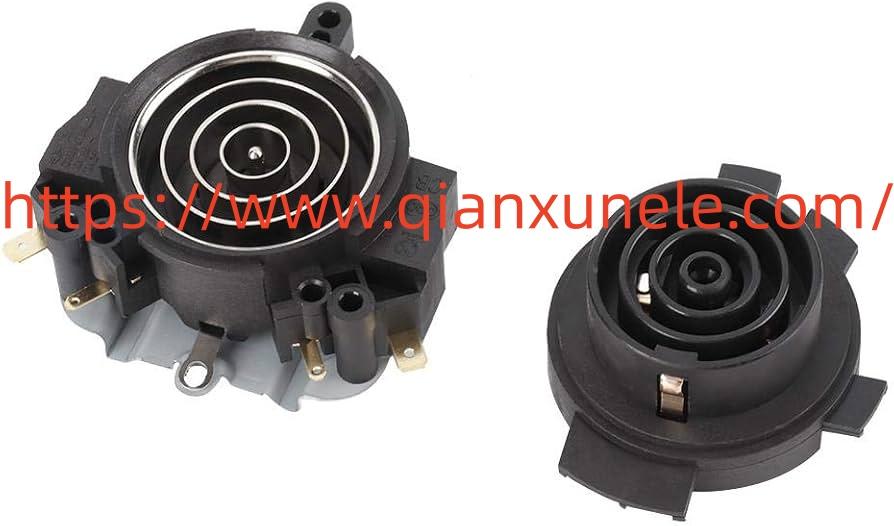
Electric Kettle Thermostat Coupler plays an important role in many household heating products by helping manage temperature regulation and power connection functions. Although users often focus on appearance, capacity, or energy consumption, the internal control assembly is one of the elements that directly influences operational stability. By coordinating temperature response and electrical...