


How Can mcwiper Support Clear Bulk Order Planning?
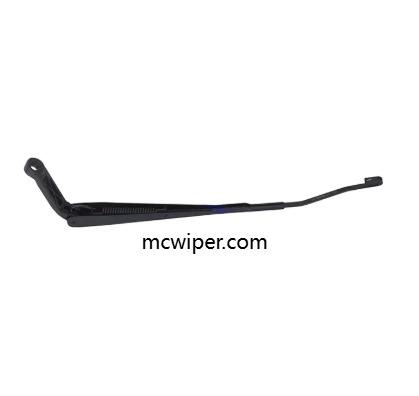
Wiper Arm bulk purchasing requires careful preparation, particularly when importers are purchasing for different vehicle markets. A large order may involve several product specifications, mounting structures, dimensions, and packaging requirements. Before confirming a purchase, buyers should organize their technical information and communicate their expectations clearly with the manufacturer. This preparation helps reduce specification misunderstandings and supports smoother cooperation throughout the order.
Identify the Requirements of Your Target Market
The purchasing plan should begin with an understanding of the vehicles commonly used in the destination market. Different vehicle manufacturers and model generations may use different mounting structures, dimensions, and installation arrangements.
Importers should prepare a reference list containing vehicle makes, models, production years, and installation positions whenever this information is available. Original component numbers, photographs, and physical samples can also help the production team identify the intended product.
For distributors serving several countries, it is useful to separate applications by market. This makes it easier to organize product categories, estimate purchasing quantities, and avoid ordering components that have limited demand.
Confirm Dimensions and Mounting Structures
Technical specifications should be discussed before quotation approval. Buyers should not rely only on product photographs because similar-looking components may have different dimensions or connection details.
Important information may include:
Overall length and width.
Mounting hole dimensions.
Connection position and structure.
Metal thickness and component shape.
Surface finish and color requirements.
Installation direction and application details.
If an importer has an original sample or technical drawing, providing it to the manufacturer can make communication more accurate. Both parties should confirm the final specifications in writing before production begins.
Request Samples Before Confirming Large Quantities
Sample evaluation gives purchasing teams an opportunity to review the actual product before committing to a larger order. It also allows the manufacturer and buyer to identify possible differences between the requested design and the proposed production sample.
During sample inspection, buyers can check dimensions, mounting accuracy, surface appearance, assembly details, and installation suitability. If the component is intended for a specific vehicle application, a practical installation check can provide additional information.
Importers should also establish how sample approval will be recorded. Photographs, signed reference samples, drawings, and written specifications can serve as useful references during later production inspections.
Calculate Order Quantities According to Demand
Bulk purchasing requires a balance between inventory availability and storage costs. Ordering too many slow-moving items may occupy warehouse space and tie up purchasing funds. Ordering insufficient quantities may create replenishment pressure when customer demand increases.
Buyers can review historical sales, customer inquiries, vehicle population, seasonal demand, and expected distribution coverage before preparing an order.
A purchasing plan can divide products into several groups:
Regularly requested models.
Products for specific vehicle applications.
New items being introduced to the market.
Special products supplied according to customer orders.
This classification helps importers discuss quantities and minimum order requirements with the manufacturer. It also gives both parties a clearer reference for production planning.
Review Quality Inspection and Production Details
Quality expectations should be established before mass production rather than discussed only after goods are completed. Importers can ask about incoming material checks, dimensional inspection, assembly verification, appearance inspection, and finished-product sampling.
The inspection requirements should correspond with the product specification. For example, buyers may define acceptable dimensional ranges, surface condition, mounting accuracy, and packaging appearance.
It is also useful to agree on how inspection records will be shared and how product issues will be handled. When the buyer and manufacturer use the same inspection criteria, communication becomes more straightforward.
At mcwiper, buyers can discuss product requirements, samples, drawings, and customization arrangements according to their purchasing projects. Providing complete technical information at the beginning helps the production team understand the intended application and prepare a suitable proposal.
Confirm Packaging and International Shipping Arrangements
Packaging deserves attention when products are transported across international supply chains. Importers should consider how individual components will be protected during storage, handling, loading, and delivery.
Before production, buyers can confirm individual packaging, inner box quantities, outer carton dimensions, labels, product identification, and private-label requirements. Packaging artwork should also be checked carefully to ensure that product references and customer information are correct.
Shipping arrangements should be discussed at the same time. Order quantity, carton volume, shipping method, destination port, documentation, and expected dispatch schedule can all affect the purchasing plan.
Build a Clear Communication Plan for Repeat Orders
Long-term cooperation depends on consistent information sharing. Importers should maintain product codes, approved drawings, sample references, packaging files, and previous order records. These documents make repeat purchasing easier and help prevent unnecessary specification changes.Before confirming an order, both parties should also agree on payment arrangements, production updates, inspection timing, and shipment information. Any requested change to the approved specification should be documented and confirmed before implementation.For importers preparing a new sourcing project or expanding an existing product range, mcwiper provides an opportunity to discuss automotive component requirements with a manufacturing partner. You can review available product information and submit your purchasing requirements through https://www.mcwiper.com/product/
Categorii
Citeste mai mult
CNC Lathe with Automation has become increasingly important in modern manufacturing environments where companies focus on reducing repeated manual procedures and improving production coordination. Many workshops today handle customized orders, shorter delivery schedules, and complex processing requirements. Automated machining systems help businesses organize workflow more efficiently while...

Body Players often evaluate whether Short Tennis Skirts and YogasuitFactory designs that incorporate pockets contribute meaningful convenience across sets and practice sessions. The ability to carry spare balls, a key, or a small phone without relying on external bags or court-side benches affects rhythm and focus. Placement, depth, and closure type determine whether these features remain...

A meticulous examination of the global Wireless Audio Devices Market Analysis reveals a robust economic framework underpinned by rising consumer electronics spending, expanding mobile media consumption, and heightened corporate investment in remote communication tools. Evaluating historical data alongside future projections highlights a market transition from wired accessories to proactive,...

The Cooler Box Market research report lays emphasis on primary as well as secondary drivers, leading market segments, market share, regional analysis, and possible sales volume. It gives a detailed explanation on what the market definition, applications, classifications, market trends, and engagements are for a healthcare industry. Further, it delves into a comprehensive market overview with...

There's been plenty William Nylander Jersey written about the burgeoning salaries of college head coaches, including Alabama's Nick Saban, who recently cro sed the $7 million a year threshold. Jim Harbaugh, the former head coach who is now coach at Michigan, seems to agree with the pundits that say coaches make too much. Harbaugh that he's not worth the more than $5 million a season his...