The Digital Proving Ground: The Automated Breach & Attack Simulation Market by 2035

Shifting from Defensive Posture to Proactive Validation
In the relentless cat-and-mouse game of cybersecurity, hope is not a strategy. For years, organizations have invested billions in a vast arsenal of defensive tools, yet devastating breaches continue to occur. This reality has given rise to a new, proactive approach to security validation, embodied by the rapidly growing Automated Breach & Attack Simulation Market. Commonly known as BAS, this market comprises platforms that continuously and safely simulate real-world cyberattacks against an organization's own live production environment. Instead of waiting for an annual penetration test or, worse, a real attacker, BAS tools act as a persistent, automated "red team." They launch a barrage of simulated malware, test for vulnerabilities, attempt lateral movement, and try to exfiltrate data, all to answer one critical question: do our security controls actually work as intended? This shift from a passive, assumption-based defense to a continuous, evidence-based validation is fundamentally changing how enterprises measure and manage their cyber risk.
What is Automated Breach and Attack Simulation (BAS)?
At its core, BAS is a sophisticated software platform that operationalizes the tactics, techniques, and procedures (TTPs) used by real-world threat actors. These platforms contain a vast, continuously updated library of attack simulations mapped to frameworks like MITRE ATT&CK. With the click of a button, a security team can launch simulations that mimic the behavior of a specific ransomware group, a phishing campaign, or a nation-state actor. The BAS agent, deployed on endpoints within the network, will attempt to execute these attacks in a safe, contained manner. For example, it might try to download a harmless file that mimics malware, attempt to escalate privileges on a local machine, or try to communicate with a known command-and-control server. The platform then observes which of these actions are successfully blocked by existing security controls (like firewalls, EDR, and email gateways) and which ones succeed, providing a clear, empirical report card on the organization's security posture.
The Core Components of a BAS Platform
A typical BAS platform is comprised of several key components that work in tandem. The Control Plane is the central management console, usually a cloud-based dashboard, where security teams define, schedule, and launch attack simulations. This is where they select which attack TTPs to run and which assets to target. The Attack Library is the heart of the platform, a constantly updated repository of thousands of simulated attacks, categorized by threat actor, malware family, and MITRE ATT&CK tactics. This ensures the simulations remain relevant to the current threat landscape. Software Agents are lightweight clients deployed on endpoints, servers, and cloud workloads. These agents are responsible for executing the simulated attacks within the production environment. Finally, the Reporting and Analytics Engine collects the results from all the agents, correlates them with the organization's security controls, and presents the findings in actionable dashboards, highlighting security gaps, misconfigurations, and providing prioritized remediation guidance.
BAS vs. Penetration Testing and Vulnerability Scanning
It's crucial to understand how BAS complements, rather than replaces, other security validation methods. Vulnerability Scanning is an automated process that scans for known CVEs (Common Vulnerabilities and Exposures) but doesn't test whether they are actually exploitable or if compensating controls are effective. Penetration Testing (pen testing) is a manual, human-driven effort where ethical hackers attempt to breach a system. While incredibly valuable for its depth and creativity, pen testing is expensive, time-consuming, and provides only a point-in-time snapshot of security. BAS bridges the gap between these two. It is automated like a vulnerability scanner, but it tests the entire security control fabric like a pen test. Its key advantage is its continuous nature. Instead of a once-a-year assessment, BAS provides a constant, 24/7 validation of security posture, immediately highlighting any drift or degradation in control effectiveness caused by system changes or updates.
A Vision for 2035: The Self-Healing Security Posture
Looking ahead to 2035, the BAS market will evolve from a diagnostic tool to a core component of a self-healing security ecosystem. The future BAS platform will not just identify a security gap; it will be tightly integrated with Security Orchestration, Automation, and Response (SOAR) platforms to trigger automated remediation workflows. For example, if a BAS simulation reveals that a firewall rule is misconfigured, the platform could automatically generate and push the correct rule to the firewall. This "closed-loop" automation will create a system that continuously tests itself, finds weaknesses, and fixes them without human intervention. This vision of a self-validating, self-remediating infrastructure will be essential for managing the overwhelming complexity and scale of future IT environments, ensuring that security posture remains resilient in the face of constant change and a relentless threat landscape.
➤ In-Depth Market Studies by Market Research Future:
Byod And Enterprise Mobility Market
Kategoriler
Read More
Refrigeration Electronic Scale selection should begin with the measurement tasks technicians perform during installation, maintenance, and servicing. Buyers should consider weighing range, resolution, platform dimensions, display readability, battery operation, portability, stability, environmental conditions, and maintenance requirements. A suitable configuration should correspond with...

The Dipyridamole Market is a complex and multifaceted industry, comprising various segments that cater to different dosage forms, applications, and distribution channels. Understanding these segments is crucial for businesses looking to succeed in this competitive landscape and for healthcare providers aiming to offer the most effective treatment options. The market can be segmented by dosage...

South America's Infertility Market is shaped by a mix of international pharmaceutical and device companies, regional fertility clinics, and emerging digital health startups. Competition is intensifying as demand grows and technology expands treatment options. Clinical success rates, patient experience, and technology integration are key differentiators. The South America Infertility Market is...
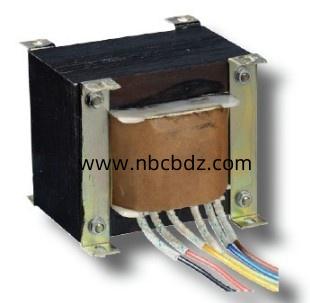
EI Transformer Factory products are widely applied in industrial and power applications where stable voltage conversion and electrical management are required. These components are designed with la minated magnetic structures that help control energy transfer between circuits. In manufacturing facilities, commercial buildings, and various electrical systems, they support equipment operation by...
Vplyv gamifikácie na online kasínové automaty: Trendy a stratégie zapojenia hráčov v roku 2025 S neustálym vývojom odvetvia online https://nvcasino-official.sk/mobilna-aplikacia/ hazardných hier, najmä od príchodu digitálnej éry, sa objavili inovatívne metodiky, ktoré výrazne...