


Natural Gas Liquids Market to Reach $400 Billion by 2035
The natural gas liquids market covers the ethane, propane, butane, natural gasoline and condensates that are separated from raw natural gas before it reaches consumers, and these liquids are the feedstock from which much of the world's plastics, synthetic fibres and heating fuel are made. Findings from WiseGuyReports value the market at USD 267.3 billion in 2025, rising to USD 400 billion by 2035 at a compound annual growth rate of 4.1%, with the trajectory attributed to increasing demand for cleaner energy sources and industrial applications.
Report Key Statistics
The research segments the market by product type, application, end-use industry, technology and region. By product type, ethane dominates with a substantial market valuation of USD 80 billion in 2024, projected to rise to USD 120 billion by 2035, a trajectory attributed largely to rising demand for ethane as a feedstock in the petrochemical industry, while propane demonstrates steady expansion driven by versatility as both a fuel and a feedstock especially in residential and commercial sectors, butane shows a moderate increase leveraged by applications in blending with gasoline and use as fuel in lighters and portable stoves, natural gasoline follows a similar trend through adoption as a blending component in gasoline, and condensates, though less dominating, play a significant role through utility in producing feedstock for downstream applications. By application, fuel is noted for its significant valuation reflecting strong reliance on NGLs for energy production and transportation fuels, petrochemical feedstock experiences robust growth driven by ongoing demand for plastics and chemicals, heating witnesses steady expansion particularly in residential and commercial sectors, LNG production remains pivotal as it becomes increasingly vital for global energy security and as a cleaner alternative to coal and oil, and industrial shows moderate increases influenced by requirement for natural gas in manufacturing. By end use, the industrial sector has historically held a position of dominance with a strong growth trajectory due to increasing demand for natural gas liquids as feedstock in chemical processes and manufacturing operations, residential and commercial exhibit steady expansion driven by growing reliance on energy-efficient heating and cooking solutions, and transportation fosters moderate increases supported by environmental regulations and a shift toward cleaner energy alternatives. By technology, fractionation has historically held a significant share due to its critical role in separating NGL components, gas separation undergoes steady expansion matching requirements for cleaner output, absorption shows moderate increase as companies strive for improved operational efficiency and lower environmental impacts, and cryogenic distillation gains traction for superior capability in achieving high-purity products and efficient handling of large volumes. Regionally, North America is projected at USD 130 billion in 2024 reaching USD 190 billion by 2035, holding 48.8% of the regional breakdown in 2024, while Europe shows steady expansion, Asia-Pacific is on a moderate increase trajectory, South America has a strong growth pattern, and the Middle East and Africa are positioned for gradual advancement.
Industry Trends
The analysis identifies three forces shaping demand. First, the increasing demand for cleaner energy sources positions NGLs as a bridge towards a low-emission energy transition, with global initiatives aimed at reducing carbon emissions promoting adoption particularly in developing countries where economic growth is spurring energy consumption, and with the shift towards using NGLs in petrochemical production, fuel for transportation and as feedstock for various industries gaining momentum. Second, technological advancements in extraction and processing are reshaping the landscape, facilitating more efficient recovery methods that enhance yield and lower production costs, thereby attracting more investment, with advances in hydraulic fracturing and horizontal drilling leading to increased production of natural gas which in turn amplifies NGL output. Third, regional demand is shifting: North America continues to dominate production driven by the shale gas boom, while emerging markets in Asia-Pacific and Latin America are experiencing rapid growth in consumption, and trends indicate growing interest in the export of NGLs particularly from countries seeking to diversify energy portfolios and capture international markets, with the rising popularity of liquefied petroleum gas and ethane as key products further underscoring their role.
Challenges
The market faces constraints the report acknowledges in its risk assessment. Price volatility can impact profitability of NGLs production, since the liquids are priced off both crude and gas benchmarks and the spread between them determines processing economics. Geopolitical factors can disrupt supply chains, and the report notes that tightening supply chains due to geopolitical tensions have intensified focus on securing NGL resources. Environmental regulations impose compliance costs on producers and processors. Infrastructure constraints matter as well, with the report observing that continuous development of pipeline infrastructure is crucial in supporting distribution across regions, and that unpredictable weather patterns have affected supply levels over the past two years. And the competing priorities of export versus domestic petrochemical use create allocation tension in producing regions.
Future Outlook
The report identifies several opportunity areas: increasing demand for petrochemicals, expansion of infrastructure projects, rising usage in the energy sector, growth in LNG export facilities, and advancements in extraction technologies. It advises investing in advanced extraction and fractionation technologies to increase yield and reduce operational costs, noting that cutting-edge methods optimising separation of NGL components can significantly enhance profitability while lowering environmental impact; leveraging predictive analytics and big data to enhance supply chain efficiency and market responsiveness, with advanced analytics improving demand forecasting and inventory management; and focusing on diversifying product offerings into high-demand markets such as petrochemicals and renewable energy solutions, so that stakeholders can capture additional market share and create value-added partnerships with downstream industries. Development activity cited includes ExxonMobil announcing in June 2025 a strategic partnership with Enbridge to expand NGL logistics and fractionation capacity across key U.S. hubs aiming to reduce transport bottlenecks and support increased propane and ethane supply, Chevron announcing in May 2025 the acquisition of a 40% stake in Plains All American Pipeline's NGL fractionation and storage assets creating a more integrated North American value chain, and TotalEnergies launching in April 2025 a new propane dehydrogenation and LPG splitting unit at its Gulf Coast complex to enhance on-site processing and marketed product flexibility.
Expert Discussion
The competitive analysis describes robust competition fuelled by increasing demand for energy and petrochemical products, with several key players dominating through extensive operational capabilities, technological advancements and strategic partnerships. Occidental Petroleum is recognised for significant presence owing to a diversified portfolio and strong operational infrastructure, excelling in production and distribution of various NGL products and capitalising on strategic assets and advanced technologies that enhance efficiency and yield, with commitment to sustainability initiatives and reducing carbon emissions positioning it favourably in a market increasingly influenced by environmental concerns, and with exceptional supply chain management and extensive market reach bolstering competitive advantage. Pioneer Natural Resources holds a prominent position with strong emphasis on operational excellence and resource management, noted for innovative techniques in enhancing natural gas liquids recovery which maximises output and minimises waste, and with deep understanding of market trends and customer needs allowing it to tailor offerings effectively, while its strategic focus on growth through sustainability and efficiency aligns with broader market trends. A comparative assessment notes that Occidental leans towards a broader strategy encompassing diverse NGL products and a strong emphasis on sustainability, while Pioneer's specialised approach in enhancing recovery provides a niche advantage in certain segments, and that their complementary strengths suggest a competitive landscape encouraging innovation. The report names Occidental Petroleum, Pioneer Natural Resources, MPLX, Centrica, ExxonMobil, Chevron, ConocoPhillips, LyondellBasell, Plains All American Pipeline, Anadarko Petroleum, TotalEnergies, Shell, Williams Companies, Marathon Oil Corporation, BP and Enbridge among profiled companies.
Conclusion
The natural gas liquids market is positioned for steady growth, supported by petrochemical feedstock demand and by the transition role gas plays in displacing coal and oil. Emerging opportunities lie in advanced fractionation technology, predictive analytics for supply chain optimisation, and downstream diversification into petrochemicals. Technological development will focus on recovery yield, separation efficiency and the infrastructure that moves liquids from wellhead to cracker. The long-term outlook favours integrated players who control both production and processing capacity. Where project-driven markets such as the US Water Desalination Market are shaped by plant construction decisions, the NGLs market is defined by the spread between gas and liquid prices and by the fractionation capacity available to capture it.
Категории
Больше
US Hydraulic Hammer Market outlook remains positive as technological innovation, including smart monitoring and automated lubrication, improves productivity and equipment lifespan. Increasing adoption of excavator-mounted attachments is expected to further strengthen long-term market expansion. The Hydraulic Hammer Market size is expected to reach US$ 4.75 Billion by 2034 from US$ 2.98...

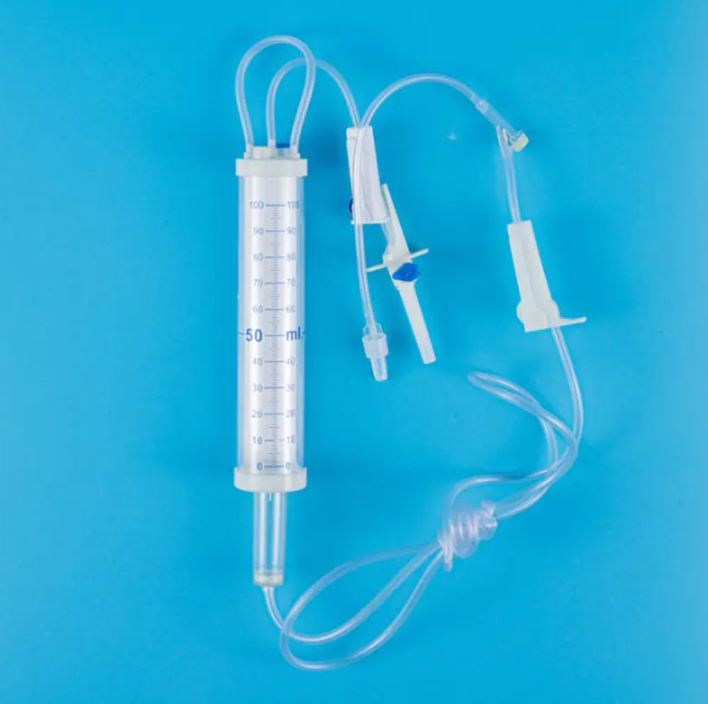
Medical technology often receives attention for advanced equipment and digital treatment systems, but everyday consumables remain equally important in healthcare operations. Products such as the Dosing Pipette and Disposable Infusion Set are used in large quantities across hospitals, laboratories, pharmaceutical factories, and research centers. Their practical role may appear simple,...
L'évolution des portraits psychographiques des joueurs de casinos en ligne en 2026 : Comprendre les motivations, attentes et comportements des nouvelles générations de parieurs Avec l'émergence et la croissance rapide des plateformes de jeux en ligne, le paysage des casinos virtuels a subi des transformations remarquables au cours des dernières...

Stem cell therapy is at the forefront of dental regeneration, offering the potential to regenerate dental tissues that were previously considered irreparable. Dental stem cells, including dental pulp stem cells (DPSCs) and periodontal ligament stem cells (PDLSCs), have the ability to differentiate into various cell types, including odontoblasts, osteoblasts, and fibroblasts. Their application...
Gas purification is an important application for adsorbents because industrial processes often require gases with carefully controlled moisture levels and impurity concentrations. Natural gas processing, petrochemical manufacturing, hydrogen purification, air separation, and other industrial operations use specialized materials to separate unwanted components from gas streams. Molecular sieves...