Comprehensive Strategic Evolution of Dynamic Force Controlled Industrial Robotics Across Modern Manufacturing
Modern automotive assembly lines, precision electronics cleanrooms, and aerospace fabrication facilities increasingly depend on sensory-driven kinetic autonomy, establishing the operational foundation of the Adaptive Robot Industry. For decades, conventional industrial robots operated as rigid, position-controlled automata executing repetitive trajectories within isolated safety cages. While effective for structured, high-volume tasks, traditional robotic manipulators fail when confronted with part dimension variances, unpredictable surface contours, or unstructured workspace environments. Adaptive robotics resolves this operational limitation by integrating multi-axis force-torque sensors, high-speed joint torque control, and dynamic vision feedback directly into closed-loop motion controllers. By adjusting positioning, contact pressure, and spatial trajectories in real time based on environmental contact dynamics, adaptive robots execute complex finishing, variable kitting, and delicate electronic assembly tasks with human-like dexterity and mechanical consistency.
The underlying engineering of modern adaptive robotics centers on compliant actuation, impedance control algorithms, and multi-modal sensory fusion. Unlike stiff position-controlled gearboxes, adaptive manipulators utilize joint-level torque sensors, direct-drive or quasi-direct-drive brushless motors, and soft-actuation elastomeric linkages. Advanced real-time motion controllers execute Cartesian impedance and admittance control routines running at kilohertz loop rates. Instead of forcing an end-effector through rigid spatial coordinates, the robot dynamically modulates its mechanical stiffness. If unexpected resistance is encountered—such as a misaligned dowel pin during precision engine block insertion—the controller compliant yields, recalculates positional vectors, and guides the component into place without binding or damaging delicate machined surfaces. Concurrently, 3D structured-light vision cameras provide continuous point-cloud telemetry, allowing the manipulator to pick randomly oriented parts from bulk bins and track moving conveyor lines dynamically.
Deploying comprehensive adaptive robotics delivers clear operational advantages across aerospace manufacturing, biomedical device assembly, and high-mix consumer electronics production. In aerospace airframe finishing, adaptive robots equipped with force-controlled orbital sanders polish expansive titanium fuselage sections and composite turbine blades, maintaining constant surface contact pressure across complex curved contours to eliminate gouging defects. Across consumer electronics assembly, adaptive manipulators insert miniature ribbon cables, solder micro-connectors, and press-fit delicate display glass into smartphone frames, compensating for microscopic component tolerances that cause high scrap rates in rigid automation setups. Furthermore, in clinical laboratory automation, adaptive robots manipulate fragile glass test tubes, centrifuge racks, and liquid handling pipettes, dynamically adjusting grip forces based on tactile feedback to prevent container fractures during high-throughput biological screening.
Looking toward strategic long-term automation roadmaps, adaptive robotic systems are converging with edge artificial intelligence, reinforcement learning simulation pipelines, and cloud-connected digital twins. Industrial engineering teams train adaptive manipulation policies within high-fidelity physics simulators using domain randomization techniques, transferring complex motor skills—such as wire harness routing, textile manipulation, and bin picking—directly from virtual environments to physical factory floors without requiring manual, point-to-point path programming. Furthermore, standardized communication protocols, such as OPC Unified Architecture and ROS 2 Industrial, allow adaptive robots to stream real-time joint torque, power consumption, and mechanical wear telemetry to enterprise manufacturing execution systems (MES). Supported by international collaborative safety standards such as ISO 10218 and ISO/TS 15066, adaptive robotics has matured into an essential industrial asset that drives agile manufacturing and autonomous production ecosystems worldwide.
Top Trending Reports :
Factory Automation Machine Vision Market
Kategorien
Mehr lesen
According to Market Research Future, the Small Hydroelectric Power Market represents a vital segment of the renewable energy industry, providing clean electricity from water resources with minimal environmental impact. As countries seek to expand renewable capacity, small hydro offers reliable, locally-sourced power generation. Understanding Small Hydroelectric Power Small hydroelectric...

Učinek uporabniških podatkov na personalizacijo igralnih izkušenj v spletnih kazinojih: Kako bo analitika obnašanja igralcev definirala prihodnost 2026 V dobi hitre digitalizacije in rastoče priljubljenosti spletnih kazinojev igrajo uporabniški https://vox-casino.si/ podatki ključno vlogo pri oblikovanju personaliziranih igralnih izkušenj. Ta članek se...

The rapid evolution of home automation has significantly transformed household routines, making connected devices an integral component of modern living. In recent years, the Smart Appliances Market Size has witnessed exponential expansion, spurred by the rising penetration of high-speed internet, smartphones, and IoT-enabled ecosystems. Consumers increasingly seek convenience, energy...

There is no established blend for the Cubs' bullpen immediately by now. Without the need of nearer Daniel Palencia offered, supervisor Craig Counsell is creating selections centered upon the inning, place of the sport, lineup aspect and availability. There are game titles any time it performs, and then there are times which include Cubs' embattled bullpen surrendered 8 operates throughout the...

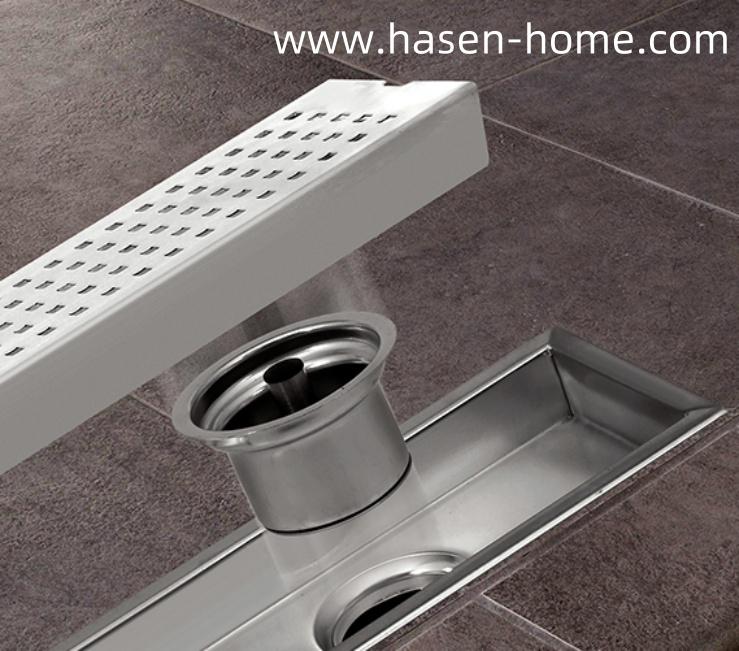
Efficient water drainage is a critical part of any well-designed bathroom, and finding the right system is essential. As a leading Shower Drain Channels Supplier Hasen , we offer cutting-edge drainage solutions that seamlessly integrate into your bathroom design. Our drain channels are designed for both performance and aesthetics, providing you with the perfect system for a hassle-free...