


Food Processing Boilers Market to Reach $14.92 Billion by 2035
The food processing boilers market covers the steam and hot water generation equipment that drives cooking, pasteurisation, sterilisation, drying, and cleaning across food and beverage manufacturing. According to Market Research Future, the market was valued at $8.972 billion in 2024 and is projected to reach $14.92 billion by 2035, expanding at a compound annual growth rate of 4.73% over the forecast period. That growth rate reflects a market driven by food demand rather than industrial cycles alone: as consumer preferences shift towards convenience and ready-to-eat meals, food manufacturers are compelled to enhance their production capabilities, and the processed food sector is expected to reach a valuation of over 3 trillion USD by 2025.
Report Key Statistics
Insights published by Market Research Future reveal a market segmented by boiler type, fuel type, application, operation type, and capacity. By boiler type, fire-tube boilers hold the largest share at $3.5 billion in 2024 on simplicity, reliability, and cost-effectiveness making them a preferred choice among processors, while water-tube boilers grow fastest and are projected to reach $4.0 billion by 2035 on capability to operate at higher pressures and quicker response times, electric boilers are projected at $2.5 billion, and biomass boilers emerge on sustainable energy demand. By fuel type, natural gas dominates and is projected to reach $5.5 billion by 2035 on efficiency, availability, and lesser environmental impact compared to traditional fuels, while oil and coal maintain significant shares and biomass grows fastest on sustainability and carbon footprint reduction. By application, bakeries hold the largest share due to increasing demand for baked goods and the necessity for efficient heating solutions, while dairy processing is the fastest-growing, driven by rising consumption of dairy products and the need for specialised boilers in pasteurisation, and dairy processing is projected to reach $3.0 billion by 2035, with breweries, meat processing, and canning contributing. By operation type, continuous operation holds the largest share due to efficiency and ability to facilitate ongoing processes in large-scale production, while batch operation grows fastest on demand for versatility and advancements enhancing batch system efficiency. By capacity, medium scale from 501 to 2000 kg/h holds the largest market share due to versatility and efficiency in industrial applications favoured by mid-sized processors balancing operational cost and output, while small scale up to 500 kg/h grows rapidly among startups and artisanal producers prioritising flexibility and lower capital investment, and large scale above 2000 kg/h is projected to reach $6.92 billion by 2035. Regionally, North America holds approximately 40% of global market share, Europe approximately 30%, Asia-Pacific approximately 25%, and the Middle East and Africa about 5%.
Industry Trends
Findings from Market Research Future identify sustainability initiatives as a defining trend. Manufacturers are focusing on developing energy-efficient boilers that reduce carbon footprints, and this trend aligns with global efforts to combat climate change and promote environmentally friendly practices in food production. A second trend is technological advancement: innovations such as automation and smart controls are enhancing operational efficiency, and these developments enable manufacturers to optimise energy consumption and improve overall productivity, with integration of IoT technology allowing real-time monitoring and optimisation of boiler performance. Third, customisation and flexibility are becoming essential, as food processing requirements vary and manufacturers are likely to offer tailored solutions that meet specific operational needs, thereby enhancing performance and efficiency.
Challenges
The market's growth path involves real friction. Energy efficiency regulations compel food processing companies to adopt more efficient systems, but the capital cost of replacement must be justified against operational savings that accumulate over years, and in competitive food categories with thin margins that calculation can defer investment. Natural gas dominance ties operating economics to fuel price volatility, and where gas infrastructure is absent, oil and coal remain in use despite higher emissions. Biomass boilers, while growing on sustainability grounds, require fuel handling, storage, and consistent feedstock quality that add operational complexity. Food safety standards demand consistent temperature control and steam quality, and any interruption in steam supply can compromise a production batch, making reliability a non-negotiable specification.
Future Outlook
Analysis presented by Market Research Future identifies several opportunities. Integration of IoT for real-time monitoring and predictive maintenance allows processors to detect degradation before it causes unplanned downtime. Development of eco-friendly boiler systems to meet sustainability goals aligns with tightening emissions regulation and with corporate decarbonisation commitments. Expansion into emerging markets with tailored solutions for local food processing needs aligns with Asia-Pacific's growth, where increasing urbanisation and rising disposable incomes are driving demand, and the growing food processing industry coupled with government initiatives to enhance food safety and quality is propelling expansion. Expansion of food processing facilities is a further driver, as new plants are established particularly in emerging markets, and the food processing sector is expected to grow at a CAGR of 5% over the next five years, necessitating installation of efficient boiler systems to support increased production capacities.
Expert Discussion
Industry practitioners describe a dynamic competitive landscape driven by increasing demand for energy-efficient and sustainable solutions. Bosch, Fulton, Miura, Cleaver-Brooks, Hurst Boiler, Babcock & Wilcox, Thermo-Dynamics, Zhengzhou Boiler Group, and Alfa Laval are the principal players. Bosch focuses on integrating advanced technologies into its boiler systems, enhancing efficiency and reducing emissions. Fulton emphasises partnerships with local distributors to strengthen market presence. Miura is known for its modular boiler systems that cater to diverse processing needs. In August, Cleaver-Brooks announced the launch of a new line of high-efficiency boilers designed specifically for the food processing industry, aligning with the growing trend towards energy efficiency and sustainability and positioning Cleaver-Brooks as a leader in eco-friendly solutions, with the introduction likely to enhance competitive edge by appealing to environmentally conscious consumers and businesses. In September, Hurst Boiler expanded its operations by acquiring a local manufacturing facility in Mexico, allowing Hurst to localise production, thereby reducing costs and improving delivery times for North American customers and strengthening its foothold in the growing Latin American market. In July, Babcock & Wilcox entered into a strategic partnership with a leading technology firm to integrate AI-driven analytics into its boiler systems, indicative of the industry's shift towards digitalisation and enabling predictive maintenance solutions that enhance customer satisfaction and operational reliability. Companies are increasingly localising manufacturing to reduce lead times and optimise supply chains, and the market appears moderately fragmented with several players vying for market share.
Conclusion
The food processing boilers market is positioned for steady growth, supported by processed food demand and by food safety requirements that make reliable steam supply non-negotiable. Emerging opportunities lie in IoT-enabled monitoring, eco-friendly boiler systems, and emerging market expansion. Technological development will focus on thermal efficiency, emissions reduction, and the controls that maintain steam quality under varying load. The long-term outlook is one of sustained expansion as food production scales to meet population growth and as efficiency regulation tightens. Where infrastructure markets such as the US Water Desalination Market are shaped by large capital projects, food processing boilers compete on the uptime and steam consistency that determine whether a production batch meets specification.
Categorias
Leia Mais
Крейзи Тайм — это уникальное развлекательное шоу, которое завоевало популярность среди зрителей благодаря своим живым трансляциям и увлекательному контенту. На официальном сайте crazytimestat.com вы можете наслаждаться прямыми эфирами, которые предлагают зрителям возможность стать частью захватывающих событий в реальном времени. Это идеальное место для тех, кто хочет испытать адреналин и...

Innovation is becoming increasingly important across the European fertilizer industry. Farmers want products that deliver nutrients efficiently, perform reliably with modern application equipment, and fit within increasingly sustainable farming systems. These requirements are encouraging manufacturers to improve fertilizer formulations, quality, production processes, and technical services. The...

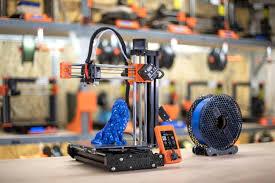
The global manufacturing landscape is undergoing a monumental paradigm shift driven by rapid advancements in industrial additive manufacturing. Once utilized primarily for quick rapid prototyping, modern 3D printing technologies now play a foundational role in direct digital manufacturing across aerospace, automotive, healthcare, and consumer goods. Organizations worldwide are replacing...
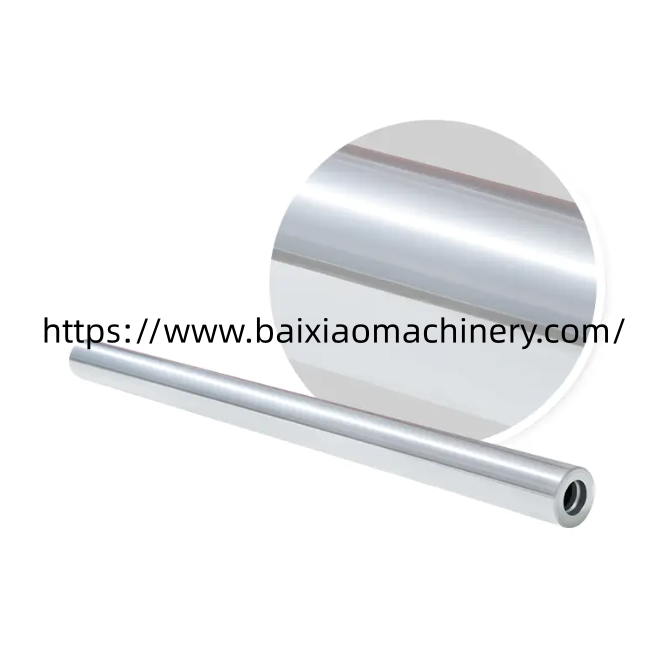
In manufacturing processes that bring materials together or press them against a working surface, the roller assembly can influence how evenly the material moves and makes contact. When evaluating Squeeze Rollers, equipment designers should consider the interaction between roller surfaces, the material being processed, and the mechanism that controls pressure. These components may be used in...
111 9648 20 D0 serves as a key component in systems that help maintain clear views for operators of heavy machinery. In construction and transport settings visibility plays a central role in daily activities. Rain snow or dust can quickly affect sight lines and create challenges for those behind the controls. A motor designed for these conditions works to move wiper blades steadily across the...
