


Artificial Intelligence In Agriculture Industry Transforming Global Farming

The Artificial Intelligence In Agriculture industry is experiencing a transformative phase as farmers worldwide adopt sensor-fused, model-driven decision platforms to enhance productivity, reduce input costs, and address climate volatility. The artificial intelligence in agriculture market reached an estimated USD 4.30 billion in 2025 and is projected to grow from USD 5.31 billion in 2026 to USD 35.48 billion by 2035, registering a CAGR of 23.5% during the forecast period (2026–2035). This expansion is anchored in the USDA's USD 3.1 billion Agricultural Innovation Agenda, which earmarks federal dollars for data-driven farming programs, and the European Commission's Farm to Fork Strategy targeting a 50% reduction in pesticide use by 2030 — a goal practically impossible without algorithmic intervention. The industry is fundamentally reshaping how crops are monitored, irrigated, and harvested across North America, Europe, and Asia-Pacific.
The transformation of the AI in agriculture industry is being driven by the shift from traditional scouting-based crop management and calendar-driven irrigation schedules to sensor-fused, model-driven decision platforms. This shift mirrors what happened in manufacturing a decade ago, but compressed into a tighter timeline because cloud computing and low-cost edge hardware are already mature. Global agtech venture funding exceeded USD 7.8 billion in 2024, with AI-focused startups capturing roughly 34% of that total. This capital surge is accelerating feature parity between enterprise platforms and smaller-farm SaaS solutions. The integration of machine learning, computer vision, and predictive analytics is enabling farmers to forecast yields, detect diseases, and optimize inputs with unprecedented accuracy. Government precision-agriculture mandates contribute 18-22% to CAGR, while declining edge-AI hardware costs contribute 15-18%.
The competitive landscape of the AI in agriculture industry features a mix of agricultural equipment OEMs, pure-play agtech startups, and hyperscale cloud providers. Key players include Deere & Company, Trimble Inc., AGCO Corporation, Bayer (Climate Corp.), Corteva Agriscience, IBM, Microsoft, Prospera Technologies, CropX Technologies, and Taranis. The market is moderately fragmented, with an estimated HHI below 800 and the top five players collectively holding approximately 28-33% of global revenue. Deere & Company leads with approximately 7-10% share through its vertically integrated OEM-to-software stack including See & Spray and Operations Center. Trimble holds 4-6% share with cross-platform precision-ag middleware. IBM collaborated with Main Street Data and GiSC to launch IoT and AI-based products for agricultural data integration. Microsoft added Copilot templates and generative AI to Azure Data Manager for Agriculture.
Looking ahead, the AI in agriculture industry faces both opportunities and challenges as it continues to evolve. Smallholder SaaS platforms in emerging markets represent a largely untapped addressable base exceeding USD 4 billion annually by 2030, with over 500 million smallholder farms globally. Carbon-credit verification and data monetization can reduce verification costs by up to 60%, unlocking new revenue streams. Autonomous harvesting and post-harvest robotics create a USD 1.8 billion opportunity by 2032. However, the industry must address challenges related to data privacy and ownership concerns, limited rural connectivity, and high upfront integration costs. As the industry continues to mature, the ability to deliver localized, accessible, and intelligent agricultural solutions will be the key differentiator, creating sustained demand across all farming segments.
FAQs:
Q1: What is driving the growth of the Artificial Intelligence In Agriculture Market?
Key drivers include government precision-agriculture mandates, declining cost of edge-AI hardware, climate volatility and yield risk, satellite and UAV data availability, farm labor shortages, expansion of rural 5G connectivity, and carbon-credit compliance.
Q2: Who are the key players in the Artificial Intelligence In Agriculture Market?
Major players include Deere & Company, Trimble Inc., AGCO Corporation, Bayer (Climate Corp.), Corteva Agriscience, IBM, Microsoft, Prospera Technologies, CropX Technologies, and Taranis.
➤ In-Depth Market Studies by Market Research Future:
India Learning Management System Market
Категории
Больше
Reliable power distribution begins with equipment designed to meet changing working environments. Portable Distribution Box ,Outdoor Electrical Distribution Panel reflects a practical approach to managing electrical connections across a wide variety of applications, while Nante represents thoughtful engineering, dependable manufacturing, and customer-focused cooperation. Whether supporting...

The global rice cakes industry has evolved significantly as consumers increasingly prioritize healthier snack options. Changing dietary habits, urban lifestyles, and rising awareness about nutrition are contributing to the expanding Rice Cakes Market. Rice cakes, traditionally popular in Asian countries, have gained worldwide acceptance as a convenient, low-fat, and versatile snack option...

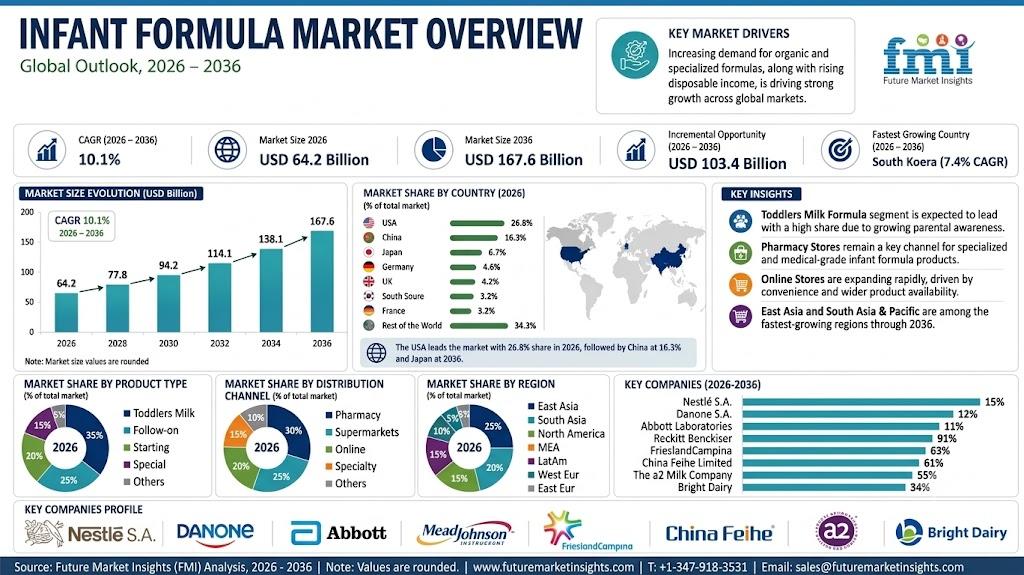
Infant Formula Market Starting Milk Formula Leads Product Type at 50.0% The global infant formula market is forecast to increase from USD 64.2 billion in 2026 to USD 167.6 billion by 2036, expanding at a 10.1% CAGR during the 2026-2036 forecast period, according to Future Market Insights. The market stood at USD 58.3 billion in 2025. Growth is being supported by continued demand for infant...
The traditional legal sector is undergoing a profound structural transformation. In an era driven by corporate cost optimization, regulatory complexity, and rapid technological adoption, law firms and corporate legal departments are turning away from traditional, high-cost billable-hour models. Instead, they are embracing Alternative Legal Service Providers (ALSPs) to handle standardized,...

Examining the dumbwaiter lifts market, covering comprehensive solutions for efficient vertical transport, key technologies including electric and hydraulic drive systems, and the future outlook for dumbwaiter lifts through 2035. The Dumbwaiter Lifts Market represents the comprehensive landscape of vertical transport innovations, providing essential equipment that enables intelligent, efficient,...