


How to Get Your Brand Recommended by AI: A Practical Guide to GEO
Introduction
The way customers discover brands is changing. Alongside traditional search engines, AI-powered platforms such as ChatGPT, Gemini, and Google AI Overviews help users explore products, compare services, and find solutions to everyday problems.
When users ask these platforms for recommendations, the brands mentioned in their answers can gain valuable exposure. This makes AI search visibility an increasingly important consideration for businesses looking to strengthen their online presence.
Generative Engine Optimization (GEO) offers a practical framework for improving how brands present information online and monitoring how they appear in AI-generated responses.
What Does It Mean to Be Recommended by AI?
An AI recommendation occurs when an AI-powered platform identifies a business, product, or service as a potential answer to a user's request.
For example, someone might ask an AI assistant to recommend an analytics platform, compare marketing tools, or find software for a small business. The resulting answer may mention several brands and, depending on the platform, provide links to relevant sources.
These recommendations can vary according to the user's question, the platform's capabilities, and the information available to the system. There is no guaranteed method for securing a recommendation, but businesses can take steps to make their information clearer, more useful, and easier to discover.
Why AI Recommendations Matter for Businesses
AI-generated answers create another opportunity for brands to reach people while they are researching potential solutions.
Understanding how your business appears in these answers can help you:
-
Discover whether your brand appears in relevant conversations.
-
Identify competitors that receive more visibility for important topics.
-
Understand how AI platforms describe your products and services.
-
Find content gaps that may limit your online presence.
-
Develop a more complete digital marketing strategy.
AI visibility should complement traditional SEO rather than replace it. Search rankings, website traffic, customer engagement, and conversions remain important indicators of digital performance.
Five Ways to Improve Your Brand's AI Visibility
1. Create Content That Solves Real Problems
Start by understanding the questions your target audience asks before making a purchasing decision.
Develop helpful guides, detailed tutorials, product comparisons, and informative articles that address those questions directly. Explain complex topics in straightforward language and include practical examples wherever possible.
For instance, a company offering marketing software could publish a guide comparing analytics features, explaining common challenges, and helping readers understand which solution fits their needs.
Useful content supports readers first while creating more opportunities for your brand to demonstrate expertise.
2. Maintain Accurate and Consistent Brand Information
Your website should clearly explain what your business does, who it serves, and what makes its products or services different.
Keep product descriptions, company information, pricing details, and other important facts accurate. Review relevant business profiles and reputable third-party listings to reduce inconsistencies.
Clear and consistent information helps customers understand your offering and provides better context about your brand across the web.
3. Demonstrate Expertise and Credibility
Publish content that reflects genuine knowledge of your industry. Original research, expert commentary, practical case studies, and well-supported explanations can help establish credibility.
Support factual claims with reliable evidence and clearly distinguish between verified information and opinion.
Avoid publishing large quantities of repetitive content simply to target AI platforms. A smaller collection of accurate, informative resources can be more valuable to readers than a large collection of superficial articles.
4. Make Your Website Easy to Understand
Organize your website with descriptive page titles, logical headings, relevant internal links, and clearly written product information.
Answer important questions directly and provide supporting details in well-organized sections. Use structured data when appropriate, ensuring it accurately reflects the content users can see.
Technical accessibility and clear content structure support discoverability, although neither guarantees that an AI platform will mention or recommend your business.
5. Monitor AI Recommendations and Brand Mentions
Improving AI visibility requires measurement as well as content creation.
Test questions that potential customers might ask across the AI platforms relevant to your business. Record whether your brand appears, which competitors are mentioned, and whether your website is cited.
Repeat the tests regularly because AI responses can change over time. Consistent tracking helps distinguish recurring patterns from individual variations and reveals topics that may deserve further investigation.
How to Measure AI Recommendation Performance
Businesses can use several metrics to evaluate their AI search presence.
Brand mention frequency: Measures how often your brand appears in a defined set of AI-generated responses.
Citation frequency: Tracks how often your website is referenced as a source.
Competitor visibility: Compares your brand's presence with competing businesses across similar questions.
Recommendation rate: Measures how often your brand is recommended in relevant responses within a consistent testing framework.
AI referral traffic: Tracks visits arriving from AI-powered platforms when referral information is available.
These metrics should be interpreted together. More mentions do not automatically mean more customers, and results may vary between platforms and queries.
How Lunocode Helps You Track AI Visibility
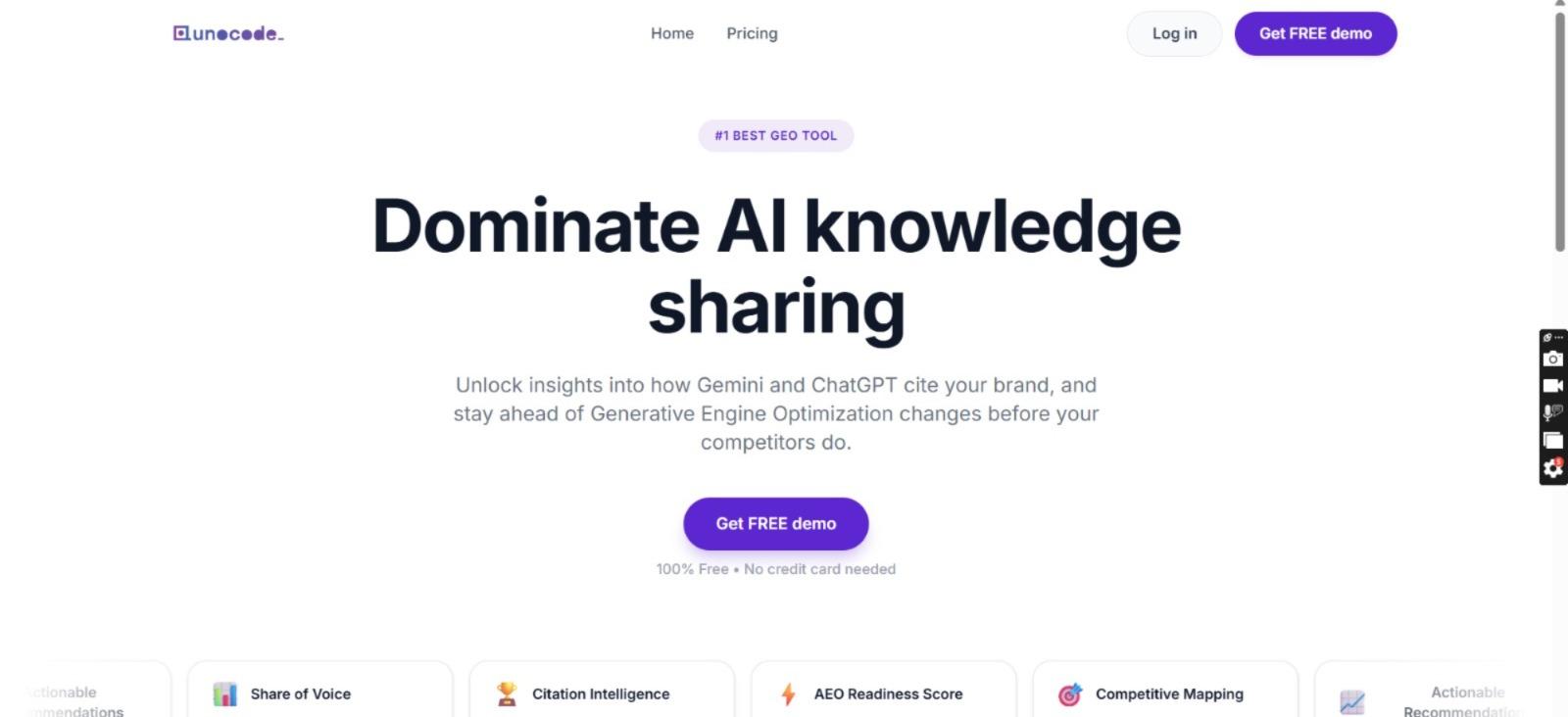
Lunocode helps businesses understand their presence across AI-powered search experiences through AI visibility tracking, brand monitoring, and actionable insights.
By observing brand mentions, citations, and competitor visibility, marketers can identify potential opportunities to improve their content strategy and understand how their businesses appear in AI-generated answers.
This approach helps teams move beyond assumptions and use measurable observations to guide their optimization efforts.
Whether you are an SEO professional, marketing agency, startup, or established business, monitoring AI visibility can provide additional context for adapting to changing online discovery habits.
Common Mistakes to Avoid
Businesses seeking AI recommendations should avoid shortcuts that compromise the quality of their digital presence.
Common mistakes include:
-
Publishing generic content without original insights.
-
Making unsupported claims about products or services.
-
Ignoring traditional SEO and website accessibility.
-
Using manipulative link-building practices.
-
Assuming a single AI response reflects long-term visibility.
-
Focusing on mentions without considering customer relevance.
A sustainable approach emphasizes accuracy, useful information, genuine expertise, and continuous improvement.
Conclusion
AI-powered recommendations are creating new ways for customers to discover businesses and evaluate potential solutions. Brands that provide clear information, publish helpful content, and maintain a credible online presence can build a stronger foundation for AI search visibility.
Although no strategy can guarantee a place in AI-generated recommendations, monitoring brand mentions, analyzing competitors, and improving content quality can help businesses identify meaningful opportunities.
With Lunocode, businesses can take a more structured approach to understanding their AI visibility and developing strategies for the evolving world of AI-powered search.
Website = https://lunocode.eu/
Catégories
Lire la suite
L'impatto dei giochi di abilità sui casinò online nel 2025: tendenze emergenti e la fusione tra giochi tradizionali e competizione strategica Nel 2025, il panorama dei casinò online sta vivendo una trasformazione radicale, principalmente grazie all'aumento della popolarità dei giochi di abilità. Questi giochi, che richiedono una combinazione di strategia,...

The Stolen Vehicle Recovery (SVR) Tracking Service Market research report has been crafted with the most advanced and best tools to collect, record, estimate, and analyze market data. The report also sheds light on the market overview in its entirety touching diverse aspects like product definition, prevailing vendor landscape, and market segmentation. Through the comprehensive and systematic...

The global carbonated beverage processing equipment market is witnessing substantial growth as beverage manufacturers continue to expand production facilities to meet rising consumer demand. The growing popularity of carbonated soft drinks, flavored sparkling beverages, and innovative beverage products is encouraging companies to invest in advanced processing infrastructure. This trend is...

Pumps are essential in many fluid-handling environments, supporting the movement of water and other suitable liquids through agricultural, industrial, commercial, and household applications. When evaluating a Pump Factory, buyers should consider much more than the basic ability to move fluid. Material selection, hydraulic design, motor integration, operating convenience, maintenance...
Ewolucja strategii marketingowych w kasynach online w 2025 roku: Jak nowe technologie i zmieniające się preferencje graczy wpływają na skuteczność kampanii reklamowych w branży hazardowej W dobie technologicznego rozwoju i nieustannej ewolucji preferencji https://hitnspin.pl/bonuses/welcome-bonus/ użytkowników, branża kasyn online staje przed koniecznością dostosowania swoich strategii...
